





AI is making it easier for marketers to analyze data, find patterns, and make decisions faster. But none of that helps if the data is outdated, irrelevant, or collected without proper consent. As privacy regulations become more complex, marketers need to think less about how much data they can collect and more about which signals will actually help them understand their customers.
Introduction
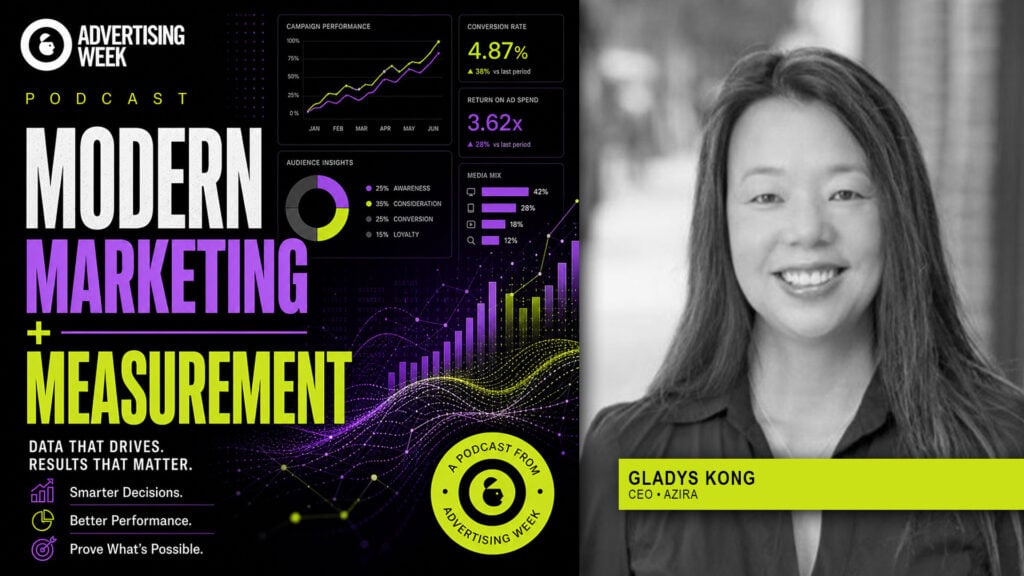
In this episode of Modern Marketing and Measurement, we are joined by Gladys Kong, CEO of Azira, to talk about why more data does not necessarily lead to better marketing. We discuss how location and transaction data can provide a more complete picture of consumer behavior, why data has a shelf life, and how AI is giving marketers more time to ask questions, test ideas, and focus on strategy.
Five Key Takeaways
1. Consent comes before everything else
The privacy landscape has become more complicated as individual states introduce different rules governing how consumer data can be collected and used. Gladys says marketers must first confirm that the data was collected with consent and that they have the right to use it for the intended purpose in each state. A large data set has little value if the organization cannot legally or responsibly use it.
2. More data does not automatically mean better data
AI models are only as useful as the information behind them. Large amounts of noisy, irrelevant, or poorly contextualized data can make the results less reliable. Gladys recommends starting with the decision the business needs to make, then choosing the data that can actually help answer that question.
3. Data has a shelf life
Consumer behavior can change quickly, making older data less useful than marketers may assume. Gladys points to the quick-service restaurant industry, where GLP-1 medications, delivery services, self-service ordering, and changing expectations have altered how people choose and purchase food. Unless marketers are conducting a historical study, timely data may be far more valuable than years of information that no longer reflects how customers behave.
4. Different signals reveal different parts of consumer behavior
First-party data can show brands what customers do within their own stores, websites, or platforms, but it cannot provide a complete view of what happens elsewhere. Location data can reveal where consumers go, transaction data can show where they spend money, and identity data can help connect those behaviors into a broader profile. Gladys calls this a triangulation of signals: bringing together the data needed to answer a specific business question.
5. AI gives marketers more time to be curious
Research that once required analysts to assemble multiple reports can now be completed through natural-language questions in a fraction of the time. That allows marketers to spend less time building reports and more time understanding the results. Gladys sees the combination of human expertise and AI as an opportunity to ask more questions, identify patterns people might otherwise miss, and make more predictive decisions instead of simply reacting to what already happened.
Listen & Subscribe