





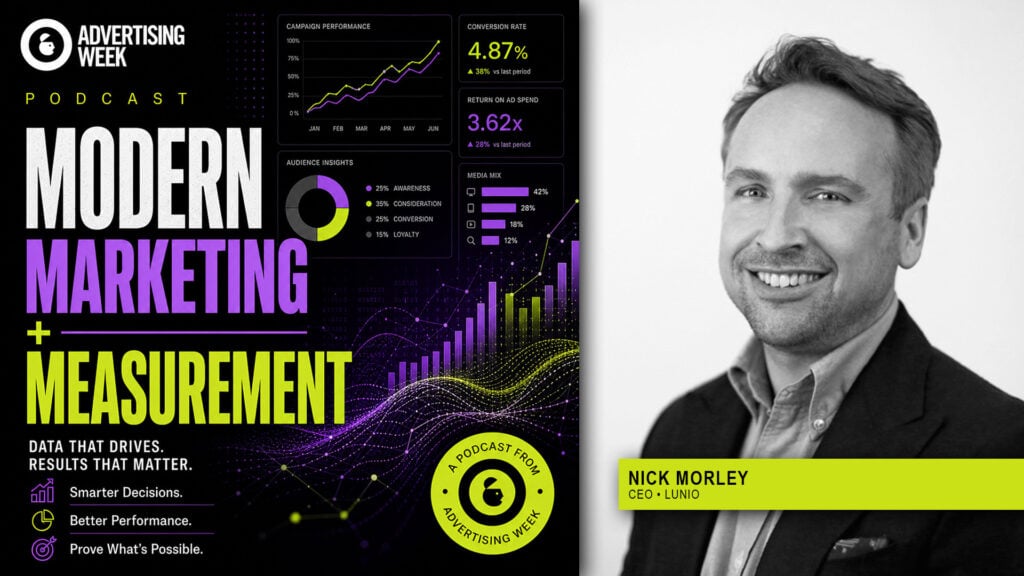
Digital advertising gives marketers more data than ever, but it still cannot always tell them whether an ad reached a real person capable of becoming a customer. As platforms become more automated and less transparent, identifying fraudulent traffic, poor targeting, and other sources of wasted spend is becoming an increasingly important part of marketing measurement.
In this episode of Modern Marketing & Measurement, we are joined by Nick Morley, CEO of Lunio, to talk about why advertisers should not rely on ad platforms to grade their own homework. We discuss the hidden waste inside performance marketing, how independent verification can give marketers more confidence in their numbers, and why finding wasted spend creates an opportunity to reinvest in growth.
Five Key Takeaways
1. More data has not solved advertising’s basic measurement problem
Marketers have more channels, metrics, and reporting tools than ever, but they still cannot always determine whether an ad reached a real person capable of buying. Nick describes fraud and invalid traffic as a sophisticated game of whack-a-mole: every time the industry appears to solve the problem, it changes form. That makes measurement and verification just as important now as they were when digital advertising was far less mature.
2. Ad platforms should not be the only ones measuring their own performance
Advertisers pay platforms such as Google and Meta, then rely on those same platforms to report how well the investment performed. Nick does not suggest that platforms are deliberately misleading advertisers, but their financial incentives and increasingly complicated advertising systems make independent measurement necessary. Following the money can help explain why marketers may not receive all the visibility they want.
3. Wasted spend extends well beyond obvious fraud
Bots and fraudulent traffic are part of the problem, but Nick says advertisers also lose money through benign scrapers, poor targeting, and algorithmic inefficiencies. Lunio detects and blocks what it can, while helping advertisers see where performance budgets are being drained. The goal is usually not to reduce the marketing budget, but to recover wasted money and put it toward activity that can produce better results.
4. Better signals can improve the algorithms buying the media
Waste intelligence is beginning to move beyond identifying bad traffic after the fact. Nick sees an opportunity to use both negative and positive signals to help train platform algorithms, improve targeting, and guide future investment. That becomes especially important as advertising platforms grow more automated and marketers have less direct visibility into how individual decisions are made.
5. Independent verification is simply good business
Brands routinely use audits and outside specialists in other areas of the business, and advertising should be no different. An audit can help a company determine whether waste exists, quantify the size of the problem, and calculate what recovered spend could contribute to growth. As media buying becomes more complicated, an independent layer of measurement can also help marketing and finance have more productive conversations about efficiency, investment, and return.
Listen & Subscribe