




Traditional Attribution and Promo Codes Share the Same Blind Spot

By Matt Bahr, CEO and co-founder of Fairing
Creator marketing has become one of the fastest-growing acquisition channels in ecommerce. Brands are investing heavily in creators, podcasts, and affiliates to influence customers long before they’re ready to buy. And many still rely on one simple mechanism to judge whether those investments are working: the promo code.
For years, promo codes have been a practical way for brands to connect marketing activity with commercial outcomes. But they were always just a proxy – built to capture what happens at checkout, not what created demand in the first place.
That distinction didn’t matter much before customer journeys became increasingly fragmented. AI is the latest evolution of that change. Whether someone discovers a product through a creator, a podcast, or increasingly through ChatGPT, the purchase typically happens much later, through search or direct traffic, long after the original source of influence has disappeared from reporting. And agentic commerce takes that further still: when checkout happens inside an AI experience, the landing page disappears, the urgency timer becomes irrelevant and the promo code never gets entered.
Traditional attribution and promo codes share the same blind spot. They reward the interaction that closes the sale rather than the activity that created the intent to buy. AI has simply brought a long-standing measurement limitation into sharper focus and is accelerating it faster than any previous channel.
The data already tells the story
This isn’t the result of poor implementation or broken tracking. It’s a structural limitation of click-based measurement.
When someone asks ChatGPT which running shoes to buy, receives a recommendation and later visits the retailer directly, there may be no referrer, no UTM parameter and no measurable click linking the two interactions. The sale looks like direct traffic, even though AI influenced the purchase. As our research highlights, this is the same no-click challenge marketers have faced with creators and podcasts for years. AI is simply accelerating it at a much greater scale, and as it takes on a larger role in product discovery, this gap is only likely to widen.
Beyond the promo code?
Promo codes have value as one attribution signal, but they have never provided the complete picture. AI-mediated commerce makes their limitations more pronounced, particularly when the traditional mechanics around entering a code disappear altogether.
Wallet and platform-layer offers are emerging as an alternative way to deliver promotions in these environments. Tools like Perplexity’s PayPal cashback and Google’s Direct Offers don’t require a landing page, a discount field or a customer who remembered a code. They work at the layer where the agent operates, making them more compatible with how agentic checkout functions.
But replacing the promotional mechanic doesn’t solve the measurement problem. Within attribution, there is no single mechanism that fully replaces the promo code in an AI-mediated world. However, by combining multiple signals including self-reported customer data, pixel tracking and platform inputs, brands can build a more complete picture of customer influence and understand what actually created demand.
Rethinking measurement before AI forces the issue
Rethinking AI measurement can’t wait for agentic commerce to dominate transaction volumes. The visibility gap is already here, and as agentic shopping scales, tracking will only become more opaque. Brands that delay modernizing their measurement stack today will end up spending double to catch up tomorrow
That isn’t a call to throw out traditional attribution. It remains a valuable mechanism wherever customers follow linear click-based checkout flows.
But as AI assistants, creators, communities and other zero-click environments become more influential, understanding what created demand becomes as important as understanding what captured the conversion. And the brands that can build a complete picture of the customer journey will inevitably be the ones making the best investment decisions.
The biggest lesson here isn’t that AI has broken the promo code – it’s that the promo code has always been proxy attribution, and AI is finally exposing its limits.
You May Also Like
The Next Era of Financial Media Networks
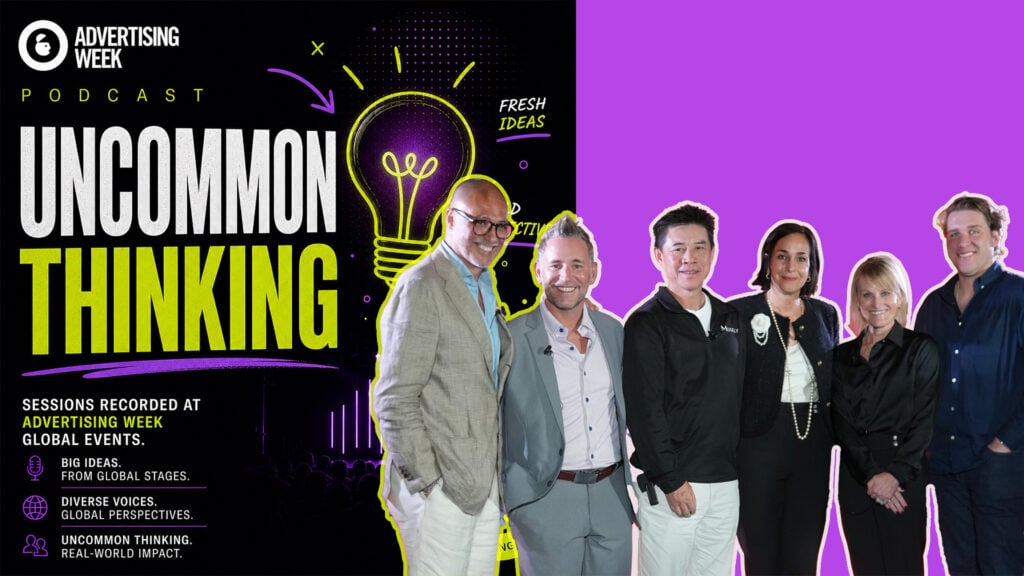
On this panel presented by Citi Commerce Media, Quentin George, Distinguished Partner at McKinsey & Company, joins Jeff Chwast, General Manager of Citi Commerce Media; Jack Jia, Founder and CEO of Musely; Maryam Paez, Head of Marketing & Loyalty at Paze; Jennifer Philo, Global Vice President, Digital Commerce and Partnerships at Blackhawk Network; and Joe Groter, Vice President of Commerce Partnerships at Publicis Media to discuss what financial media networks must deliver for advertisers. The conversation examines how transaction insights, relevant offers and payment capabilities can work together to serve customers.

AW Playmaker Award: EA’s Troy Smith
As part of the AWPlaymaker Awards, AW360 spoke with Troy Smith, North American Athlete Marketing Lead at EA, about the evolving role of athletes as creators.

Gen Z’s Problem With AI Marketing Isn’t What Marketers Think
Marketers are moving quickly with AI, but I’m not sure enough are asking what consumers think until after the work is already done.