What Happens When Out-of-Home Gets Easier to Measure?

By Becky Johnson, Advertising Week Writer & Podcast Host
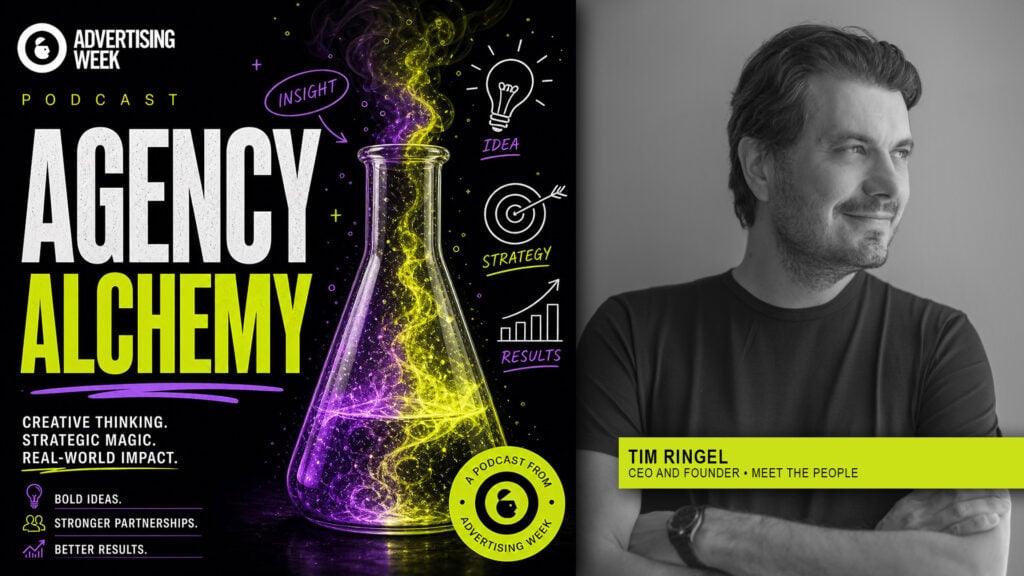
Out-of-home advertising has a familiar advantage: people encounter it while doing something they already planned to do. They are walking to work, waiting for a train, heading to a game, or moving through their city. On Modern Marketing and Measurement, we spoke with Chris Grosso, CEO of Intersection, about the harder question for marketers: how to buy those placements efficiently and compare their results with the rest of a media plan.
Intersection works with cities and transit authorities, including TriMet in Portland, and operates LinkNYC kiosks in New York. Chris sees those assets as places for both advertising and useful content. A train arrival time can draw someone’s attention on a platform; a live game or a local creator’s work can give people a reason to look at a screen they pass every day.
Buying that space is changing, too. Intersection helped create Place Exchange so digital buyers could access out-of-home inventory through the platforms they already use. It has since introduced a form of header bidding that makes its inventory available to multiple supply platforms simultaneously. That addresses a practical problem: a marketer planning across several channels should be able to consider out-of-home without building an entirely separate buying process.
Measurement is where Chris sees the next big shift. Current industry estimates draw on information such as street traffic, pedestrian counts, transit ridership, and mobile panel data to forecast how many people are likely to see an ad. Marketers can also commission studies that look at what exposed audiences do afterward, including whether they visit a store or an advertiser’s website. Those methods provide useful information, but a forecast is different from reporting what a campaign actually delivered.
“Getting measurement right is going to be a huge unlock for this industry,” Chris says. An industry measurement program being piloted with Ipsos aims to provide both forecasts and delivered impressions. Chris believes the latter will give agencies a better input for media mix models and make it easier to evaluate out-of-home alongside television and other channels. His expectation is that stronger measurement will help the medium earn a larger share of budgets; the pilot has yet to establish that result.
A cleaner data feed still cannot decide where an ad belongs or what it should say. Chris sees AI helping planners sort through a fragmented set of placements and adapt creative to different formats. He is much less convinced that it can come up with the original idea. That distinction matters in a medium where the setting is part of the message: an ad on a commuter’s route serves a different purpose from one beside a marathon crowd.
Chris describes New York’s marathon as Intersection’s highest revenue day of the year. The route fills with people, and advertisers want to be present for a day the city shares. That is a compelling reason to buy out-of-home, though it is not a substitute for measuring what the buy achieved. As the channel becomes easier to purchase and compare, marketers will have a better chance to judge both sides of its value: how it performs and what it means to show up in the right place.
You May Also Like

There Is No Cheat Code in Marketing
Marketers have often been guilty of reaching for a shortcut. Every era seems to produce a new way of trying to work around the system, from hidden text and keyword stuffing to buying followers, clickbait headlines and gaming social algorithms. The tactics change, but the goal is usually the same: find the loophole, beat the platform, get the result faster.

A Very Bearista Christmas
Starbucks’ Bearista is bringing friends for Christmas.
Out of Home Is Effective, and Chris Grosso of Intersection Has the Receipts
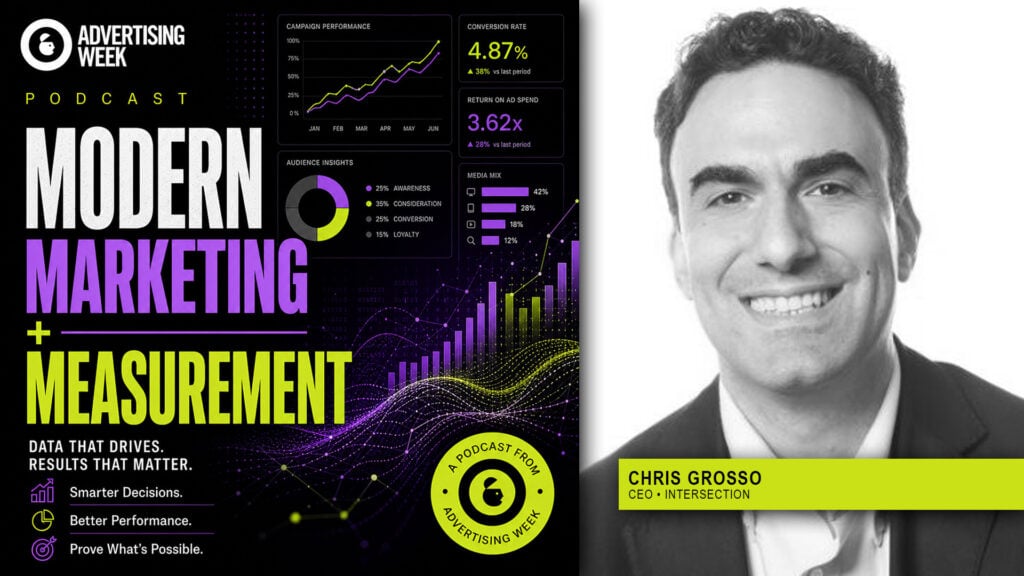
In this episode of Modern Marketing and Measurement, we talk with Chris Grosso, CEO of Intersection, about making out-of-home advertising easier to buy and easier to measure.