

5 Reasons Marketers Should Harness 3D Printing

By Shaun Edwards, Managing Director, Pink Sparrow
Thanks to the latest 3D printing technology, moonshot ideas that were once dismissed because of prohibitive expense, time or logistics can now be executed simply by punching numbers in on a keyboard.
The Walt Disney Company recently announced it would make major new investments in its theme parks. The company will presumably use 3D printing technology to create new attractions because it’s the fastest, most cost-efficient manufacturing process. Meanwhile, earlier this month, NASA unveiled an ambitious plan to use 3D printing to build structures – even houses – on the moon, possibly as early as 2040.
Adidas, Hasbro, Amazon, and Disney are just some of the companies that have been experimenting with using 3D printing to create new products, and the trend is likely to accelerate as the technology becomes more accessible. 3D printing has revolutionized the way products are designed and produced, allowing more flexibility in the manufacturing process than ever before.
The good news for marketers is that the most cutting edge 3D printing technology doesn’t require expensive and bulky machinery, making it within reach for companies of any size. It’s now faster, easier and more affordable for agencies and brands to create compelling retail environments, pop-up activations and personalized promotions than ever before.
Here are 5 reasons marketers should harness 3D printing:- It’s sustainable. Everyone is looking for ways to be more sustainable and 3D printing is one way to do it while keeping up with emerging technology and on-demand production. 3D printing, which is additive, produces little to no waste, particularly when compared to traditional foam sculpting. While it’s still in its early stages, some 3D machines are capable of printing using recycled materials, which would obviously make the process even more sustainable.
- It’s fast. 3D printing provides an efficient way to create stunning environments and immersive experiences with shorter turnaround time and without all of the back and forth with clients. With the newest rapid, state-of-the-art, large-scale 3D printing technology, brands are able to produce large-scale structures at an unprecedented speed (30x faster than traditional systems). It’s now possible to produce components with intricate finishes within hours or days rather than weeks.
- It’s cost-effective. By leveraging localized 3D printing facilities, transportation costs can be reduced or eliminated. It helps customize products with lower labor costs. It’s now possible to create a custom giveaway on the fly at an economical price. Of course, longevity is an extension of value. Traditional fabrication techniques are not proving to be long-term solutions.
- It reduces risk. In the past, marketers might spend money for a sculptor to take a month to produce a mold in order to create a particular object. Then, after all that time, a client might complain that it doesn’t look enough like the original design. Back to the drawing board, and more iterations and experimentations, without any guarantee of success. With its accuracy and reliability, 3D printing is inherently risk-averse because it removes the layer of subjectivity, significantly reducing the margin of error.
- It benefits from AI. Many of the new 3D printing machines use AI technology and it’s only going to become more common. Generative design allows designers to input complex shapes and forms based on a set of parameters and use AI to create 3D models. Overall, AI helps to streamline the 3D printing process, making it smoother and more efficient. AI technology can help predict an error in the process, which also helps to reduce risk. When you’re two hours into a 12-hour print job, it’s nice to have AI scouting the future for potential errors.
Key takeaway: Capabilities that seemed impossible only a few years ago are now becoming a reality thanks to the new technological advances of 3D printing. Given its sustainability and lower risk, 3D printing is an essential tool for brands and agencies looking to personalize and elevate the consumer experience.
You May Also Like
A Creator Brief Should Make the Next Decision Easier
A creator campaign brief should tell a team what it needs to learn before it spends the next part of its budget. That sounds straightforward. Yet a list of videos, posting dates and preferred formats can leave the most consequential question unanswered: what decision will this work help us make?
The Sameness Trap — Why the Brands Breaking Their Category’s Unwritten Rules Will Outshine the Rest This Season
Seasonal advertising tends to converge on the same safe, predictable formula within each category, so brands that follow it blend into the noise they’re paying to cut through.
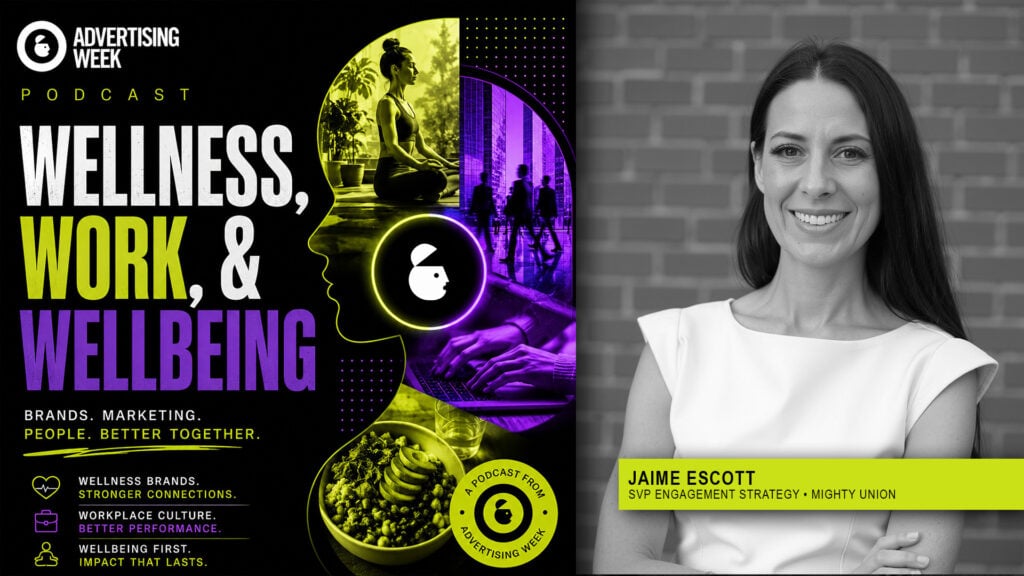
Healthcare Websites Need to Start Thinking Like Their Patients, Featuring Jaime Lyons of Mighty Union
In this episode of Wellness, Work & Wellbeing, we’re joined by Jaime Lyons, SVP of Engagement Strategy at Mighty Union, to discuss why hospital websites need to evolve beyond traditional marketing platforms.