




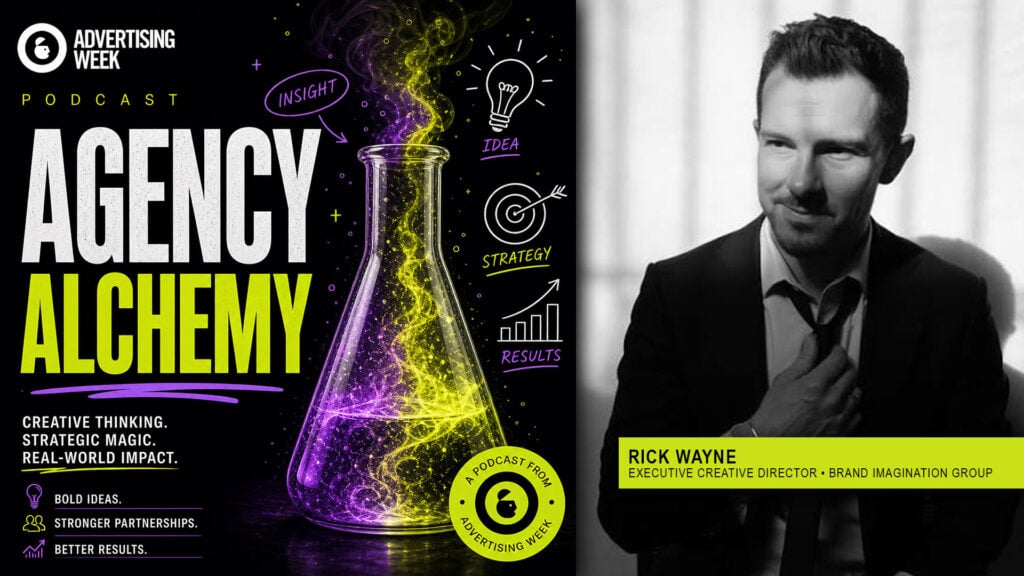
What happens when Hollywood filmmaking collides with the agency world? Rick Wayne, Executive Creative Director at Brand Imagination Group, joins Agency Alchemy to explore why the traditional agency model is struggling to keep pace with modern creativity and what might replace it.
Drawing on his background as a filmmaker and director, Rick discusses the growing convergence of advertising and entertainment, why cinematic work is about intentionality rather than budget, and how creative directors are evolving from arbiters of taste into builders of creative systems. He also explains why brands need to respect the language of individual platforms, why culture must be earned rather than manufactured, and why the future will belong to creative organizations that can combine speed, taste, craft, cultural fluency, and execution without sacrificing the original idea along the way.
Five Key Takeaways
1. The traditional agency assembly line is becoming a liability. Rick argues that siloed structures can slow ideas down and dilute them as they move from strategy to creative to production. His alternative is a multidisciplinary “symphony orchestra” model in which storytelling, design, production, social, and experiential work together from the beginning.
2. Cinematic advertising isn’t about spending more money. With high-quality production technology widely accessible, visual polish alone is no longer differentiating. What makes work cinematic is intentionality: the choices around story, pacing, emotion, framing, and preparation that make an idea feel crafted rather than merely expensive.
3. Creative directors increasingly need to design systems, not just approve ideas. Modern creative leadership stretches across film, social, creators, technology, culture, and AI. The job is becoming less about judging individual executions and more about understanding how an idea can live coherently across an entire ecosystem.
4. Brands cannot manufacture their way into culture. Audiences are extremely good at recognizing when a brand is borrowing cultural aesthetics without earning its place. Rick argues that stronger work begins with genuine human truths, communities, behaviors, and stories rather than attaching a celebrity or trend to a product and calling it relevance.
5. Platform adaptation isn’t the same as platform-native creativity. Taking one beautifully produced commercial and using technology or AI to resize it for every channel misses the point. TikTok, Reddit, television, social video, and other environments have their own expectations, and respecting those expectations is part of respecting the audience.
Listen & Subscribe