




Catch Them Forever: How Pokémon Became the World’s Most Resilient Brand

By Kyle Whybrow, Executive Creative Director, Elmwood London
Thirty years. That’s how long Pokémon has occupied the cultural conversation.
Not as a relic, not on life support from nostalgia alone, but as a genuinely active, commercially dominant force. As Pokémon Go marks its tenth anniversary this July, it’s worth stepping back and asking the question every brand strategist should be obsessed with: how does a franchise born on a four-shade Game Boy screen become, by most measures, the highest-grossing media franchise in human history?
The answer isn’t luck. It’s architecture.
The Mythology Was Built to Scale
When Satoshi Tajiri pitched Game Freak’s original concept in 1989, he was encoding something far more durable than a game mechanic. He was encoding a relationship between a child, a creature, and the act of discovery.
The “gotta catch ’em all” tagline is often dismissed as marketing shorthand, but it is, in fact, a perfect articulation of compulsion, completionism, and community rolled into six words. No brand consultant has done better work.
The original 151 Pokémon were designed with obsessive intentionality: varied enough to create distinct fan loyalties, simple enough to be drawn by a child, strange enough to spark imagination. That tension is the load-bearing wall of the entire franchise. Every strategic decision since 1996 has been made around preserving it.
The Generational Handshake
Here’s what separates Pokémon from every other franchise that has tried to play the long game: it doesn’t ask you to stay. It asks each generation to arrive fresh, find their own entry point, and claim ownership. Red and Blue belonged to millennials. Diamond and Pearl to older Gen Z. Scarlet and Violet to children who weren’t alive when Pokémon Go launched. Each generation gets their starter, their rival, their Champion moment. And the brand gets a new cohort of evangelists.
This is deliberate product architecture. The games are designed to be complete standalone experiences, not sequels demanding prior knowledge. The anime resets its protagonist. The trading card game constantly rotates its competitive meta. The brand never says “you should have been here at the beginning.” It says “here is your beginning.”
Meanwhile, the parents who played Red and Blue in 1996 are now the ones buying the cards for their kids, watching the animated specials, tearing up at the anniversary campaigns. Pokémon doesn’t just span generations. It connects them. That is an almost impossible brand achievement, and The Pokémon Company has executed it with rare discipline.
Pokémon Go and the Decade That Rewrote the Rules
When Niantic launched Pokémon Go in July 2016, it didn’t just break download records. It proved something the industry had debated for years: that augmented reality, done right, could dissolve the boundary between screen and street. Within 72 hours of launch, it had more daily active users than Twitter. People were walking into fountains. Governments were issuing public safety notices. A brand born in the nineties had physically moved millions of people out of their homes.
A decade on, Pokémon Go remains a cultural institution because Niantic built community infrastructure beneath the spectacle. The raid system required cooperation. Community Days created recurring calendar rituals. Go Fest became a genuine live event franchise spanning continents. The game evolved from a novelty into a social platform, and that platform has now outlasted the apps that were once called its competitors.
What Pokémon Go demonstrated, and what its tenth anniversary crystallises, is that the franchise’s greatest strength is its ability to meet people where they are physically, technologically, and emotionally. It didn’t wait for players to come to a console. It came to them, in the park, in the street, in the world they already inhabited.
The Strategy Hiding in Plain Sight
From the outside, Pokémon can look like it succeeds by accident. But the brand strategy is sophisticated and consistent: maintain the core myth, lower every barrier to entry, create systems that reward long-term investment, and never let any single platform become the whole story. Games, cards, anime, film, mobile, live events and merchandise. Each channel recruits and retains different audiences, and each feeds the others.
The Pokémon Company also understands scarcity in an age of infinite content. Limited card prints. Timed raid windows. Seasonal releases. In a world where attention is the scarce resource, they manufacture moments worth showing up for.
Thirty years in, the franchise isn’t coasting. It’s compounding. Every new child who chooses their first starter is making a decision that, statistically, will follow them for life. That’s not marketing. That’s mythology.
And mythology, built right, doesn’t age.
You May Also Like
The Power of the Transaction
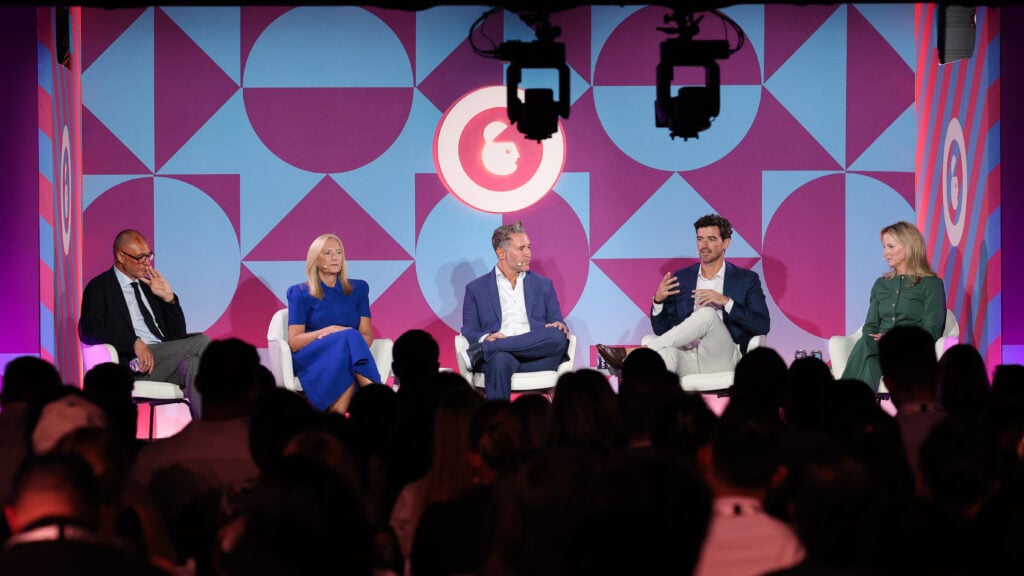
A click can suggest interest, but a transaction shows where someone chose to spend. In our Advertising Week New York session, “The Power of the Transaction,” the leaders behind Citi Commerce Media discussed how purchasing data can help brands identify audiences, deliver relevant offers and assess what happens after an advertisement.

How to Find Authentic Experts in a World of Ai-Generated Content
As AI-generated content floods the internet, how do we know who’s actually an expert anymore? Why businesses need better ways to distinguish genuine human expertise from AI-generated noise.

Brands Can Scale Creator Content Without Sacrificing Authenticity
With platforms and technology providers promising easier discovery, faster campaign setup, and more efficient distribution, creator marketing is starting to look more like the rest of digital advertising. For brands managing a growing number of creator relationships and assets, the appeal is obvious. But it also raises a reasonable concern.