




DMEXCO 2026: AI Hype Is Out. Proof Is In

By R. Larsson, Advertising Week
DMEXCO has just wrapped up in Cologne, and this year it felt different from past editions. Less flash and more substance. The AI hype is finally cooling off, and you could feel it in the halls: marketers aren’t interested in automation for its own sake anymore. They want data they can trust, context that actually means something, and proof that the money they’re spending is working.
The sessions reflected that shift. Agentic AI came up constantly, but so did the less glamorous stuff: getting data connected properly, working across teams and platforms without everything living in siloes, and tying campaigns to real business results. Trust in media buying was another recurring theme, as the industry continues to grapple with transparency, measurement, and making sure investment can generate the greatest impact.
If there was one takeaway from DMEXCO this year, it was that the conversation around AI and advertising is becoming less about what the technology could do, and more about what it can truly deliver.
Chris Hogg CRO, Lotame
“DMEXCO has always been a strategic event for us. Beyond the opportunity to connect with your clients and partners, it offers a valuable perspective on the European market, giving us a clear view of the challenges businesses are navigating, as well as, more importantly, the opportunities emerging across the market.
For us, staying closely connected to the European ecosystem is essential, and DMEXCO plays an important role in helping us understand, engage with, and respond to the region’s evolving needs ahead of the final quarter of the year. This is particularly important as marketers look for better ways to connect data and audience signals to understand changing consumer behaviour and make more informed decisions.”
Adrien Boyer, SVP EMEA at Seedtag
“What stood out the most is how fast the industry is moving beyond basic automation into an environment where AI agents can evaluate complex, unstructured context and dynamically optimise campaign delivery in the moment. This week reinforced that the future of media buying lies at this intersection, combining neuroscience principles with agentic AI to deliver highly impactful, intent-driven brand engagement right when consumer attention is highest.”
Alexander Igelsböck, CEO & Co-Founder of Adverity
“DMEXCO underlined that the conversation around AI in marketing is now in its practical application era. There was no shortage of discussion about agents, automation and new capabilities, but what was noticeable was the growing recognition that AI only creates real value when marketers can trust the data and context behind the answers it gives them.
“Marketing data is still fragmented across channels, platforms and teams, and simply connecting that data isn’t enough – AI also needs to understand how metrics relate to one another, what has changed over time and what is happening around them. That means understanding not just the numbers, but the objectives, decisions and external factors that give them meaning, so AI can produce answers that are genuinely informed rather than just confidently wrong. Much of that knowledge still sits in people’s heads, but by bringing it into a shared, structured foundation, marketers and AI agents are able to make decisions from the same understanding.
“The conversations at DMEXCO proved that the industry is increasingly focused on solving that challenge, and that’s an encouraging shift towards genuinely useful implementation that will fundamentally change the way AI is used in marketing and advertising now, and in the future.”
Nick Henthorn, Global Head of InfoSum, Data and Technology Solutions, WPP
“My conversations at DMEXCO showed the idea that the industry has moved beyond asking what AI can do and is now much more focused on how to turn it into measurable business growth. Across the discussions in Cologne, a consistent theme was that the advantage will come not from having more data, but from being able to connect high-quality, current signals and activate that intelligence across the marketing journey.
“What was also clear is that businesses are looking for ways to collaborate around data without giving up control of it. That is accelerating the shift away from static, centralised identity approaches towards more decentralised models, where first-party data can be used securely and efficiently. For retailers, media owners, and other data-rich organisations, the opportunity extends beyond improving advertising relevance to creating entirely new, high-margin revenue streams.”
Peter Wallace, CRO, Onetag
“Marketers still want to make better use of data, signals and outcomes, and AI is increasingly seen as the tool to help them do that. Change is happening quickly, so people wanted to talk about how the industry is adapting and solving the challenges that are emerging.
“For me, one thing that came through strongly was the potential of using the intelligence layer to improve connectivity between data, channels and platforms. Ultimately, this can help the industry better validate what quality media really looks like, while supporting marketers to achieve their goals and prove outcomes. I also see how, as we embed agentic AI into our workflows, it could strengthen partnerships between players. That’s important because no one can fully take advantage of this technology in isolation.
“There was also a real sense that, while AI is disruptive, it will drive more innovation. My feeling is that by next year, we’ll be looking at that disruption with a lot more optimism.”
Ann Tarasewicz, CEO Axis Marketplace
“One of the clearest takeaways for me from our time in Cologne was that the conversation felt less about new tech and more about trust. Nearly every conversation I had centred on accountability: not ‘what can your platform do’, but ‘what can you prove’. It’s notable that advertisers are actively trading reach for confidence, looking for greater certainty around where their budgets are going.”
DMEXCO 2026 Takeaway
The message from Cologne was clear: the industry is entering a more pragmatic phase, where innovation alone is no longer enough to command marketers’ attention. AI will remain central to the conversation, but its value will increasingly be judged by what sits behind it and what comes out the other side — trusted data, better connectivity, greater transparency and measurable business results. After several years of asking what the technology might make possible, marketers are starting to ask the question that ultimately matters more: can you prove that it works?
You May Also Like
The Privacy Payoff: What 11,000 Consumers Want Marketers to Know
Usercentrics’ Maureen Prado explores what consumer research reveals about data sharing, AI personalization and meaningful consent.

The Next Era of Commerce Media: How Tractor Supply Is Building for What’s Ahead
On this fireside chat presented by Koddi, Nicholas Ward, President and Co-Founder of Koddi, joins Tori Haynie, Director of Retail Media and Digital Initiatives at Tractor Supply Company to discuss how the retailer is building its media network around the people it serves. From first-time pet owners to families caring for livestock and land, the conversation explores how understanding customers can guide advertising that helps them shop.
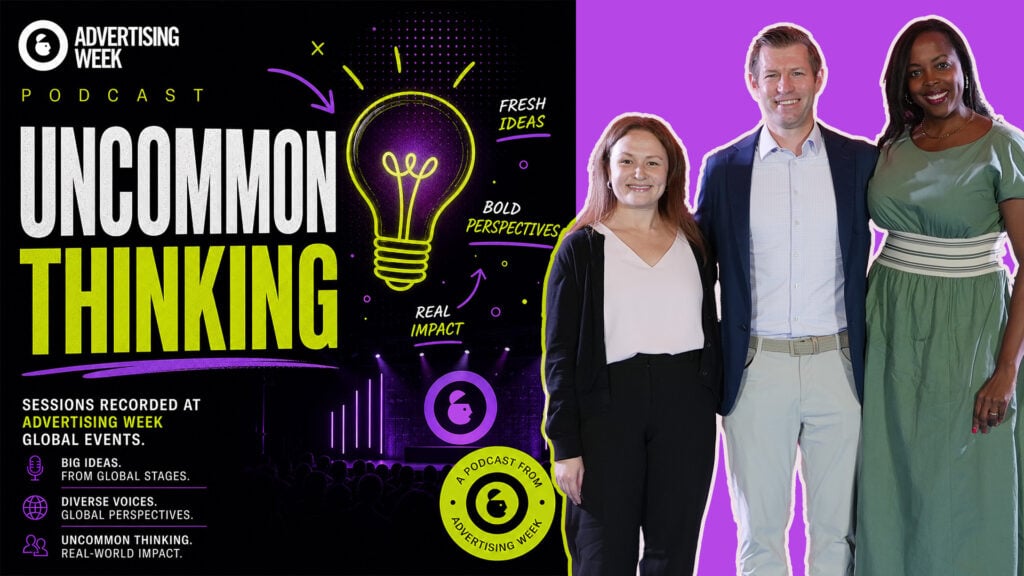
The Other Side of the Screen: Brand-Building through Premium Content
On this panel presented by Amazon Ads, Chris Fuller, Director of U.S. Financial and Consumer Services Advertising Sales at Amazon Ads, joins Jodie Hayes, Vice President of Integrated Investments at Havas Media, and Lauren Anderson, Head of the U.S. Brand Innovation Lab at Amazon Ads to discuss what attention adds to streaming TV planning. Reach and frequency show how often an ad appears, but understanding the content and the audience’s engagement can help brands make more informed investments.