




Five Counterintuitive Advertising Plays for a Winning NFL Season

By Jessica Dudley, VP of Analytics & Operations, Liftoff
NFL season is one of the biggest stress tests in user acquisition.
Competition intensifies. Budgets expand. Every campaign is expected to capitalize on one of the biggest recurring moments on the advertising calendar. And under that pressure, most teams lean into one of two instincts: lock every lever down, or hand the keys to the algorithm entirely.
Both instincts are dated.
Changes in the privacy landscape have reduced industry reliance on deterministic signals, pushing mobile marketing toward probabilistic, contextual, and modeled data at scale. The playbooks built when marketers could target directly don’t hold up in an environment where the model is doing most of the discovery. The teams pulling ahead aren’t picking between control and autonomy. They’re getting sharper about which constraints belong to them and which ones belong to the machine.
Not every constraint is doing the same job. Some starve the system of the signals it needs to find valuable users. Others carry business context the model can’t infer on its own. The advantage comes from knowing which is which.
What machine learning should own
The 2026 World Cup made this visible in real time.
Across sports betting apps during open match windows, roughly 30% of installs happened in the 12 hours after matches ended, according to Liftoff data. Not while matches were happening. During the quiet hours when many campaigns had reduced or paused spend. The bettor who downloads at 7 a.m. and places their first wager three hours later exists. Most hand-built campaigns aren’t able to find them.
Those users aren’t anomalies. They’re exactly the opportunities machine learning is designed to uncover.
Modern models excel at finding patterns humans wouldn’t think to look for. Restricting campaigns around assumptions about when users convert, where they’ll engage, or what audiences they’ll come from can quietly narrow the model’s ability to discover high-value users. What looks like discipline ends up limiting performance.
One caveat matters here. This only works when the model has something to learn from. Campaigns with insufficient data volume can’t lean on ML the way established programs can, and early-stage teams often over-invest in autonomy before their models have enough signal to work with. If your campaign is under-fueled, feed it more. Don’t unwind the constraints yet. The plays below work best in campaigns that have crossed the volume threshold where the algorithm can actually learn.
What you should own
Some constraints are fundamentally different from the ones the model can find on its own.
Super Bowl Sunday is one of the most compressed and volatile advertising environments of the year. Inventory prices swing hour to hour. Competitive promotions appear and disappear throughout the game. Operational and regulatory considerations can require advertisers to accelerate or slow spend within specific windows. And the business goal itself may require timing precision the model can’t infer. If an app needs users to install before kickoff to participate in a halftime food delivery promotion, the algorithm has no way of knowing that unless you tell it.
These aren’t signals the model can find in campaign data. They’re business realities that exist outside the algorithm. Campaign pacing tools have become valuable across the industry for this exact reason. They let marketers layer business context onto machine learning rather than override it. Automation performs best when people supply the context it can’t generate on its own.
Your oversight also matters when the data itself raises questions. AI optimizes toward the strongest signals it finds, but not every strong signal is a good one. An unusual CTR spike. A sudden performance improvement that doesn’t translate downstream. Results that seem too good to be true. Those are the moments where pattern recognition matters. You can catch when the system is being gamed rather than succeeding.
The strongest NFL campaigns don’t ask whether humans or machines should be in control. They define where each one adds the most value.
Five plays for the season ahead
- Give machine learning room to find what you can’t predict. Challenge inherited assumptions about audiences, schedules, and conversion windows. Run A/B testing before adding constraints.
- Use lightweight dayparting to add business context, not to override the algorithm. Game schedules, promotional windows, competitive activity, inventory pricing, and operational realities are signals the model can’t see on its own.
- Refresh your targeting strategy as often as your creative. Constraints that improved performance last season may be limiting the model’s ability to find new high-value users this one.
- Treat creative as a source of discovery. Don’t assume what works on one partner or channel will translate to another. Test broadly, trust the data, and let performance decide what scales.
- Protect budget for experimentation. Reserve spend to test new optimization approaches, inventory, and features. The strongest teams challenge their assumptions instead of relying on last season’s playbook.
The question worth asking every week
As the NFL season unfolds, every optimization decision comes back to a simple test.
Is this constraint something the model can’t know? Or is it something I’m simply more comfortable controlling?
The answer determines whether a constraint sharpens performance or limits it. Machine learning doesn’t replace human judgment. It changes where that judgment has the greatest impact.
You May Also Like

Podcaster Brinda Adhikari on Building Trust Through Curiosity, Not Correction
Brinda Adhikari, a journalist and the co-host of the podcast “Why Should I Trust You?,” joins host Drake Baer to discuss what it takes to build trust in science and public health across deep divides.
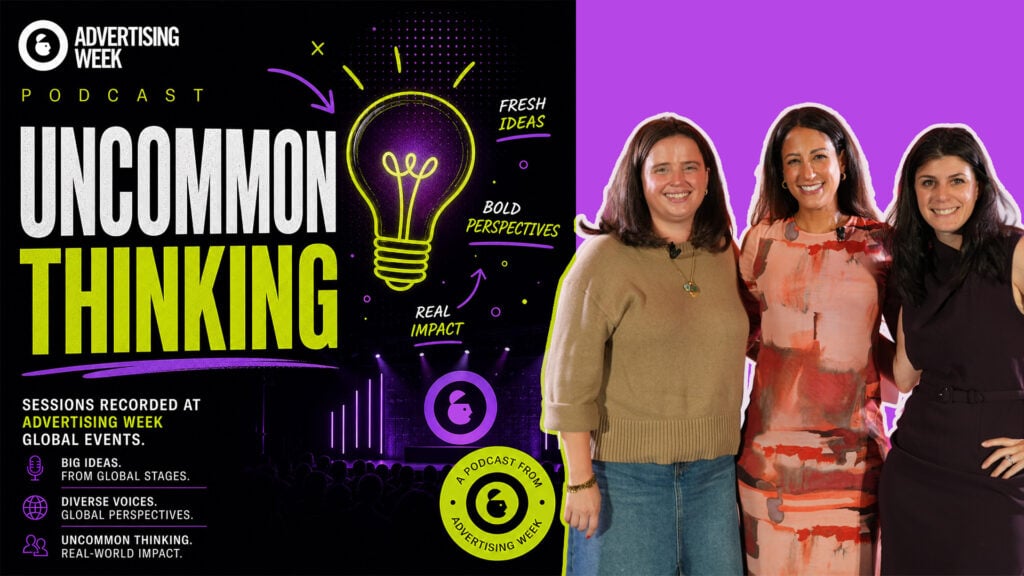
Add to Cart, Add to Culture: The Full-Funnel Commerce Evolution
Joining us is Abhay Singhal, co-founder and CEO of InMobi Advertising. Abhay explains what he means by agentic advertising and where early experiments with conversational ads are taking the industry.
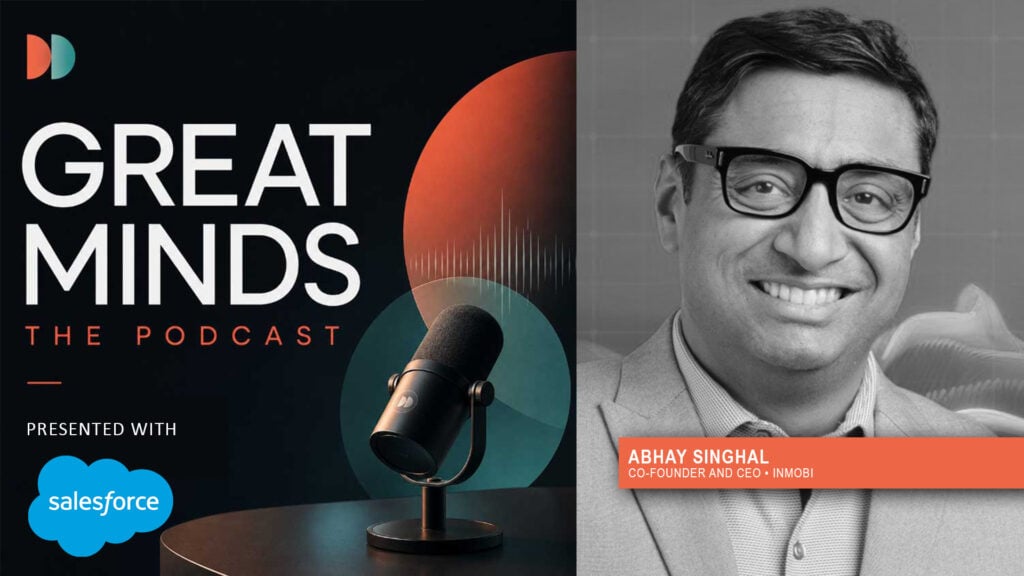
When the Customer Sends an Agent with Abhay Singhal of InMobi & InMobi Advertising
Joining us is Abhay Singhal, co-founder and CEO of InMobi Advertising. Abhay explains what he means by agentic advertising and where early experiments with conversational ads are taking the industry.