




Gen Z’s Problem With AI Marketing Isn’t What Marketers Think

By Paula Catoira, Rival Technologies
According to the Interactive Advertising Bureau, 82% of ad executives believe Gen Z and millennial consumers feel very or somewhat positive about AI-generated ads. We recently asked Gen Z consumers how they actually feel, and we got almost the opposite response.As CMO of a company that helps global brands understand their consumers, I think about both sides of this equation. I’m pushing my own team to experiment with AI while also watching how quickly consumer expectations around it are changing.
In our study of 901 Gen Z consumers in the U.S. and Canada, 74% said they react negatively when they realize a brand’s marketing was made with AI. Half have unfollowed a brand because of AI marketing, 48% have unsubscribed from emails or texts and 43% have stopped buying from a brand altogether.
Marketers are moving quickly with AI, but I’m not sure enough are asking what consumers think until after the work is already done. Customers are already making judgments about how brands use AI, and those judgments can affect whether they follow, subscribe or buy.
“Should we use AI?” is too broad a question
Marketing Dive recently reported on Dollar Shave Club using generative AI to produce creative faster and at lower cost, including an AI-powered campaign that they said cost just $400 and called the most successful in the brand’s history.
Gen Z is more willing to accept AI when it takes on mundane, functional tasks or helps a person do their job. What they don’t seem to like is when AI starts replacing what they view as uniquely human, like art, storytelling, creativity or a voice they expect to come from a person.
That range of opinions comes through in how they talk about it. One 25- to 29-year-old called AI marketing “a cheap way out for companies to cut employees,” while another said, “AI can assist in the development but should not be the sole product.” Others talked about paying artists, cutting corners and the jobs that might otherwise have gone to people.
There are obvious efficiencies here, but clearly “Should we use AI?” is too broad a question. Marketers also need to consider where they are using it, what role it plays in the finished work and what that choice may communicate to the audience. For Gen Z, replacing a writer, designer or other creative professional can become part of how they judge the brand.
Gen Z’s AI backlash isn’t evenly distributed
The youngest Gen Zers (18-20 years old) in our study were actually the least negative about AI, with 44% saying they react very negatively. This rises to 47% among 21- to 24-year-olds and 54% among those ages 25 to 29.
Geography also plays a role, and the differences would likely be even more pronounced if compared to other global regions. In our study, we saw differences even between Canada and the United States. In Canada, 84% of Gen Zers in our study react negatively to AI marketing, compared with 65% in the U.S. Canadian Gen Zers (48% vs. 38%) were also more likely to have stopped buying from a brand because of it.
A 19-year-old American and a 28-year-old Canadian may both fit neatly into a target audience or persona in a marketing plan, but their starting points on AI could be quite different.
What does your use of AI say about your brand?
I don’t want my team to stop experimenting with AI because Gen Z has reservations about it. But when we use it, I want to deeply understand our audience so we know exactly where experimentation could create problems. I also expect my team to stay involved throughout the process. We need to give AI the context it needs, review what comes back and make sure the final work still reflects what we think, not just what the AI produced.
Marketing history is full of reminders of what a misstep can cost, from New Coke in the 1980s to Pepsi’s more recent Kendall Jenner ad disaster. The consequences can go well beyond whether someone likes an ad or product, with real bottom-line costs.
I think marketers need to treat the decision to use AI as part of the brand experience itself. We saw why in our research, where Gen Z consumers connected AI-generated marketing with job losses, unpaid artists and companies cutting corners. Marketers may be thinking about speed, cost and what AI lets them produce. Some of the Gen Zers we talked to were thinking about who used to do that work and why the company decided AI should do it instead.
Audience research needs to be part of how marketers make these decisions. Even within Gen Z, we found meaningful differences by age and geography, which is a good reminder of how much can get lost when marketers make assumptions about an audience.
Ask more specific questions about AI
There is still a lot we don’t know. Does the reaction change when someone sees an actual AI-generated ad? Does knowing a person was involved make a difference? What about disclosure? There are also probably plenty of uses of AI that consumers simply don’t care about.
Simply asking whether Gen Z likes AI is not useful, and neither is asking just one time. The technology is changing quickly, and people are encountering it in more places and situations. We don’t know yet where all of those lines are, or whether Gen Z will draw them in the same places a year, or even a few months, from now.
About the Author
Paula Catoira is the Chief Marketing Officer at Rival Group, the parent company of Rival Technologies, Reach3 Insights and Angus Reid. She has over 20 years of experience in marketing and over a decade in the B2B SaaS industry. Prior to joining Rival Group, Paula worked as Chief of Staff for the CEO at Allocadia, leading strategic projects across the organization, advancing the company’s growth, and laying the foundation for a successful acquisition. As CMO at Rival, Paula is responsible for driving go-to-market strategy and execution, leading the marketing, sales development and revenue operations. Paula holds a bachelor’s degree in mechanical and industrial engineering and an MBA from IBMEC in Brazil.
You May Also Like
The Power of the Transaction
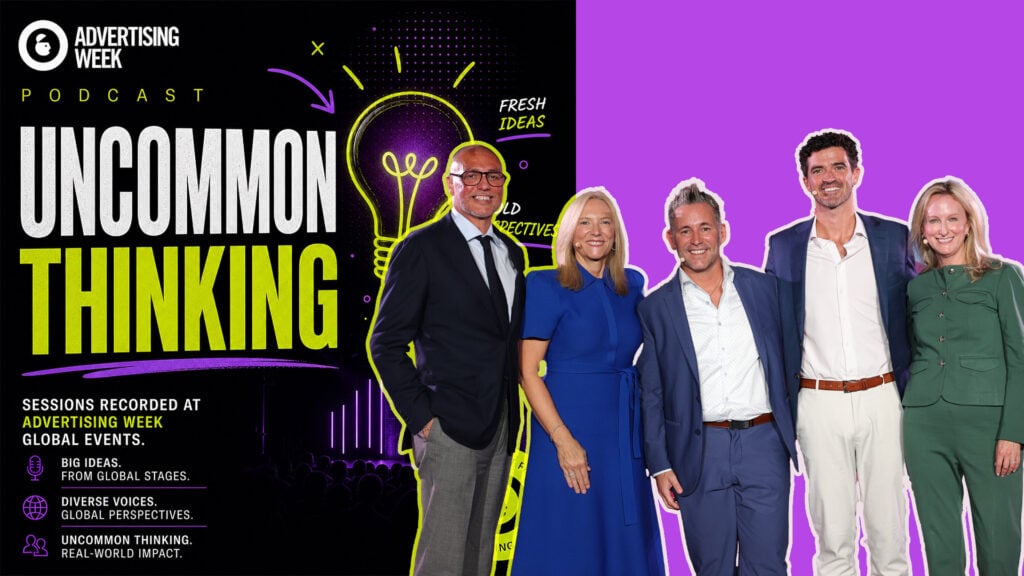
On this panel presented by Citi Commerce Media, Quentin George, Distinguished Partner at McKinsey & Company, joins Pam Habner, Head of U.S. Consumer Cards; Jeff Chwast, General Manager of Citi Commerce Media; Elyse Lesley, Head of U.S. Consumer Cards Marketing; and Ben Mackinnon, Founder and CEO of Kard to discuss what purchasing behavior can reveal about customers. The conversation explores how Citi Commerce Media can connect audience insights with relevant advertising and offers across the purchase journey.

The Business of Joy: Four Cultural Shifts Brands Can’t Ignore
As consumers navigate increasingly digitally saturated lives, one truth has become impossible to ignore: people are actively seeking moments that make them feel something.
The Entertainment Evolution: What Today’s Audiences Want Next
In this special session, presented by Xbox, we explore the changing expectations of today’s audiences, the growing influence of fandom and what the next generation of entertainment experiences means for brands.