


Healthcare marketing has a tendency to look and sound the same. Doctors, technology, awards, and claims of exceptional care dominate the messaging, particularly when regional health systems are competing with larger hospitals in major cities. But patients aren’t making decisions based on credentials alone. They’re looking for care they can trust, and that trust often starts with something more personal. Penn State Health and Pavone Group took a different approach, using storytelling, emotion, and a familiar regional symbol to challenge perceptions of local healthcare and give people a reason to look at the hospital differently.
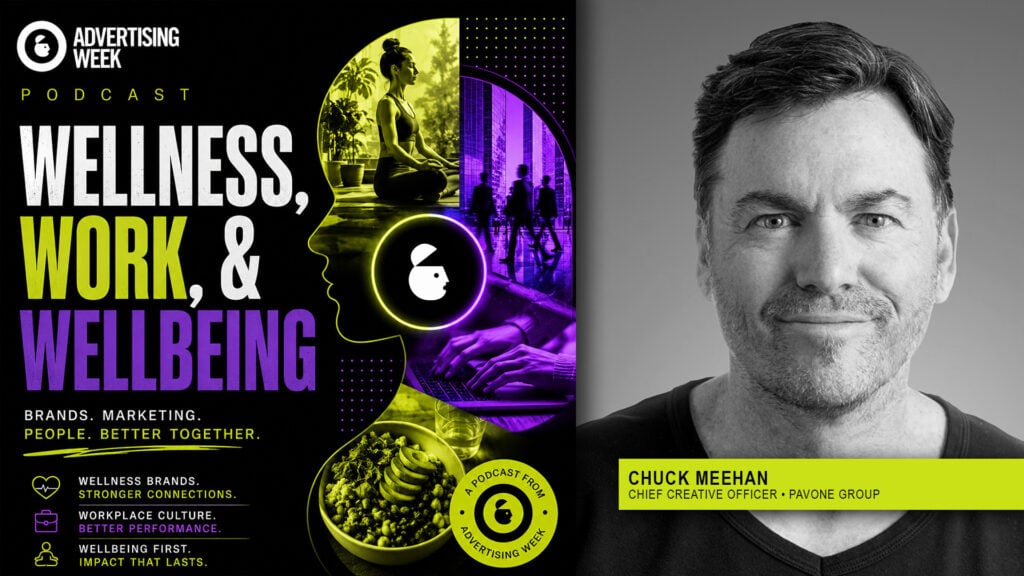
In this episode of Wellness, Work & Wellbeing, we’re joined by Chuck Meehan, Chief Creative Officer at Pavone Group, to discuss the storytelling behind Penn State Health’s Breakthrough Medicine Lives Here campaign. We talk about how the agency developed the cancer campaign’s memorable “Bell” spot, why the work deliberately moves away from traditional hospital advertising, and what it takes to make a serious healthcare message stand out during the Super Bowl. Chuck also shares how the team found compelling stories in unexpected places, why the campaign is expanding into heart and vascular care, and why good storytelling matters more than the length of an ad.
Five Key Takeaways
1. Regional hospitals need to change the story, not just repeat their credentials.
Penn State Health was facing a familiar challenge: convincing patients that excellent care was available close to home rather than requiring a trip to Philadelphia or Pittsburgh. The agency also needed to address perceptions surrounding its cancer services. Instead of relying on the usual hospital messaging about technology, physicians, and awards, Chuck and his team focused on stories that could change how people felt about the health system. The goal wasn’t to eliminate the facts, but to give people an emotional reason to care about them.
2. The “Bell” campaign made cancer care personal without starting with cancer.
The campaign’s centerpiece grew out of a simple idea: the bell a patient rings after cancer treatment sounds different from other bells. The commercial moves through familiar bells associated with the region before revealing the one that matters most to the story. For much of the spot, viewers don’t even know they’re watching a hospital advertisement. That was intentional. The creative uses curiosity, community, and a carefully timed reveal to make the message memorable, while reinforcing that advanced cancer care is available right where patients live.
3. Some of the strongest stories weren’t in the original script.
Not every compelling moment was planned. While filming Penn State Health’s cancer physicians together, Chuck saw an opportunity to portray them as a team of cancer fighters. Another film emerged from footage of a doctor preparing for his day in a locker room. The team created a familiar daily to-do list, with the final task being to save someone’s life. No operating room, elaborate equipment, or dramatic medical procedure was necessary. The contrast between an ordinary morning and an extraordinary responsibility did the storytelling.
4. A 60-second commercial can work when the story earns the time.
The “Bell” spot was originally part of a campaign planned around 30-second commercials, but Chuck and his team realized the story needed a full minute. That decision shaped the broader campaign, with longer films becoming a way to introduce additional service lines, including heart and vascular care. Despite the industry’s obsession with shrinking attention spans, Chuck argues that length isn’t the real problem. Advertising has to be interesting enough to keep people watching, whether it’s 15 seconds or 15 minutes.
5. Getting attention and keeping it are two different jobs.
Chuck describes two tests he applies to creative work: it needs to be disruptive enough to get someone’s attention and relevant enough to hold it. That’s particularly important in healthcare, where the message has to be both credible and emotionally meaningful. From the surprising opening of the “Bell” commercial to the quieter stories of doctors going about their work, the Penn State Health campaign shows how a strong story can make familiar subject matter feel different without losing sight of the care behind it.
Listen & Subscribe