NFTS: Love ‘Em or Loathe ‘Em, You Can Learn From Them

Participation is the key to maximizing potential impact and reach
By Matt Gray, Creative Director, Iris
NFTs. Just the acronym alone makes some roll their eyes so hard they could topple over. But others will tell you it’s the future of everything. Whatever your opinion, there’s no denying the impact they’ve had, and ultimately will continue to have. While the inflated hype cycle has started to fade, it would be a mistake to wave off NFTs as a passing fad or a flash in the pan. Sure, 95% of NFT “projects” will more than likely crash and burn, but there’s still a wide-open open opportunity to harness their innovative potential. And as we see it, that potential is intrinsically linked to participation.
While the way NFTs are built and run may seem counter intuitive to traditional marketing theory, I can promise you this: Beneath the whitelists, Discords and gas fees are some fascinating lessons in brand building. The best brands, hands-down, are consistently built on participation, and with tokenization driving a fundamental change in the relationship between creators and customers, the best NFTs are absolutely dripping in it.
Art is just the beginning…
Digital art was, and in many ways still is, the center of the NFT universe. But it goes deeper than that. Having a distinct visual identity and personality is paramount but where NFTs can go a step further is in the realm of storytelling (a word I’d argue we’ve collectively ruined as an industry, but that’s a topic for another day). The “lore” of a project and the overarching story is just as important as the art behind or within it. Recognizing that is key to understanding how and why communities form around these projects.
A holder’s NFT is essentially their character in the project’s story world, which they can be an active part of. Many create their own backstories, building on the central narrative, even impacting how the artwork evolves. It’s UGC on NOS. Sure, a brand can create one brand character –but now it could create thousands, with the community playing a key role in how a campaign evolves. In 2012, Iris created the first digital, fully customizable mascots for the Londond Olympic Games. Today, they could have been NFTs that rewarded holders with exclusive rewards or tickets to the Games depending on how they brought their character to life. It’s one of the tenets of participation branding: Get your market to do your marketing for you. But with NFTs it isn’t a goal, it’s woven into its DNA.
You can’t put a floor price on loyalty
Utility is essential to NFTs and that won’t change. They’re the benefits that come with ownership and therefore create a sense of justification, but they’re also where much of their future potential resides. While utility is what you get, loyalty is what it creates. And decentralization presents a whole new way to think about what loyalty is, as well as how we value it.
In a way, NFTs aren’t just tokenizing ownership of an asset like art, they’re tokenizing the relationship with the owner. Adding utility like staking rewards, exclusive access to events, and revenue sharing, gives loyalty a value that’s arguably greater than the sum of its parts. Today, most loyalty schemes are non-transferable and have no value beyond what the brand that offers it states it has. But imagine if you could sell your excess Virgin Air miles for a premium. Or put your Starbucks rewards out on the open market. Imagine if you had a new kind of ownership over your loyalty—and could wield it in a way that benefits you. This may sound counter-intuitive but giving customers more control over their loyalty will only serve to strengthen it.
A real role in culture
As an industry, we like to talk about shaping culture and inciting change. But NFTs and builders in the Web3 space are leaping ahead to show us how it’s done. Take the band Muse, whose new album will be the first chart-eligible NFT. Before you label it as such, this isn’t a gimmick—The average recording artist gives up at least 85% of their earnings to their label. NFTs flip that, giving artists a new way to raise funds outside the traditional structures, putting more money in their pockets while also building new levels of fan engagement.
But note that this isn’t exclusively applicable to the arts. Crypto leader, Ripple, has pledged $100m to tokenize carbon credits to bring more transparency to the market and bring scale to carbon removal projects. There are small start-ups tokenizing emission allowances so they can be bought and removed from circulation on the international carbon market, so big polluters can’t take advantage of them. Suffice it to say that there is enormous potential for NFTs to be used for greater, purpose-led initiatives when you look beyond the hype.
You May Also Like

A Creator Brief Should Make the Next Decision Easier
A creator campaign brief should tell a team what it needs to learn before it spends the next part of its budget. That sounds straightforward. Yet a list of videos, posting dates and preferred formats can leave the most consequential question unanswered: what decision will this work help us make?

The Sameness Trap — Why the Brands Breaking Their Category’s Unwritten Rules Will Outshine the Rest This Season
Seasonal advertising tends to converge on the same safe, predictable formula within each category, so brands that follow it blend into the noise they’re paying to cut through.
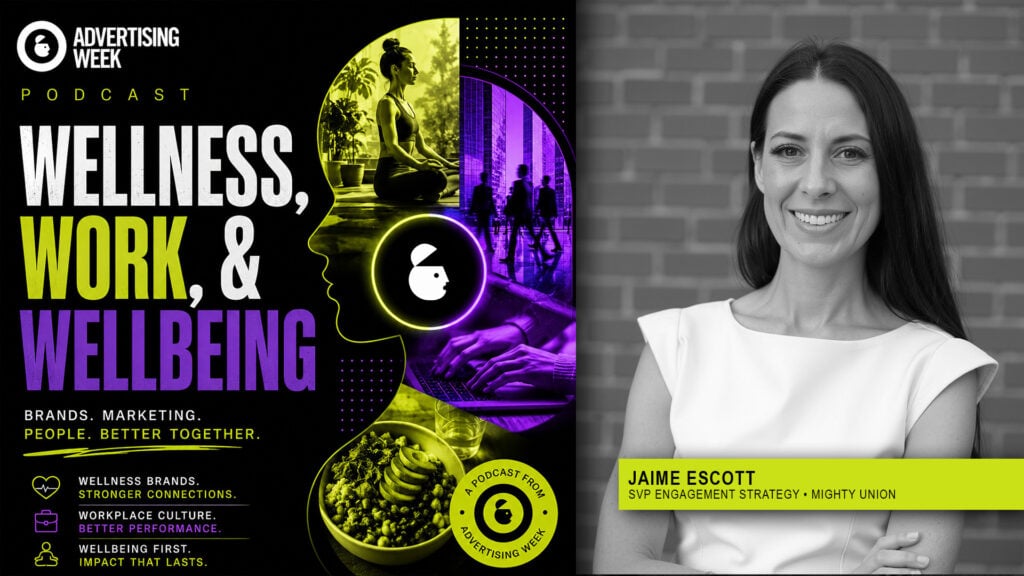
Healthcare Websites Need to Start Thinking Like Their Patients, Featuring Jaime Lyons of Mighty Union
In this episode of Wellness, Work & Wellbeing, we’re joined by Jaime Lyons, SVP of Engagement Strategy at Mighty Union, to discuss why hospital websites need to evolve beyond traditional marketing platforms.