The Best Agency-Client Relationships Are Built in the Trenches

By Jimmy Dietzen, VP, Creative Director, Manifest
THE ECHOES ARE GETTING AWFULLY LOUD
At this point, I’ve lived through a few eras of advertising. Not to carbon date myself, but my journey began when “digital” was the hot word in the ad world, back when agencies were bolting words like “Tribal” and “Proximity” onto their names to try to capitalize on it. In fact, Manifest, where I work now, was once part of this trend. But through every phase since, one thing still rang true: the value of an agency to a brand was clear, if not necessary.
I’m not writing this to wax poetic about the crusty old days. I’m writing it as a word of caution, because that belief is waning. It’s been deteriorating for a while now, and there are three culprits worth naming: shrinking marketing budgets, the rise of in-house creative teams, and, you guessed it, AI.
The math isn’t hard to math. There’s less money for creative, so clients bring creative in-house to make the work cheaper. They may not have the deep award-winning bench, strategic might, or production expertise an agency provides, but they can make it work, right? And then, like a gift from the Silicon Valley gods, they get AI. Suddenly they think they’ve got the most brilliant strategist alive and a limitless creative bench, all propping up the team for the price of a subscription.
It’s logical. I don’t blame them. And in all fairness, they have attracted some very talented creative people who I greatly respect. But they’re forgetting the one thing an agency gives them that none of this can. Separation.
As I’ve worked alongside more in-house teams over the last year, I’ve noticed the same challenge emerge. The closer any team gets to a business, the harder it becomes to separate what’s internally important from what actually matters to consumers. They’re too close. Too close to what the CEO said at the all-hands. Too close to the murmurs about a PE firm circling. And believe it or not, too close to the product itself.
Here’s where AI makes it worse instead of better. A team that’s already too close now runs those same assumptions through a model and gets them right back, polished and instant. Feed your own compromised truth into AI and it won’t push back. It’ll confirm. So the doubt never comes, the questions never get asked, and the work that should’ve been stopped sails straight through. The echo isn’t just loud now. It’s validated.
Now, the easy shot at an agency is that our separation is really just distance. That we don’t know your business well enough to matter. But that distance is the entire point. We don’t focus entirely on what the CEO said, because we serve the brief, not the org chart. Our knowledge of your product isn’t so granular that we fixate on the feature you just shipped that nobody outside the building finds exciting. We’re free to chase what actually moves a consumer to feel something, and then to buy.
More than ever, clients don’t realize they’re stuck in an echo chamber. And those echoes are now reaching consumers, which is where it gets dangerous. Separation is what buys back the clarity. It lets us ask the questions your own people won’t, or can’t, or would get in trouble for asking. It lets us serve the real truth instead of the compromised one corporate culture pours out. AKA the Kool Aid.
So a quick exercise. When was the last time your in-house team handed you a Don Draper holy $#!* moment? The insight you’d never have reached on your own, the idea that knocked you flat? I’m not saying it can’t happen in-house. But I’d bet my Claude account those moments are getting pretty rare.
Before your next campaign goes live, ask yourself a few questions: Who challenged our thinking? What assumptions are we treating as fact simply because everyone internally agrees? And are we making choices to avoid hard internal conversations, or are we doing what we firmly believe is right for the consumer?
These are important questions to ask. Because the work doesn’t work when all the consumer can hear is the echo.
—-
You May Also Like

Evolving Commerce Media: How Offsite Unlocks the Full Funnel
Commerce media spent the last decade proving one thing exceptionally well: onsite ads drive immediate conversions. But treating commerce media purely as a bottom-funnel sales tool leaves most of the customer journey untouched.
The Entertainment Revolution: Why Brands Need to Think Beyond the Screen
As gaming, streaming and social media reshape how audiences experience entertainment, marketers face a fundamental challenge: Learning to participate in culture rather than simply advertise alongside it.
More Than the Game: Earning a Place in the Fan Conversation
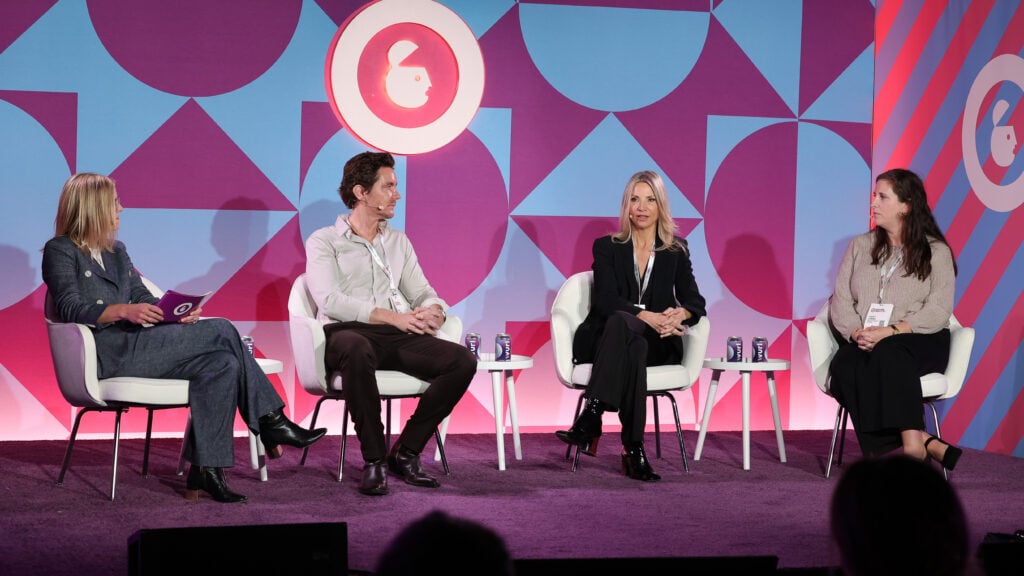
Ann Piper, Head of Sales for the Americas at Spotify, moderated the discussion with Angela Steele, Chief Client Officer, U.S. at WPP Media; Wes Harris, Director of Marketing for YouTube TV at Google; and Juliet Litman, Director of Talent and Operations at Spotify Podcast Studios.