




The End of Hybrid Work? Rethinking Return to Office

New Perspectives on the Future of Office Work
By Christine Olivas
It’s easy to get lost in the polarizing nature of our current Return to Office discourse. On one side, business leaders – saddled with costly leases and obsessed with observed productivity – have broadly insisted that workers come back to the office en masse. On the other, a diverse workforce – now accustomed to the flexibility, autonomy and comfort of remote work – has largely resisted the call to reoccupy the anodyne open floor concepts that dominated 2010s white collar offices.
Whatever middle ground existed was bulldozed by a rushed hybrid solution that failed to deliver any benefits of the in-office or remote work experiences. Given an RTO mulligan, 80% of managers say they would do things differently.
But most retrospectives fail to grasp the extent to which we collectively must reimagine office work if it can ever match the efficiency of working from home. Why live in expensive cities and commute to faraway office parks if everything done in-person could be accomplished from your desk at home? Why waste time in traffic to attend hours of video calls from an otherwise empty bullpen? Why go to “collaborate” with co-workers when no one is ever in the office at the same time? The math doesn’t add up, and the transparent calculator breeds distrust within an already fraught labor/management relationship.
It’s time to have a more nuanced conversation about RTO, one that argues for the good faith in-office presence while not discounting the positive changes WFH brought to many groups. Here’s how we can start:
Correctly Identify the Importance of Office Hours
Most Return to Office programs fail because they don’t accurately identify real benefits to workers. Instead, RTO policies are messaged from a manager’s perspective – more time evaluating work, easier collaboration, culture-building through brute force physical presence. These reasons obscure the genuinely compelling perks of being in-office, so it’s no wonder workers pushed back.
Academia tells us that most learning takes place via osmosis, complemented by smaller factors like applied practice and book smarts. In the workplace, we underestimate how simply being in the same place as qualified mentors or craft experts can level up a career and rapidly refine professional skillsets – not to mention the obvious networking opportunities. But the nuance of that osmosis can be significantly more challenging when you’re in structured virtual environments without actual eye contact or organic conversations.
The best way forward is to position RTO as a collaborative effort with workers – complete with common sense benefits and earnest buy-in – rather than an inflexible top-down mandate from the higher ups. Let workers understand what their choice entails, within the expectations of their roles, and everyone can succeed.
Don’t Paint All WFH Communities with the Same Brush
For many workers who are neurodiverse or live with disabilities, working from home created new opportunities to succeed in their chosen careers. Their barrier was never competence or talent, it was the inflexibility of modern offices and negative social pressures that resulted in absence or stagnation. The pandemic WFH restrictions offered the best of both worlds: a chance to produce stronger work in comfortable, controlled spaces oriented to reduce stressors.
And while marginalized groups still make up a vocal percentage of remote work advocates, there are certain subpopulations that welcome in-person work. For example, data shows that caregivers and women feel that WFH adds more stressful mental and emotional labor, making it harder to focus on work when pressing family responsibilities keep intruding. And there’s growing interest among young people for an in-office experience, partially as a response to feeling isolated by technology.
With that in mind, it’s important to write RTO policies that are adaptive to your workforce, not a myopic one size fits all approach. Doing so adds another layer of employee autonomy into the conversation, reinforcing office hours as a positive opt-in choice.
Adopt a Truly Hybrid Model
Instead of forcing a hybrid working model that draws only the negatives from RTO and WFH, what if we blended the best of each arrangement? What if we developed a system that filled in-office hours with work that couldn’t be better done remotely, and that accommodated employee needs within set parameters? What would that look like?
In an ideal world, hybrid working models would eschew day/hour quotas for meaningful interactions among teams. Organize attendance by discipline, so that people can connect in a meaningful and intentional manner. Talent from all seniority levels would be incentivized to mix in-office, allowing managers and direct reports to bond as they work organically yet productively. Office hours would prioritize 1:1 discussions, teambuilding exercises and skill development – any essential collaborative encounters that wouldn’t be possible in a remote video conference. Physical office spaces could be redesigned for communal use – less alone-together open cubicles and more centralized group spaces with rounded edges that promote conversation over individual screen use.
The key to all of this is employee autonomy, a trust that’s hard to establish and often fractured by careless corporate policymaking and ineffective leadership. If we’re serious about the future of work, let’s escape the binary discourse and learn from the past six years to intentionally chart a more sustainable path forward together.
About the Author
Christine Olivas is the founder and CEO of No Single Individual, the agency partner of the future that offers premier team-based freelancing solutions for agencies with strategic and account management needs.
You May Also Like
The Entertainment Revolution: Why Brands Need to Think Beyond the Screen
As gaming, streaming and social media reshape how audiences experience entertainment, marketers face a fundamental challenge: Learning to participate in culture rather than simply advertise alongside it.
More Than the Game: Earning a Place in the Fan Conversation
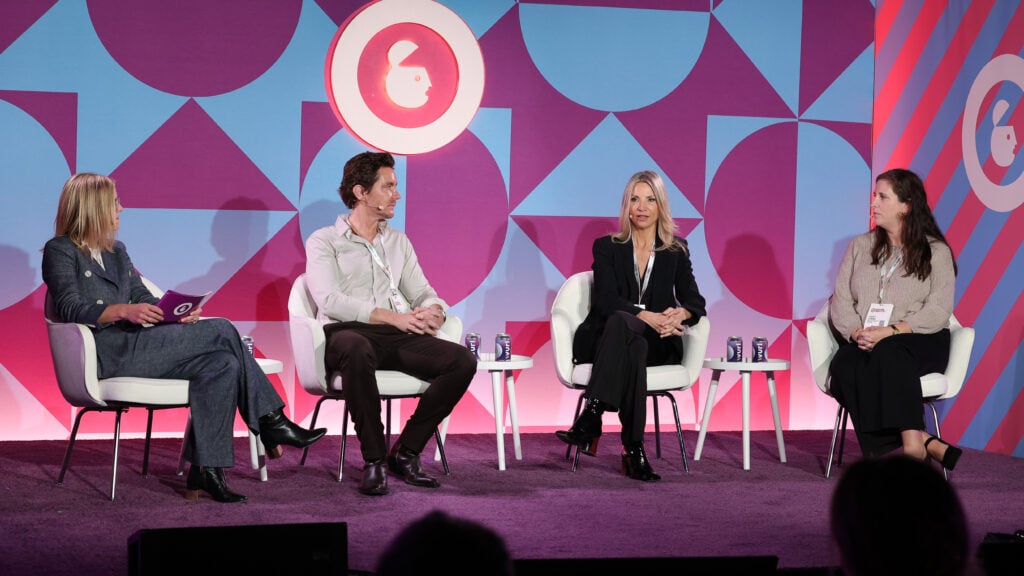
Ann Piper, Head of Sales for the Americas at Spotify, moderated the discussion with Angela Steele, Chief Client Officer, U.S. at WPP Media; Wes Harris, Director of Marketing for YouTube TV at Google; and Juliet Litman, Director of Talent and Operations at Spotify Podcast Studios.

Traditional Attribution and Promo Codes Share the Same Blind Spot
Traditional attribution and promo codes share the same blind spot.