





The Future of Privacy — and How You Can Prepare
By Chetna Bindra
This article has been updated to reflect
ongoing evolutionsIt might be hard to imagine a functioning digital ads ecosystem without third-party cookies, which are used to track people’s browsing habits across websites. How will you deliver relevant ads that align with people’s interests based on the websites they visit? How will you know whether people interact with your ads across the web and then take action on your website as a result?
Well, that’s the idea behind the
Privacy SandboxThis approach is made possible thanks to privacy-preserving strategies.
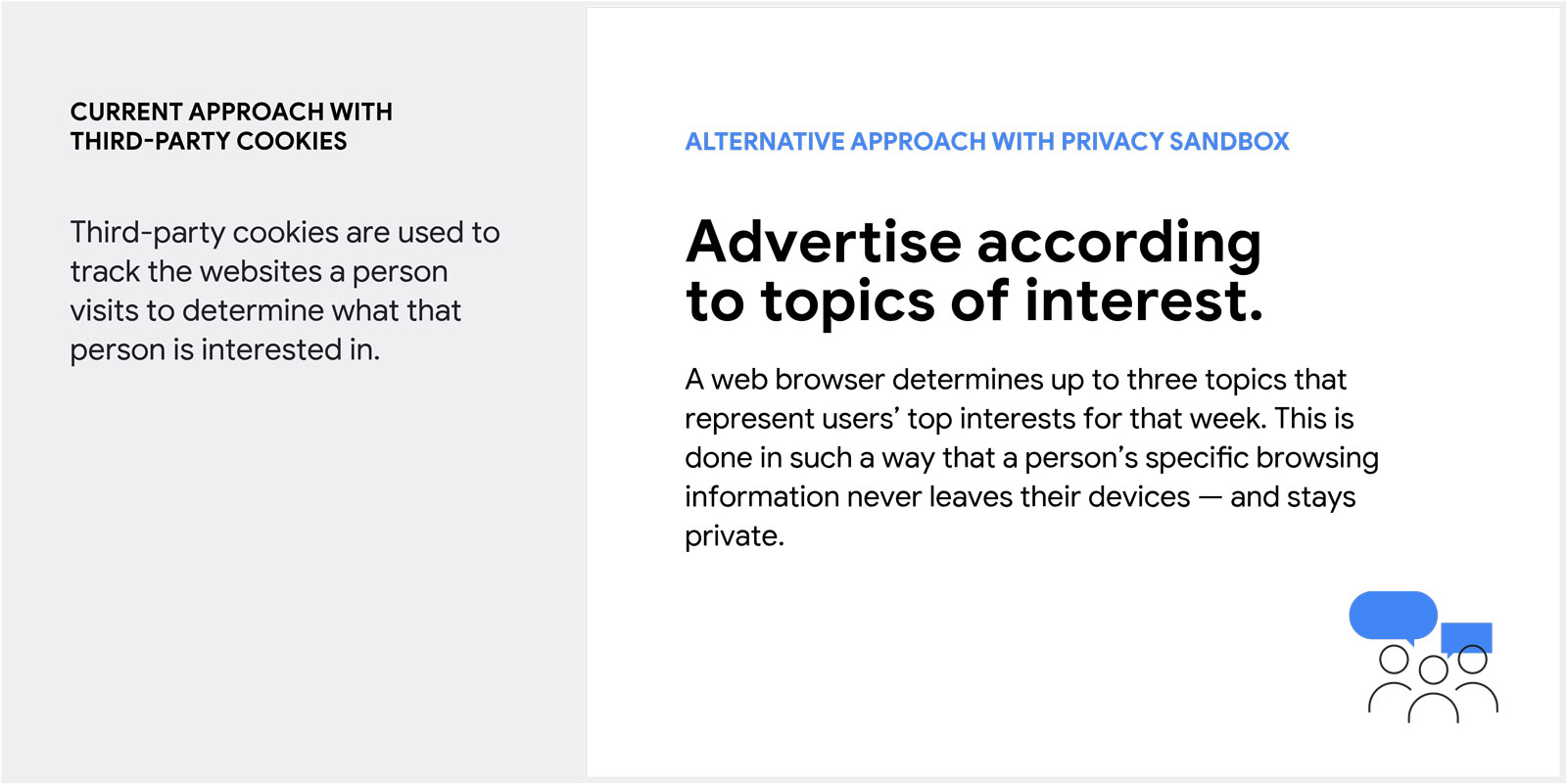
- Instead of tracking individuals across the web to find out their interests, the browser will share the observed topics of recently visited sites without any connection to an individual.
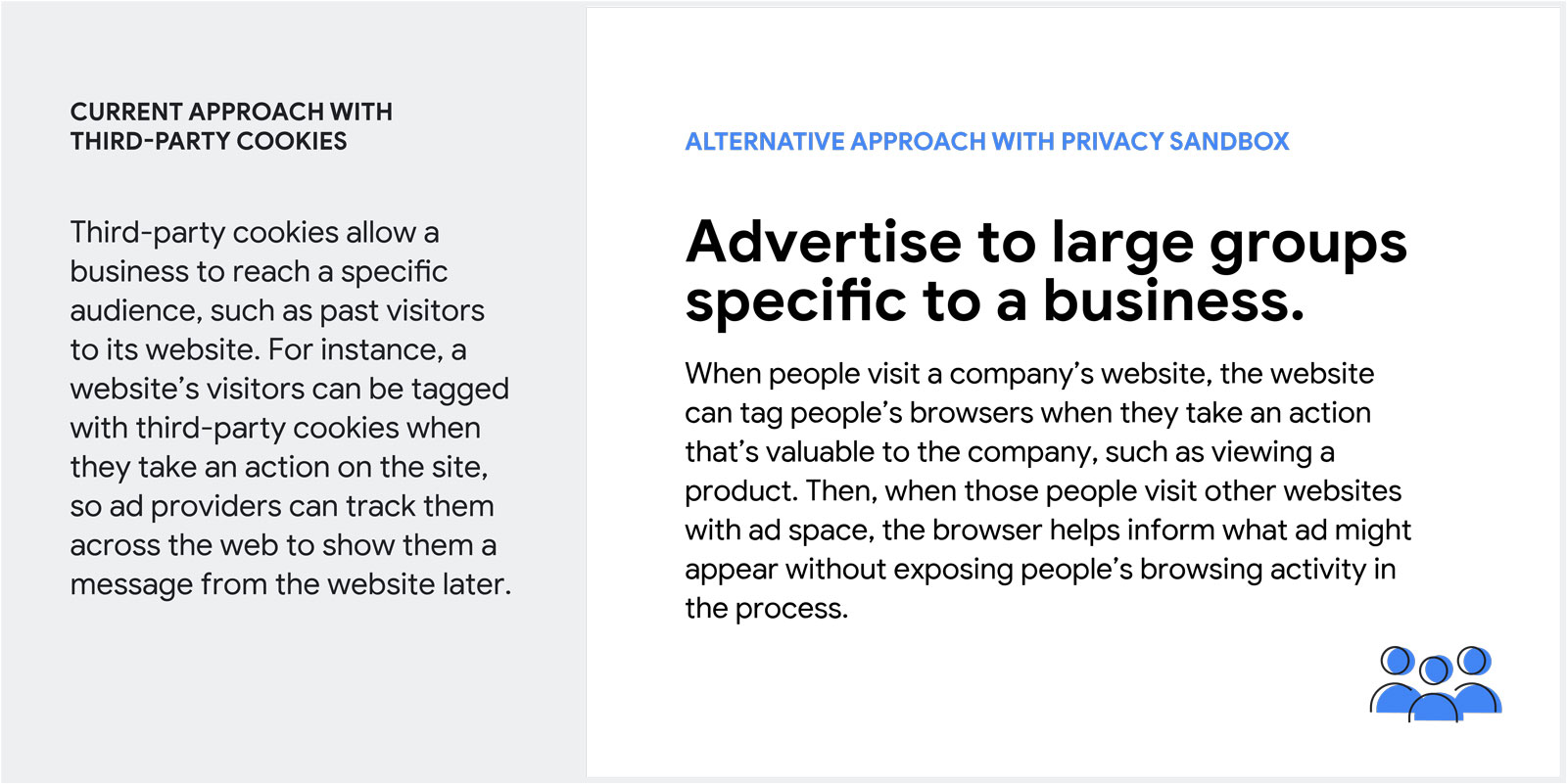
- Instead of having companies collect people’s information in the course of showing them ads, that information can be kept on each person’s device so it stays private.
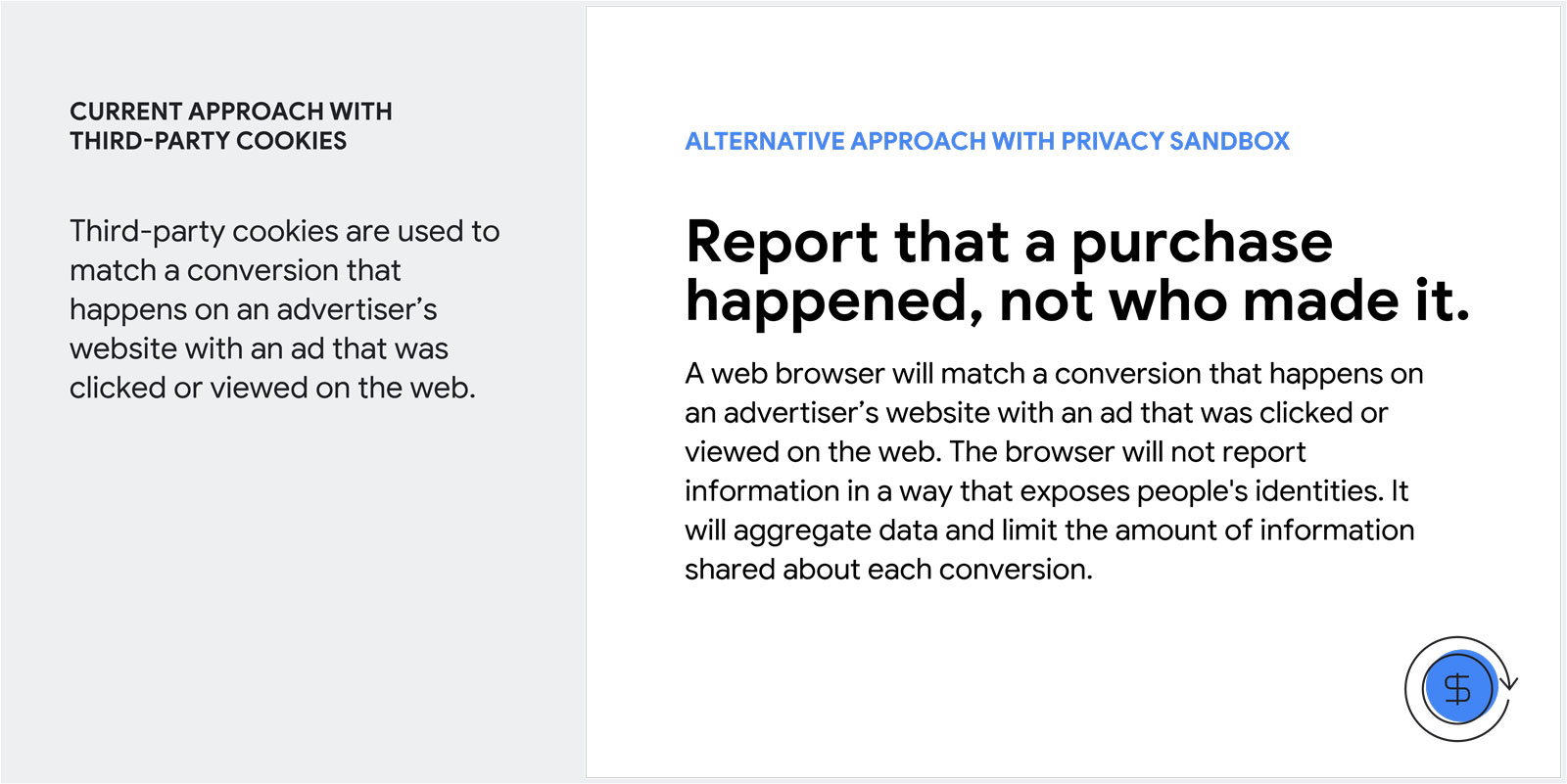
- Instead of measuring how people respond to ads in a way that could reveal their identity, individuals can be kept anonymous by limiting how much data can be shared about them.
A change of this magnitude can certainly seem complicated and technical, but this is where Google and other ad tech companies can help. We’ll do most of the work behind the scenes, switching from third-party cookies to these privacy-first alternatives, so you’ll still be able to buy and sell ads on the platforms you rely on today — but through technology that is private by design.
Here’s how three advertising use cases will be supported by the technology being developed in the Privacy Sandbox.
SHOW INTEREST-BASED ADS
ENGAGE PAST SITE VISITORS
MEASURE CONVERSIONS FROM ADS
In addition to these use cases, the
Privacy SandboxHow we get there
New open-source browser technologies, like the ones being developed in Chrome’s Privacy Sandbox, typically go through a few stages before being broadly adopted. Proposals generally start with a public evaluation and experimentation period, when companies can discuss, test, and provide feedback to build confidence and demonstrate the effectiveness of an approach.
While the proposals mentioned above are currently still in the first stage, the goal is to have each proposal launch as features in Chrome and any browsers that decide to adopt the new technology. Then ad tech companies can start using them in their products.
What you can do now
Changing consumer attitudes toward privacy and regulation mean that we have to come up with an alternative to today’s practice of tracking people across the web. We believe the Privacy Sandbox offers the best path for the industry in the long run, giving businesses the tools they need, while ensuring people get the privacy they want. And, keep in mind, advertising providers will do most of the heavy lifting — swapping out third-party cookies with new, privacy-first technologies behind the scenes.
In the meantime, here are some important steps you can take today that will work well alongside the Privacy Sandbox technologies when they’re ready:
- Look for opportunities to build direct relationships with customers. These relationships should be supported with a comprehensive first-party measurement solution for your website that has the appropriate tagging and consent infrastructure.
- Take advantage of solutions that use automation and machine learning to help identify trends and model results when there are gaps in your data.
To learn more about the steps you can take today to help you navigate the changing privacy environment, read our privacy playbook for
marketersThis article first appeared on Think with Google
You May Also Like

The Power of the Transaction
A click can suggest interest, but a transaction shows where someone chose to spend. In our Advertising Week New York session, “The Power of the Transaction,” the leaders behind Citi Commerce Media discussed how purchasing data can help brands identify audiences, deliver relevant offers and assess what happens after an advertisement.

How to Find Authentic Experts in a World of Ai-Generated Content
As AI-generated content floods the internet, how do we know who’s actually an expert anymore? Why businesses need better ways to distinguish genuine human expertise from AI-generated noise.

Brands Can Scale Creator Content Without Sacrificing Authenticity
With platforms and technology providers promising easier discovery, faster campaign setup, and more efficient distribution, creator marketing is starting to look more like the rest of digital advertising. For brands managing a growing number of creator relationships and assets, the appeal is obvious. But it also raises a reasonable concern.