




The Next Battle for Fan Attention Is Happening Inside the Venue
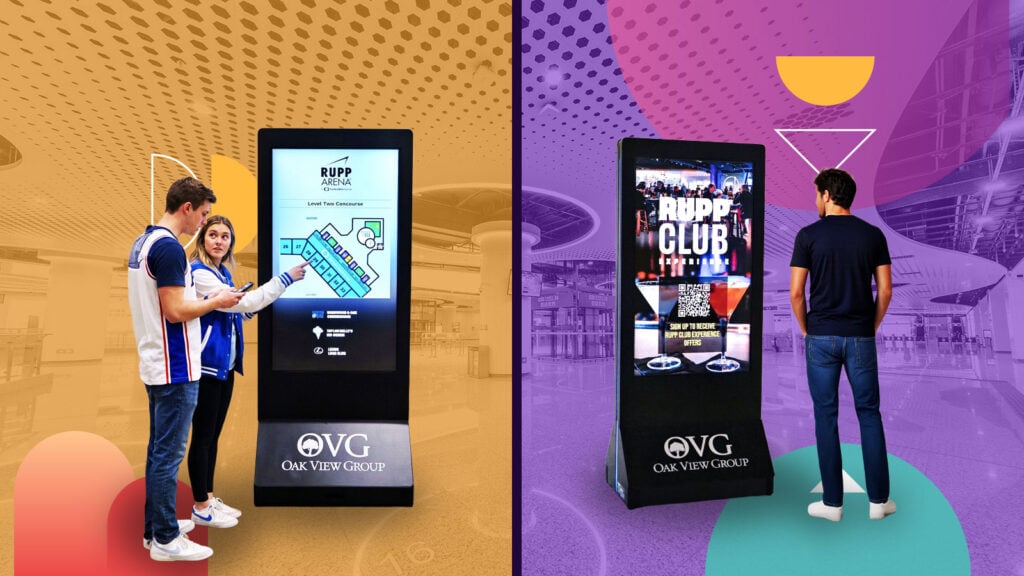
Oak View Group’s new partnership with BIG Digital points to a broader shift in sports and live entertainment, as venues turn physical spaces into flexible media environments capable of delivering fan engagement, sponsor activation and measurable value long after audiences walk through the doors.
For years, the commercial value of a sports arena or entertainment venue was relatively easy to understand, with brands buying signage, hospitality, naming rights and other forms of visibility while operators concentrated on filling seats and moving people efficiently through the building. That model is changing as audiences arrive carrying sophisticated digital expectations with them, sponsors demand more than passive exposure and venue owners recognize that the physical environment itself can become a dynamic media platform rather than simply the place where an event happens.
That evolution is behind a new partnership between Oak View Group and BIG Digital, with OVG naming the technology company, headquartered in Toronto, its preferred Portable Fan Engagement Technology partner and preferred Sustainable Display Technology partner in North America. The agreement creates a framework through which the companies can explore digital and interactive experiences across OVG’s portfolio, using portable displays, interactive kiosks and other technology to rethink communications, sponsorship activation and audience engagement inside live-event environments.
The Venue Is Becoming a Media Channel
The more interesting story for marketers is not the technology itself, but what technologies like these allow venues to become, because a building filled with tens of thousands of people who share an interest, have intentionally traveled to the same location and are collectively focused on the same experience represents an unusually valuable concentration of attention. Digital media has spent years trying to recreate that combination of context, intent and community through targeting, while sports and entertainment venues already possess it naturally.
Portable digital infrastructure makes that attention more addressable, allowing communications and commercial messages to move beyond fixed screens and permanent signage into entrances, concourses, premium lounges, outdoor plazas, convention areas and hospitality spaces. Rather than selling a sponsor a static placement for an entire season or event, venues can potentially create experiences that change according to the audience, event, location or moment, making the physical environment behave increasingly like a programmable media network.
BIG Digital’s technology combines portable displays and interactive kiosks with software supporting wayfinding, contests, gamification, sponsor activations, live-event information and other forms of audience interaction, while the absence of permanent infrastructure means those experiences can be moved to wherever audiences are gathering. For operators, that flexibility can make communications more responsive, but for marketers it creates something potentially more valuable by expanding the number of moments in which sponsorship can become an experience rather than simply an impression.
Sponsorship Has to Do More Than Be Seen
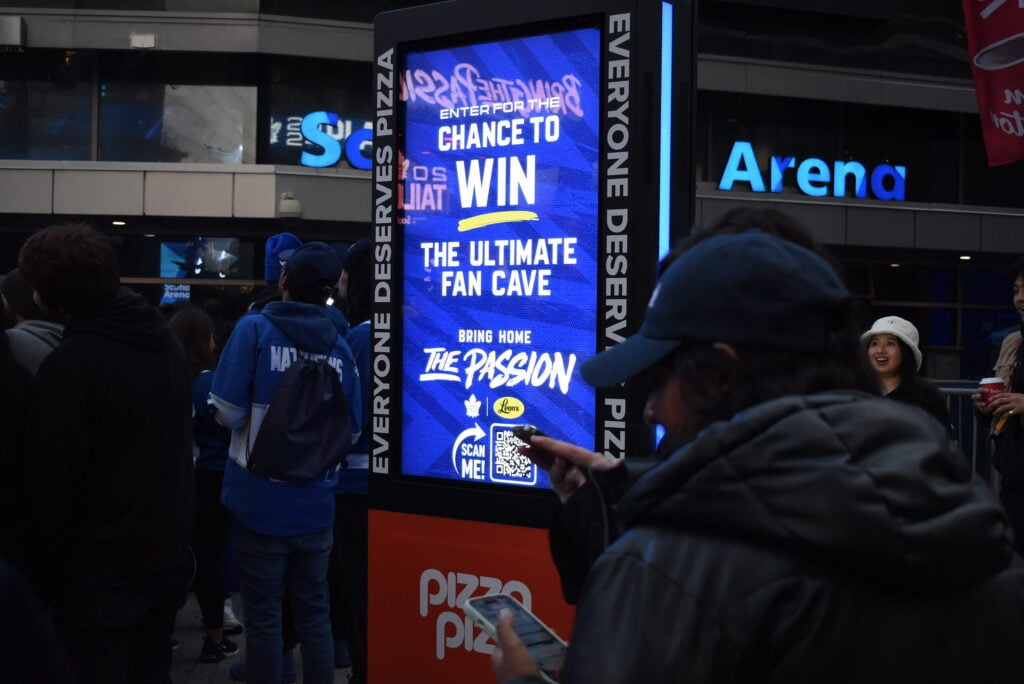
That distinction matters because sports and entertainment sponsorship has increasingly confronted the same measurement pressures affecting the rest of advertising, with brands expected to demonstrate what their investments actually accomplish rather than simply report how many people could theoretically have seen a logo. A sign above a concession stand may generate exposure, but an interactive activation that encourages a fan to participate, respond, play, enter a contest or otherwise engage creates an entirely different relationship between audience and sponsor.
This does not mean every surface in an arena should become another advertisement, because turning live experiences into increasingly aggressive commercial environments could easily undermine the very attention brands are trying to capture. The opportunity instead lies in making sponsorship useful, entertaining or additive to the event, which means helping fans navigate a venue, giving them access to information, creating moments of participation or providing experiences that feel connected to why they came in the first place.
The OVG and BIG Digital partnership is therefore interesting because it reflects a wider movement away from sponsorship as inventory and toward sponsorship as infrastructure, where technology gives brands opportunities to participate in the fan experience instead of simply surrounding it. If that participation can also generate measurable interaction, venues gain a more sophisticated commercial product while sponsors gain evidence that extends beyond estimated visibility.
Sustainability Is Becoming Operational, Not Promotional
There is another part of the partnership that may ultimately prove equally significant, as BIG Digital will also work with OVG around ultra-low-power ePaper technology intended to replace temporary printed signage with remotely managed digital communications. BIG Digital says the technology can use up to 99% less energy than traditional digital displays, while portable and solar-powered applications can reduce the need for repeatedly printing, installing and disposing of temporary signs.
That matters because sustainability in live entertainment has often been communicated through large public commitments while many of the mundane operational processes inside venues have remained stubbornly analog. Replacing temporary printed materials with reusable digital systems is less glamorous than a sweeping environmental campaign, but it illustrates how sustainability can become embedded in everyday operations while simultaneously making those operations faster and more adaptable.
For marketers, this also creates an interesting convergence between sustainability and media efficiency, because the same infrastructure that reduces physical waste can create more flexible commercial inventory. Instead of sustainability functioning primarily as a corporate message attached to an event, the technology underpinning the event can itself become part of a more sustainable operating model.
The Bigger Opportunity Is Context
BIG Digital already works across sports, entertainment and events, with experience involving organizations across the NFL, NBA, PGA TOUR, Live Nation, Maple Leaf Sports & Entertainment and Tennis Canada, among others, while OVG operates across venue management, hospitality and sponsorship sales. Their partnership therefore provides an opportunity to test these ideas across different types of audiences and environments rather than treating digital fan engagement as a single-purpose arena technology.
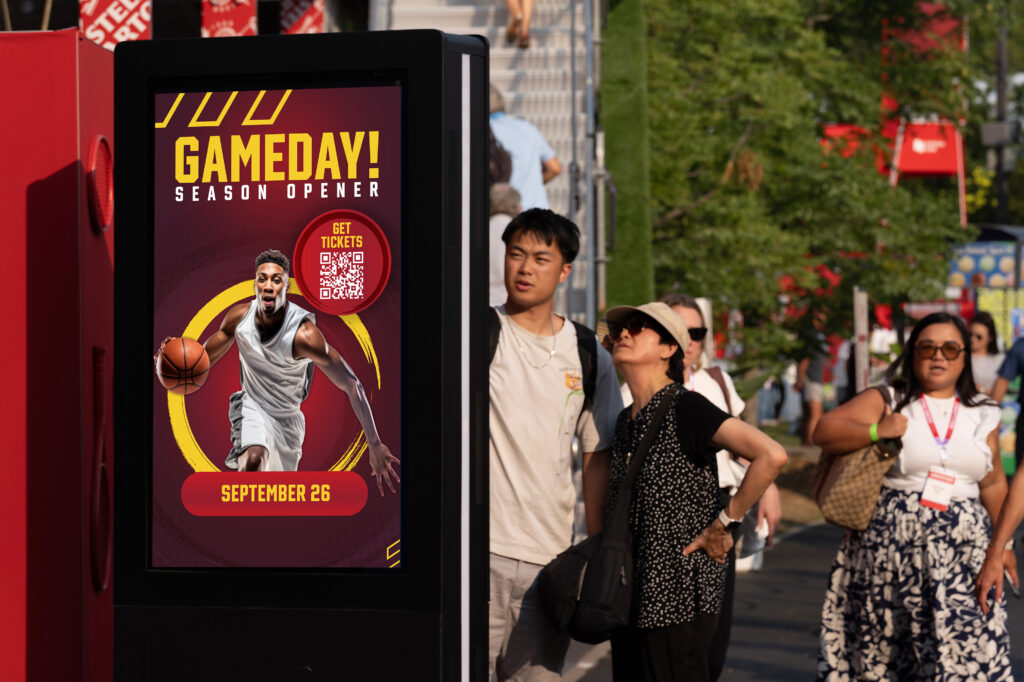
The larger lesson for advertisers is that some of the most interesting developments in media may increasingly occur outside what the industry traditionally defines as media, because stores, stadiums, airports, entertainment districts and other physical environments are becoming connected, measurable and capable of responding dynamically to the people moving through them. Retail media has already demonstrated what happens when a physical commercial environment becomes a data-enabled advertising platform, and live entertainment could be approaching its own version of that transformation.
The challenge will be resisting the temptation to treat every newly connected screen as another piece of inventory, because the value of these environments comes precisely from the fact that audiences are there for something else. The brands that benefit most will therefore be those that understand the difference between occupying attention and contributing to an experience, while the venues that build the strongest commercial ecosystems will be those that preserve that distinction as they become increasingly digital.
OVG’s partnership with BIG Digital may begin with portable screens, interactive kiosks and sustainable signage, but the broader implication is considerably larger, because the modern venue is becoming a communications network, an experiential platform and an increasingly measurable media environment at the same time. For advertisers accustomed to fighting for fragmented attention across digital channels, the opportunity may be less about finding another screen and more about understanding the extraordinary value of reaching people when they have already chosen to show up.
You May Also Like
The Power of the Transaction
A click can suggest interest, but a transaction shows where someone chose to spend. In our Advertising Week New York session, “The Power of the Transaction,” the leaders behind Citi Commerce Media discussed how purchasing data can help brands identify audiences, deliver relevant offers and assess what happens after an advertisement.

How to Find Authentic Experts in a World of Ai-Generated Content
As AI-generated content floods the internet, how do we know who’s actually an expert anymore? Why businesses need better ways to distinguish genuine human expertise from AI-generated noise.

Brands Can Scale Creator Content Without Sacrificing Authenticity
With platforms and technology providers promising easier discovery, faster campaign setup, and more efficient distribution, creator marketing is starting to look more like the rest of digital advertising. For brands managing a growing number of creator relationships and assets, the appeal is obvious. But it also raises a reasonable concern.