




Three Ways to Use Creative As Your New Path to Performance

By Rhea Rizk Sauma, Sr Product Marketing Manager at Kargo
Almost every media buying solution for digital advertisers is built around audience targeting, campaign optimization, and inventory analysis. Creative, meanwhile, has largely been treated as a separate challenge, making it one of the last untapped levers of performance.
For media buyers, creative has historically been a separate work stream. And for the creative team, much of their time is spent on manual, fragmented processes that require time and coordination:
- Resizing and reformatting, uploading and tagging.
- Making sure the creative was brand safe.
- Testing to make sure the video played, that the sound was set to “on” or “off.”
Compared to audience data or inventory, it’s been almost impossible to truly understand what elements in a creative work or don’t work across channels or connect creative performance to audience or specific inventory. Creative performance was mostly a black box.
AI is dramatically shifting how creative is seen in the media operations process by removing the tedious tasks,, instead resizing and reformatting thousands of ads in minutes. And AI analytics are cracking open the creative mystery, giving media buyers insights into what works so they can directly integrate into campaign optimization.
Now the question becomes how media buyers can make the most of this new performance lever.
Get Ahead of Creative Decline
Creative no longer has to be something that is only measured after a campaign is over, long after a creative has maxed out its performance and started to decay. AI changes the detection window entirely to be much more proactive.
Today’s creative intelligence platforms can identify performance drivers and performance decay at the element level. Instead of simply being aware that the creative is performing well or fading, a media buyer can know precisely whether it’s the image, the tagline, the offer, or a mix of all three. Combining this understanding of a creative’s individual traits with AI-driven creative generation to update and optimize creatives and give them a new life. Suddenly creative refresh becomes a media strategy in which buyers can wire in a refresh into their measurement and optimization process to get ahead of performance dips.
Build Out Hypothesis Testing at Scale
The classic A/B test is overly simplistic for the reality of digital advertising today. Marketers are still pitting two creatives against each other and waiting for statistical significance, while real-world campaigns may include thousands of creative variations.The result is a slow, narrow view of performance that misses the complex factors influencing outcomes. AI removes that bottleneck by making it possible to test many creatives, individual creative elements, and even creative hypotheses simultaneously and at scale. Instead of a simple A/B test, imagine an “A/Z” test that evaluates everything from discount offers and headlines to product hero images all at the same time. Now, an advertiser can test 100 different product image and tagline combinations and determine which connect best with different audience segments. Advertisers can also get creative scores and analysis back that identify the strongest and weakest elements of a creative from logo placement to colors and sound.
AI tagging tools can also map individual creative elements directly to conversion metrics, so buyers start accumulating a proprietary creative intelligence library over time. As each campaign adds new insights, that library becomes more valuable,transforming creative strategy from a series of one-off decisions into a more iterative and data-driven process.
Personalized Creative Enhances Audience Targeting
As third-party signal loss has eroded the precision of audience targeting, creative can enhance the performance of targeting, which is the ultimate promise of personalization. Advertisers can enhance targeting with a range of creative inputs to optimize toward the right person quickly and effectively.
AI makes this supercharged targeting possible. The same campaign concept can be expressed with different emotional tones, talent demographics, pacing, and environments, each for a distinct audience segment without a huge production budget. AI can also use contextual information to augment its picture when signal is weak.
Start Where You Are
The reality for many media teams is that they’re focused on automation and creative teams are separated often from their day-to-day. Getting to a place where the creative team doesn’t spend hours resizing creative is a major win. But this, admittedly, game-changing automation is really only a first step in the creative evolution that’s coming. Once the manual work is removed, the goal is to replace that work with something more strategic and bring creative and media buying closer together. It’s time to start plotting out more analytics-driven creative approaches to media buying that are more granular, more predictive, and more personalized.
Brands aren’t just going to want a lot of versions of their ad out there. They want to know which versions work and why. They want to quickly replace low performers with higher performers and do it at a granular level – within the elements of a creative. Not only that, they’re going to want to be more forward looking and relevant to their audiences. If they could make the perfect creative for every impression, they would. With AI analytics and optimization, achieving these higher creative ambitions will soon be our reality.
You May Also Like
The Power of the Transaction
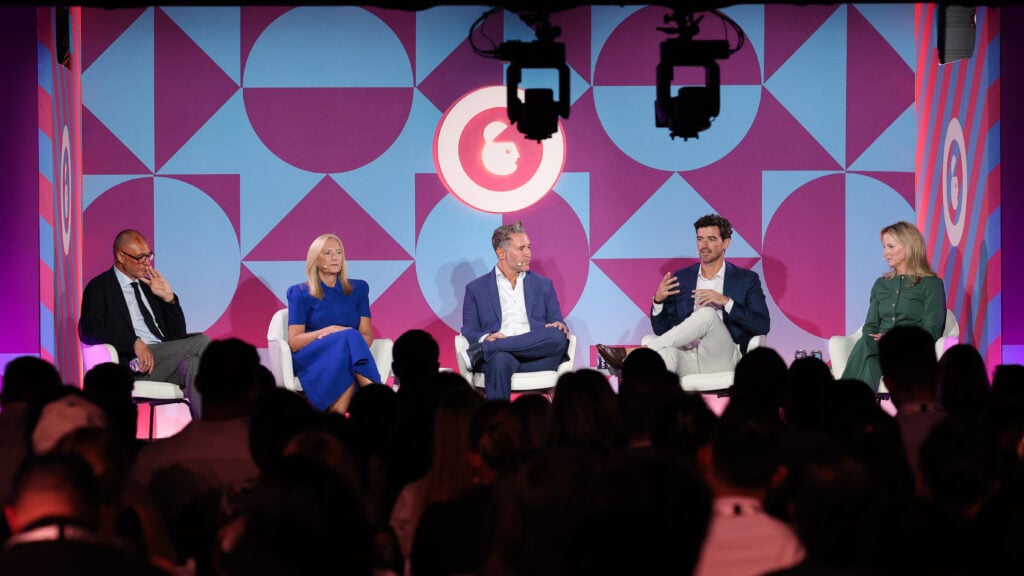
A click can suggest interest, but a transaction shows where someone chose to spend. In our Advertising Week New York session, “The Power of the Transaction,” the leaders behind Citi Commerce Media discussed how purchasing data can help brands identify audiences, deliver relevant offers and assess what happens after an advertisement.

How to Find Authentic Experts in a World of Ai-Generated Content
As AI-generated content floods the internet, how do we know who’s actually an expert anymore? Why businesses need better ways to distinguish genuine human expertise from AI-generated noise.

Brands Can Scale Creator Content Without Sacrificing Authenticity
With platforms and technology providers promising easier discovery, faster campaign setup, and more efficient distribution, creator marketing is starting to look more like the rest of digital advertising. For brands managing a growing number of creator relationships and assets, the appeal is obvious. But it also raises a reasonable concern.