




By Becky Johnson, Advertising Week Writer & Podcast Host
A discount might get someone to join a restaurant loyalty program. Keeping them interested between visits is harder, especially when rising food and labor costs make it difficult to keep handing out the same deal.
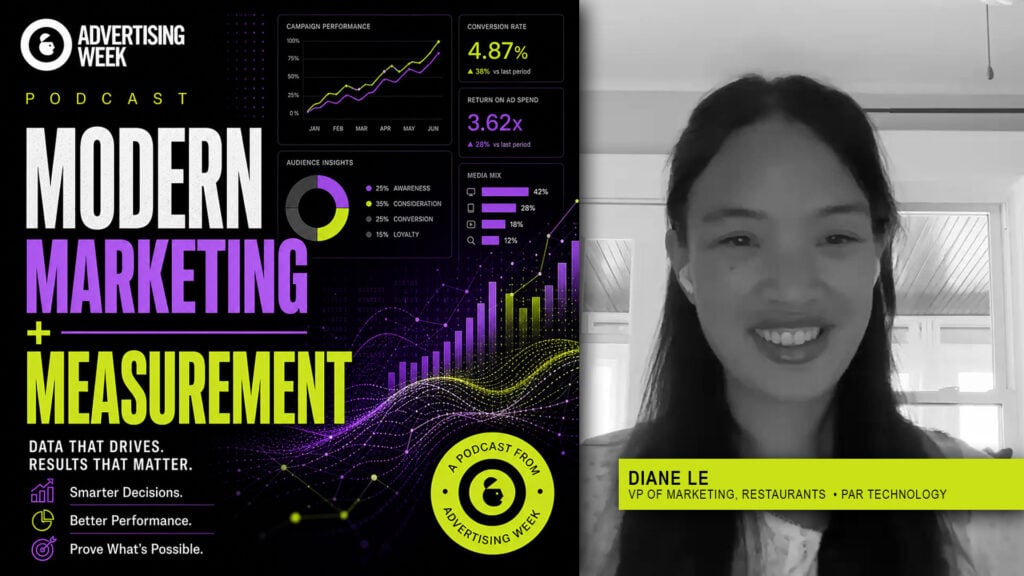
In this episode of Modern Marketing and Measurement, we talk with Diane Le, VP of Marketing, Restaurants at PAR Technology, about the return of games and challenges in restaurant marketing. We get into Smoothie King’s results, why a promotion needs time to build, and the measurement problem hiding behind a simple question: did that customer come back? Diane explains how much a restaurant can miss when someone orders through DoorDash or visits without using their loyalty account.
Five Key Takeaways
- Restaurants are looking for ways to connect without another blanket discount. Diane says many loyalty programs have become discount programs in practice. With restaurant margins under pressure, brands are revisiting games and challenges as ways to give guests something to do between purchases. The point is to create an interaction people want to take part in, whether or not it looks like a traditional game.
- People need time to hear about a promotion and make plans. Diane’s advice is to run a promotion over several weekends instead of expecting everyone to respond to a single weekend offer. Participation can grow as customers become aware of it. She sees the same principle in longer seasonal games, with smaller challenges keeping the program active in between.
- Smoothie King’s game brought in members, but signups are only part of the result. Over three months, the campaign generated two million game plays and a 40% increase in loyalty signups. Diane says the new members were also spending more than nonmembers. To understand what the campaign accomplished, her team compares the behavior of participants with that of people who did not take part, then looks beyond the campaign period.
- A loyalty account shows only some of a customer’s visits. Someone might identify themselves at the register one day, order through DoorDash the next, and forget to enter their phone number another time. That makes it hard to tell whether an offer brought back an existing customer or reached someone new. Diane discusses PAR’s work to account for transactions outside identified loyalty purchases and build a more complete view of what guests actually do.
- A timely invitation can give people a reason to act. Diane points to Carl’s Jr. and Hardee’s using a scheduled code drop to bring people from social media into their app. She also describes restaurant offers tied to a local team’s performance, when fans already have a reason to celebrate together. These promotions work with a moment people care about, instead of asking them to pay attention to another generic offer.
Listen & Subscribe