




As AI agents begin playing a bigger role in how consumers discover, compare, and ultimately choose products, retail marketers face a fundamental shift: the customer may no longer be the only audience they need to win.
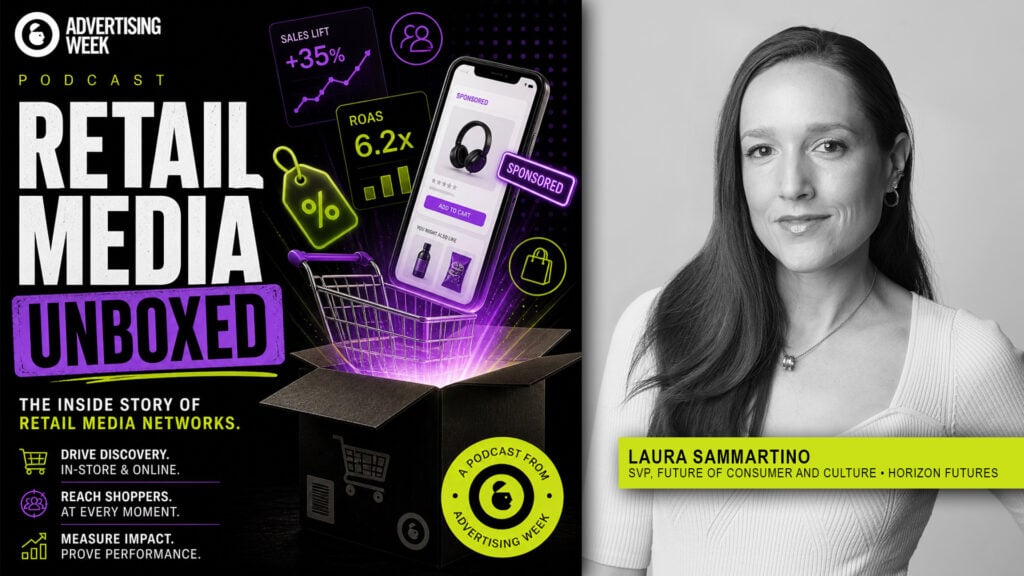
In this episode of Retail Media Unboxed, Laura Sammartino, SVP of Horizon Futures – Future of Consumer and Culture, explores why trust could prove more important than technology in determining the future of agentic commerce. She joins us to discuss the “control paradox” shaping consumer adoption, why brands must become discoverable to algorithms without sacrificing emotional connection with people, and how AI could reshape everything from product discovery and brand loyalty to measurement and post-purchase marketing.
Laura also explains the emerging “automation hangover,” why conversion alone may no longer tell marketers enough, and how brands could take on very different roles as optimizers, curators, and guarantors depending on what consumers are buying.
Five Key Takeaways
- Trust may be the real barrier to agentic commerce.
Consumers are increasingly comfortable allowing AI to research products, compare options, and find deals, but many remain reluctant to surrender the final purchasing decision, particularly when the financial or emotional stakes are high. - Marketers are beginning to serve two audiences.
AI agents need structured information, specifications, reviews, credibility signals, and clear product data, while humans still respond to storytelling, identity, community, heritage, and emotional meaning. Brands increasingly need to succeed with both. - The customer journey could become dramatically shorter.
If AI reduces thousands of potential products to a handful of recommendations, traditional discovery and consideration may become compressed. That makes the post-purchase experience more important as brands attempt to turn an algorithmically generated transaction into an enduring customer relationship. - Conversion will no longer tell the entire story.
Laura argues that marketers should also consider agent visibility, agent selection, customer satisfaction, and whether the brand ultimately earned a relationship beyond the transaction. - Different purchases will demand different brand roles.
For routine, low-commitment purchases, consumers may want brands and AI to act as optimizers; for categories overwhelmed by choice, they may want curators; and for expensive or consequential purchases such as homes and automobiles, they may increasingly value brands as guarantors that reduce risk and provide reassurance.
Listen & Subscribe