People go to YouTube to see a product work, compare options, and hear from someone who has tried it. Those videos are also appearing in AI answers, giving brands another reason to pay attention to what happens beyond their own channels. This episode looks at the data behind YouTube’s influence and how paid media, creator partnerships, and organic content can do more when they are planned and measured together.
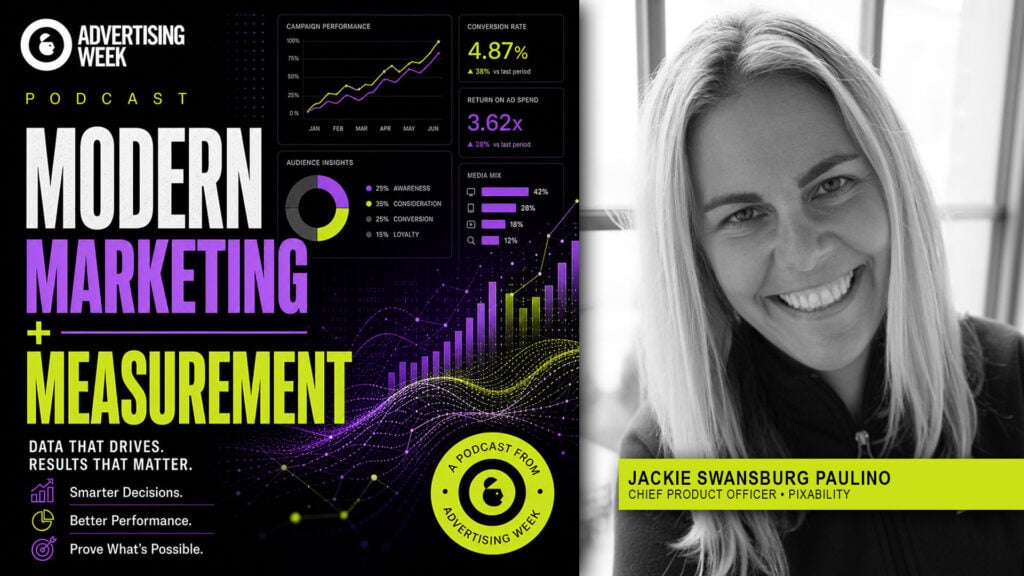
In this episode of Modern Marketing and Measurement, we talk with Jackie Swansburg Paulino, Chief Product Officer, Pixability, about giving YouTube the attention it deserves in the marketing plan. We get into Pixability’s research on AI recommendations, what makes a creator worth partnering with, and how to bring the PR and media teams into the same conversation. Jackie also explains what to measure, from brand sentiment and search visibility to whether people are watching the videos and finding the products.
Five Key Talking Points
- YouTube’s role in AI recommendations: Pixability tested consumer-style prompts across dozens of AI models, model types, and versions. Jackie says YouTube appeared about 85% of the time when the prompts asked for video reviews without naming a platform.
- The influence of creators: In the same testing, creators and influencers accounted for about 90% of references, compared with 10% for brand-owned channels. Understanding which creators appear and whether they resonate with customers can help inform partnership decisions.
- A channel strategy with a purpose: Jackie recommends approaching a YouTube channel with the same care as a website. Content planning, channel organization, titles, tags, and descriptions all deserve attention.
- Measurement across the whole presence: Jackie discusses tracking recommendations relative to competitors, sentiment, and referral traffic alongside YouTube activity. That includes understanding whether people are finding videos, watching them, and discovering products.
- Connecting paid, organic, and creator activity: Pixability’s agency research found that 90% believed paid and organic YouTube strategies should align, while only 35% were doing so. Jackie explains how sharing data between teams can help close that gap.
Listen & Subscribe