


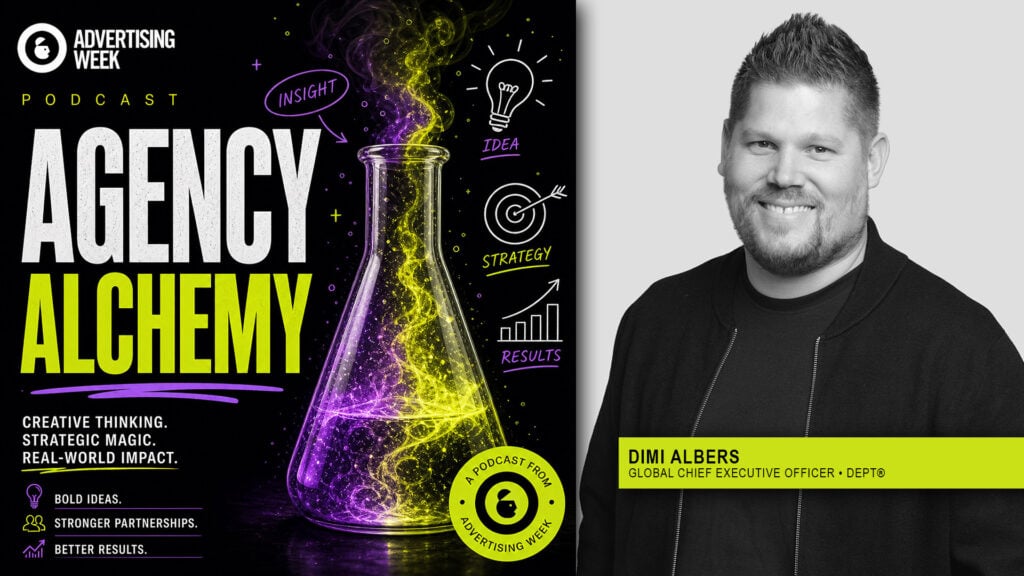
What does it take to build an agency for a world where marketing, technology, and AI are becoming inseparable? And why are brands investing more than ever in marketing innovation while still struggling to achieve meaningful growth?
In this episode of Agency Alchemy, we speak with Dimi Albers, Global CEO of DEPT®, about why traditional agency models need to evolve, how organizational silos are holding brands back, and why growth must become a guiding obsession rather than simply another performance metric.
Dimi shares his perspective on integrating creativity and engineering, balancing brand consistency with the demands of an AI-driven marketplace, and building deeper partnerships between agencies and their clients. He also explores why the future belongs to organizations that can combine technological sophistication with human expertise, adapt without chasing every industry trend, and help brands not just outperform their competitors, but out-transform them.
Five Key Takeaways
1. Growth is a mindset, not a discipline. Agencies must move beyond protecting individual capabilities and focus on how every skill, from creativity to engineering, contributes to meaningful client growth.
2. Organizational silos are among the biggest barriers to growth. Without genuine alignment between marketing, technology, and executive leadership, even the best strategies struggle to deliver results.
3. AI is changing how brands communicate. As conversational AI becomes more influential in consumer interactions, consistent brand messaging and verbal identity may become just as important as visual identity.
4. The future agency must combine human creativity with deep technical expertise. Successful agencies will integrate engineering and AI throughout their operations while remaining thoughtful about which responsibilities should be automated and which require human judgment.
5. Adaptability will separate tomorrow’s winners from the rest. Independent, technology-native, and specialized agencies may be particularly well positioned to succeed as the industry moves away from rigid operating models toward more flexible, integrated client partnerships.
Listen & Subscribe