




First Came the Beards, Then Came the Coffee Shops
By Simon Massey, co-founder, Neverland
The last time the economy was in serious trouble, the green shoots of recovery came in the shape of beards.
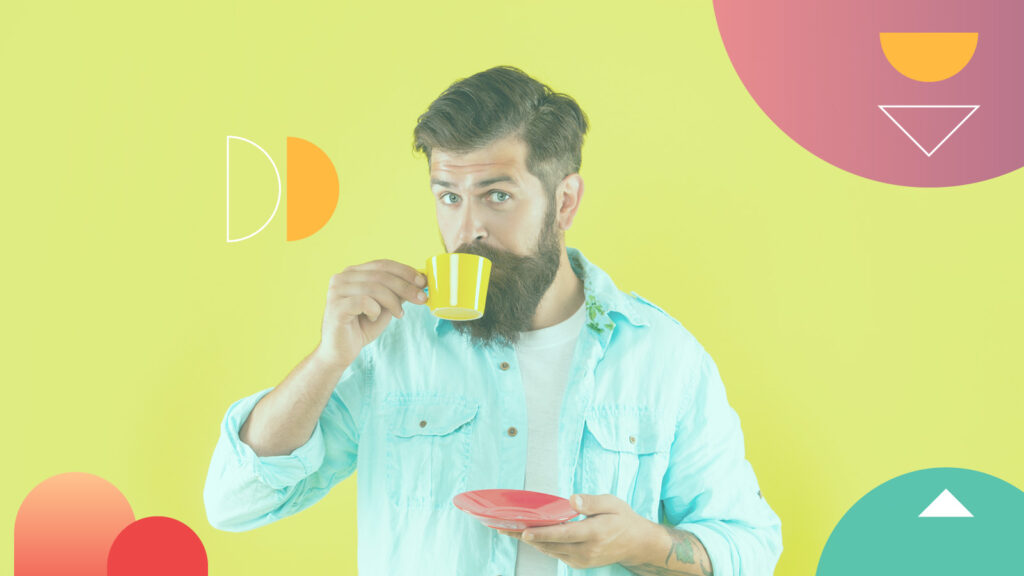
I’ve been around long enough to remember vividly what happened during the 2008 financial crash. It was almost like our desires and associated aesthetics shifted overnight. Eschewing the clean-shaven corporate image of yesterday, beards appeared, the longer the better, men and women alike donned checked shirts, drank out of jam jars, everything craft, heritage, handmade or artisanal suddenly boomed. That might sound like a series of unremarkable consumer trends, but in reality, they were all symptoms of one thing: people reacting to a world that no longer felt stable.
When our institutions fail us, we stop trusting polish and scale and retreat towards things that feel personal and comforting. And as the financial markets had just detonated the global economy, consumers turned firmly away from corporate culture and back towards simplicity, tradition and craft. In fact the ‘bearded hipster’ was a caricature of the working-class American, beard, jeans, lumberjack shirt, work boots, making things well with their hands. Worldwide we wanted to get back to honest values and hard work.
Creatives found the run-down neighbourhoods; cheap rent, strong community an openness, a need to innovate. Then came the coffee shops and bakeries, the galleries and small independent businesses. You saw the beards and the checked shirts coming, you knew the area was on the up.
That was just the 2008 crash. But economic troubles have always reshaped culture in strange and revealing ways.
During the Great Depression (and again in 2008), short hairstyles became popular for women because they were easier to maintain. Nostalgia tends to surge during periods of instability too; the 2020s cost-of-living crisis coincided with the Y2K revival.
Then there’s the famous “Lipstick Index”, or “treatonomics”. When we can’t justify major luxuries, we still look for small indulgences. Lipsticks, expensive chocolates, bakery treats, cocktails and little affordable comforts that provide emotional relief without requiring a second mortgage.
Some economists even track the “men’s underwear index”. Apparently, when times get really tight, men stop buying new pants.
It sounds utterly ridiculous. But, all of these signals point towards the same truth: economics shapes emotion, and emotion shapes culture.
And now, once again, the warning lights are flashing. Conflict in Ukraine and the Middle East, soaring energy prices, global instability and growing fears of recession are already changing consumer behaviour. Just look at people’s hands; “recession nails” are the latest economic bellwether.
But this downturn feels fundamentally different from the ones that came before. Because this time, there’s another huge force reshaping everyday life alongside it: AI.
The scale of change coming is hard to overstate. Demis Hassabis, the creator of Google’s Gemini, has said AI will be 10x bigger than the Industrial Revolution. For some this will mean enormous opportunity, for some devastation, but for most, we just don’t know. It’s unpredictable and unclear.
So already, people are pushing back. You see it in the rise of “friction-maxxing”, where consumers intentionally choose slower, analogue experiences as a rejection of hyper-optimised digital life. Cooking instead of ordering DoorDash, for instance. Taking notes by hand rather than sticking a transcript in ChatGPT. Wired headphones are on-trend, instead of Bluetooth.
Consumers are also becoming increasingly hostile towards brands putting out AI-generated content, or “AI slop”. Only the other week, Colgate was blasted for a blatantly AI promotional ad, complete with janky nonsense text. People just look at that and think: you’re one of the biggest brands in the world. Why does this feel so cheap and careless?
When Duolingo announced it was becoming “AI-first” and phasing out human contractors, it lost hundreds of thousands of online followers in a day. The move just felt totally at odds with why people liked Duolingo in the first place. The whole brand, with the iconic Duolingo owl, was built around personality, humour and social storytelling, so a sudden pivot towards machine-led efficiency felt cold by comparison.
And that, to me, encapsulates the real risk for brands and businesses right now.
In moments of uncertainty, businesses tend to retreat into optimisation mode. More automation. More efficiency. More performance marketing. But nobody builds an emotional relationship with a brand because it’s efficient.
Which is why I don’t think this next recession, if it comes, will simply mark a return to craft and heritage in the same way we saw in 2008. At a time when we are debasing the value of life with war and question the value of people with AI, it much more existential. This time I believe, and I hope, it’s about a return to humanity itself.
The brands that succeed over the next decade will be the ones that rediscover the simple truth of why they exist, and stretch towards the dream of how they can add more to the world, then express that clearly and consistently in everything they do. It’ll be the brands that feel emotionally honest; like they actually give a shit.
Authenticity is an overused word in marketing, but its meaning is actually very simple. It means behaving in a way that feels true to your brand’s reason for being. Consumers will feel the difference between brands that use humanity as a marketing aesthetic and brands that genuinely operate with a point of view and a sense of care.
So yes, the beards might come back. The coffee shops too. But this time, the deeper shift won’t be about craft. It’ll be about people looking for something real. And brands need to start preparing for that now.
You May Also Like
Better Data Collaboration Without Giving Up Control with Juan Baron from Decentriq
Juan Baron, Head of International and Global Accounts at Decentriq, explains how data clean rooms allow organizations to match data, run analyses, and gain useful insights without sharing raw information.
From Prime Time to “Right Time”: 3 Shifts Redefining the Sports Marketing Playbook
As another fall sports season gets underway, marketers should look beyond the biggest moments on the calendar without losing sight of their power.
AI is Winning the Race but Losing the Room
Winning the race is one thing. Bringing the room with you is another.