




There Are No Shortcuts to Greatness

By Kim Mickenberg, Partner, Campaign Design, VSA Partners
Look, I’m a writer by trade. Throughout my career, I’ve gone from editorial to strategic communications to brand and campaign development, and through it all I’ve been very passionate about the importance of two things: having something sharp and differentiating to say, and saying it clearly.
The rise of AI-generated content complicates the picture, but not in a way that’s necessarily bad.
But AI isn’t really what I want to talk about, at least not directly. In fact, I’ve been very adamant about the fact that I don’t want to write thought leadership pieces about AI. To start, there are already too many. Second, I’m a writer, not an engineer, and I think many of the most salient applications of AI are in technology, healthcare, and automation, not creative inspiration. And third, no matter how you get your work done—whether you’re an AI power user or someone who just asks it for restaurant recommendations on the weekend—there are no shortcuts on the road to greatness.
Zero. Zilch. None. (None!)
If you want to get to greatness, you have to get there the old-fashioned way, because that’s the only way that exists.
Consider the environment we’re all in. Most businesses are managing quarter to quarter, most teams are hyper-attuned to data and analytics, and most marketers are being pressured to produce more with less—and faster than ever. At the same time, your audience’s attention is fragmented, and we (all of us) have much less control over what they’re seeing and how they’re seeing it than we’d like.
AI can seem like an easy way out—a way to get in front of your audience early and often with minimal force and maximum velocity. Anyone can type a prompt and get something that sounds fairly reputable, and anyone can now scale that content to deliver perfectly acceptable-seeming creative to fill a media plan. So that’s what many brands are doing.
That’s also why they’re not breaking through. Because if you want to truly connect, you need something you can’t easily outsource or fake: a strong point of view and the conviction to stick by it.
And delivering that takes a lot of real human work.
To start, you have to deeply understand your audience, what motivates them, and what they need—not just what they need in a material sense, but in a higher-order, emotional one. Henry Ford is often quoted as saying that if he had asked people what they wanted, they would have said “a faster horse.” Similarly, your audience might have certain conscious wants that they’re happy to share with you. But to be truly visionary as a company, you have to go a step deeper and get a handle on the deeper human need they have—and that only you can address.
For example, I’m a parent with two relatively undomesticated little kids. If you ask me what I need at dinnertime, I might say things like, “kids who actually listen to me” or “food that doesn’t create crumbs” (I’m looking at you, Whole Foods cornbread). But if you actually observed my life and the fact that I make like three separate dinners each night to appeal to everyone’s different tastes, you might approach me differently. Instead of telling me—bloodlessly—that you have a product to make mealtime “more efficient,” you might realize that mealtime makes me feel frenetic and overtaxed and say, “Stop feeling like a short-order cook!” And you know what? If you said that, you’d get my attention.
But I digress!
Beyond understanding your audience, you have to deeply understand the business part of the business, including everything about what you offer, how you operate, and where you’re headed. It’s tempting to stay at 36,000 feet, a safe cruising altitude for anyone who isn’t super technical. But if you stay too far out of the weeds (or depend on AI-generated summaries to guide you), you miss the nuance and the nitty-gritty details that help you build a more compelling overarching story. That’s why we always ask to speak to engineers and product teams. Not because we think they’ll solve a positioning exercise on their own, but because the information they provide makes it possible for us to build a positioning and messaging framework that has real teeth and genuinely sets their offering apart.
Next, you have to come up with an idea that’s powerful enough to speak to your audience’s unmet needs: an idea that’s strong, simple, and bold—one that reflects both who you are and who you aspire to be, and that can be developed and delivered in a compelling way across every channel and throughout the entire funnel.
It’s gotta make for an awesome :30 spot. A heart-stopping billboard. A viral TikTok. A millennial-coded Instagram post. An elevator ad that your execs see and love. And ideally, at least one activation large enough to see your logo from space.
Oh, and you have to sell that idea in. To dozens of stakeholders, in every part of the business, all while keeping it intact and interesting.
That’s a tall order, a ton of work, and (usually) many, many variations of the same deck. And it’s not something a chatbot can do on its own.
But doing it pays off!
Want proof? Look at FactSet. A few years after launching our first brand campaign with them—which increased brand awareness by 280%, leading to a 438% increase in marketing qualified leads and a 76% increase in consideration—they needed to shift their positioning to reflect the org’s focus on AI and speak to the needs of enterprise buyers. After digging into the actual tensions of the AI era for financial professionals, we found that while everyone wanted to integrate AI and work faster, they were very concerned about accuracy. (And rightfully so! One hallucination or misinterpretation of sentiment could be a disaster for people whose job it is to be right.)
So for our follow-up campaign, we decided to focus on a new POV that FactSet could uniquely own: AI is only as good as the expertise behind it—and FactSet has some of the best in the industry. That became the basis for our “Fluent in Finance” campaign, which takes a humorous, absurdist look at what happens when AI doesn’t quite “get it.” In outright defiance of category norms, the campaign creative did not mention any products or services at all; it just shared a POV on what financial professionals need to succeed, with the goal of speaking to an emotional need that no one else was.
It has been a resounding success: The campaign drove very high engagement on every channel right out of the gate, increasing favorability +19 points (vs. a +1.8-point benchmark), familiarity +16 points (vs. a +1.1-point benchmark), and consideration +12 points (vs. a +1.4-point benchmark). But more importantly, it drove actual business results and was cited in a Q2 earnings call as “generating strong top-of-funnel growth.”
To develop Fluent in Finance, we interviewed the CTO, talked to the product team, did a landscape audit, wrestled with the right singular thing to own, and pressure-tested ideas a million ways to Sunday. If it sounds like it took a lot of human work, it’s because it did—and that’s before we even got to production and the challenge of making the creative really sing.
But all that hard work—and the friction it entails—is what makes it possible to find the right big idea and POV. And landing that plane actually makes everything else that much easier.
When you know who you are and you’re committed to what you’re saying, reproducing content at scale is much simpler.
When you get brand and business alignment, product and marketing naturally row in the same direction.
When your audience sees your conviction, you give them a reason to believe in your company.
And all that goodness helps you build trust and credibility at the top of the funnel, which makes it easier to convince and convert audiences throughout it.
In other words, your life gets easier! And that’s a very, very good thing, because you’ve got enough to do.
That’s why, even though the world is inundated in AI slop, and even though every seven minutes I see a new LinkedIn post about how “writing is dead”—you know the type: one with 27 hard returns, with a suspicious amount of conviction about em dashes—I’ve never felt more excited about the potential for big, smart, creative ideas and the ways we can use technology to amplify them. There are just no shortcuts to get there. But that’s OK! Shortcuts are overrated. Nothing worth having comes easy.
Don’t believe the hype; believe the work.
Author bio:
Kim Mickenberg, Partner, Campaign Design at VSA Partners, blends creative vision with strategic precision to build campaigns that resonate deeply and defy category conventions. With nearly two decades of experience leading brand and campaign work, Kim is known for her philosophy of “bold simplicity” – developing clear, emotionally compelling ideas that cut through complexity and drive lasting impact.
You May Also Like
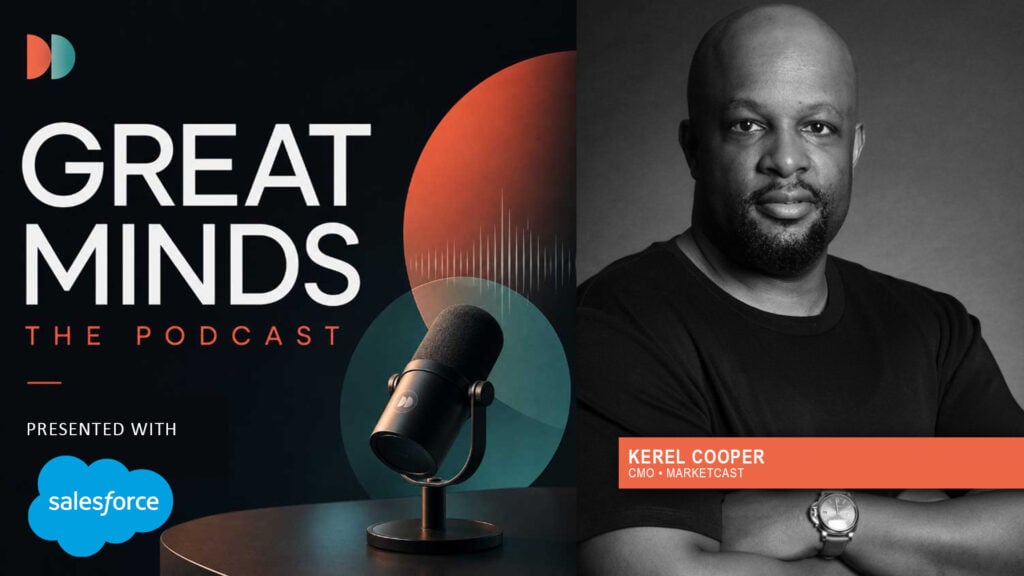
What the Dashboard Can’t Tell You About People Featuring Kerel Cooper of MarketCast
Joining us is Kerel Cooper, Chief Marketing Officer at MarketCast. Kerel shares why he believes marketers can learn from the strongest consumer brands and how human judgment should guide the use of AI in creative work.
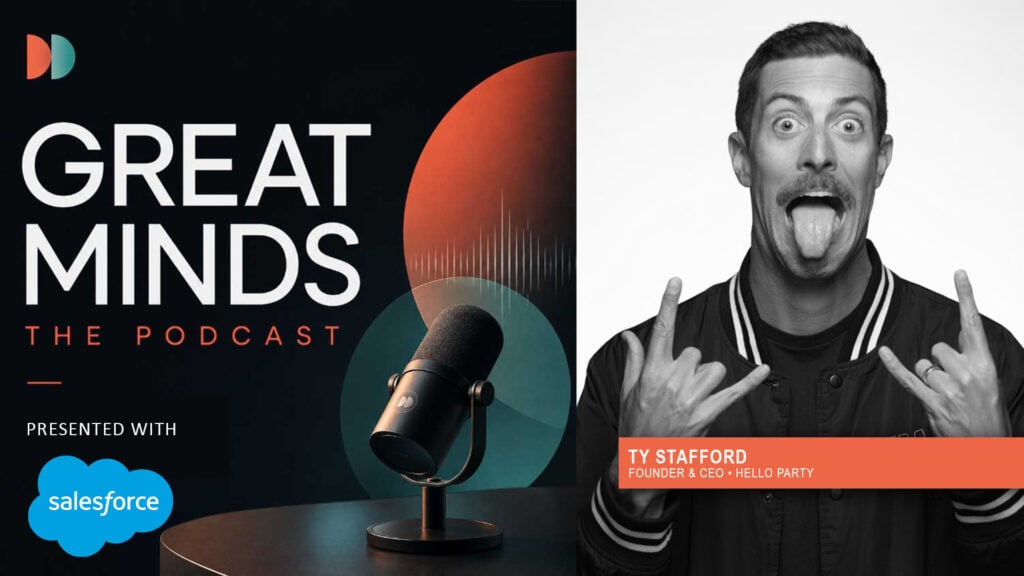
Would You Share It If You Didn’t Work Here? Featuring Ty Stafford of Hello Party
Joining us is Ty Stafford, Founder and CEO of Hello Party, whose experience spans making YouTube videos in his dorm room and working at Red Bull Media House.

From the Conference Floor to the Boardroom: How Kindle Scribe Is Changing the Way Executives Capture Ideas
At Advertising Week New York 2026, Amazon’s Kindle Scribe offers a glimpse into how business leaders are combining the familiarity of handwritten notes with the convenience of digital technology to make the most of an increasingly demanding professional world.