

Still Worth Paying For? The Question Every Subscription App Has to Answer
By Mick Rigby, Founder and CEO, Yodel Mobile
When did everything become a subscription? Streaming, podcasts, food boxes, toilet paper, seasonal seed packages for your garden, a new pair of socks delivered to your door each month. Where does the list end?
In the UK alone, there are approximately 155 million active subscriptions, accounting for around £26 billion in annual consumer spending. In the US, 90% of households have at least one paid video subscription, with subscribing households paying for an average of four services.
Services and products you wouldn’t have dreamt of a decade ago are now firmly cemented in the cultural zeitgeist. Even features that might once have been included in the price of a product increasingly arrive with a monthly fee attached. Apps sit in the middle of this, offering one of the most personal avenues for brands to build a relationship with customers and convince them to spend.
It is hardly surprising that the avalanche of subscription services has triggered a type of fatigue. That doesn’t mean that consumers are suddenly unwilling to pay for digital products and services, rather that they are much less forgiving when those chosen suppliers fail to justify the charge. For app marketers, that means convincing a consumer spoilt for choice that their app is worth a recurring place in their wallet.
Subscription fatigue is really value fatigue
The subscription model can look deceptively simple: acquire a user, get them through a paywall and retain them for as long as possible. The reality is that every app is fighting for a share of limited attention and spend. A fitness app, for instance, may be competing for the same monthly budget as Netflix or Spotify, even though the products serve entirely different purposes.
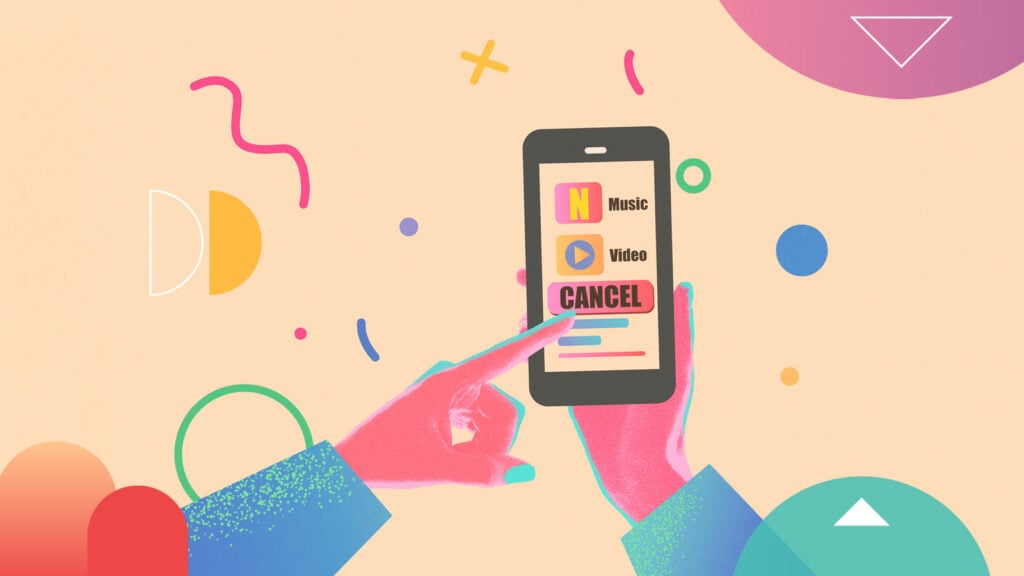
Our latest research at Yodel Mobile, surveying 4,000 consumers across the US and UK, shows how differently that value calculation can play out. Across both markets, consumers cited declining value, unmet expectations and reduced usage as reasons for canceling app subscriptions.
A one-off purchase only has to make sense once. A subscription has to prove its value at every renewal, prompting the same question each and every time: do I still need this?
Value shouldn’t stop after the paywall
App marketers spend a huge amount of time optimizing the moment somebody pays, but that can only take a business so far if consumers haven’t developed enough confidence in the product to make that commitment worthwhile.
US consumers are particularly more responsive to being shown before they are sold. Twenty per cent say freemium access, being able to use the basic product without paying the premium for additional features, would encourage them to pay for an app, compared with 13% in the UK, while brand familiarity and recommendations also carry more weight with US audiences.
A freemium model isn’t the only answer. Consumers are looking for different forms of reassurance before they pay out, whether that’s to try the product first or know that other people rate it highly. That makes sense when we look at the most trusted factor influencing app discovery; recommendations from friends and family (84%).
There is a wider lesson here about brand trust. What people hear from others can shape their perception of an app before they reach its paywall and a recognizable brand with a credible reputation has a stronger foundation for asking consumers to commit. And once they’re paying, that trust needs to be maintained through an experience that lives up to what was promised.
For marketers, the challenge is to adapt to these signals and reinforce value once the payment has gone through. If your app saves someone time, show them how much. If they are making progress against personal goals, make that visible. If there are useful features they have not discovered, surface them. The aim is to help customers realize the value they’re receiving before they start questioning whether the subscription deserves to stay.
It also means global app businesses need to be careful about assuming one proposition will travel everywhere. Building one product and making it available internationally may be relatively straightforward, but building a proposition that resonates in different markets is not.
Every renewal has to be earned
Perhaps subscription fatigue is the wrong diagnosis. Consumers are not tired of paying. They’re tired of paying for products that no longer earn their place. The idea that consumers are being more selective should be good news for businesses with genuinely valuable products.
It also forces app businesses to think more carefully about the relationship they’re building with subscribers. Clear communication and a product that continues to meet expectations can do far more for long-term loyalty than another round of paywall optimization. Trust may help secure the initial commitment, but continued usefulness gives people a reason to stay. Ultimately, every recurring payment comes back to one simple question: is this still worth keeping?
You May Also Like

Your Campaign Hit Its KPIs. So What?
It’s a question marketers have wrestled with for years. And despite all the data at our disposal, the answer isn’t always clear.

Neda Whitney, President and Managing Director, MATTE Projects
Join Katie Kempner as she sits down with Neda Whitney, President and Managing Director of MATTE Projects, for an inspiring conversation about forging your own path.

Your Audience Wants to Build Your Next Product. Let Them.
Every day, millions of people on social media are telling brands what they want to buy next. They do it in the comments, in their saves and in their stitches. They ask where to buy something, swap one ingredient for another and tag a friend who needs to try it. They aren’t just watching. They’re pitching.