

The Best Targeting Signal Isn’t in Anyone’s Data Stack

By Ryan Fitzgerald, Co-Founder + CEO, Net Conversion
We’ve seen it before: a media brief with some variation of “women ages 25 to 54” or “adults 35 to 64 with household incomes of over $100,000.” Audiences are lumped into these categories so platforms can sell them. We wanted to challenge this approach, so when my team fielded our latest national consumer survey, we found that the biggest divide in purchasing behavior had very little to do with age or income; instead, it boiled down to economic outlook.
As you can probably guess, most respondents report feeling lousy about the economy’s current state. Close to two-thirds of the consumers we surveyed say that the economy is worse than a year ago. However, the most intriguing group in the dataset was those who said the economy was doing better. This group appeared in every age band and income bracket, and when we compared the purchasing behaviors of optimists and pessimists, the two groups were fairly distinct.
Same economy, different mentality
Optimists, those who view the economy as doing better than a year ago, are three times as likely as pessimists, those who feel the economy is doing worse, to call themselves highly loyal to the brands they buy, reporting 31 percent versus 10 percent.
This group also adopts AI as a shopping tool in large numbers. Seventy-six percent use it for product research (compared with 48 percent of pessimists), and they’re far more likely to say an AI recommendation raises their trust in a brand.
Nearly everyone in this survey is also adjusting their household budget. Pessimists are primarily cutting back their spending, while optimists are more likely to grow their savings (51 percent vs. 31 percent) and buy early to lock in a good deal (30 percent vs. 18 percent), meaning optimists are budgeting to buy. The challenge is that no platform will sell you that audience.
How to attract the optimistic buyer
All that said, planners should start looking for patterns that point them toward the optimistic mindset.
Here are some good starting points:
Premium experiences. Our research points to premium experience shoppers as one way in. Experience-driven purchasers, like luxury travelers and frequent sports attendees, use AI for product research at 72 and 73 percent, well above the 54 percent average.
Life transitions and future planning. The forward-looking habits we saw in optimists, saving more and buying ahead, look a lot like how people act when they’re planning something monumental. Someone buying a first home, starting a new job, planning a wedding, or saving for a milestone trip is thinking a year out. Contextual and affinity targeting around those moments puts a brand in front of consumers with buying intent.
Viewed through the lens of AI usage, a shopper who lands on your site from an AI summary is telling you their intent for your brand. This clarifies that as a brand, generative engine optimization (GEO) should be a part of your core media plan, not just an SEO side project. The key to reaching this audience while they are still forming potential options is showing up in these findings.
What this means for your next media plan
If outlook is the signal, start with the brief. A brief that opens with an age range tells you very little about who’s ready to buy. Define your audience by the behaviors that point to it, and use age and income as a filter rather than the starting point. Modifying measurement is a key as well. Optimists are the customers most likely to stick around, so judge your campaigns on retention and lifetime value rather than cost per click alone.
Talk to optimists like investors
Reaching the desired audience is only half the battle. Your message also has to match their spending thought processes. These shoppers aren’t simply hunting for the cheapest option. In our survey, 43 percent of optimists said they buy to invest in a high-quality product versus 31 percent of pessimists.
They want to know how the product performs and how long it lasts. Make this payoff easy to see, and frame the offer as a chance to lock in value rather than a reason to cut back. A pessimist responds to “Save 30 percent this weekend,” whereas an optimist is more likely to respond to “will last a lifetime.” Most brands will need both versions in the market at once, matched to the signals each shopper sends.
Testing and measuring your target and creative
Of course, none of this should be a one-time switch. Some segments and messages will outperform others, so prioritize flexibility with your targeting and creative. Run optimist-minded segments against your standard demographic buy, and test value-lock messaging against cost-cutting messaging within each one. Then let the results move your budget.
Right now, most brands reach optimists by accident. Think: through a luxury travel buy or a strong showing in AI search, all without planning or measuring around outlook.
Economic optimists are a high-value audience defined by a mindset that no platform can provide for you. These consumers hold on tightly to brands that target them intentionally, while other brands find dead ends through discounts and deals.
You May Also Like

Still Worth Paying For? The Question Every Subscription App Has to Answer
When did everything become a subscription? Streaming, podcasts, food boxes, toilet paper, seasonal seed packages for your garden, a new pair of socks delivered to your door each month. Where does the list end?

Your Campaign Hit Its KPIs. So What?
It’s a question marketers have wrestled with for years. And despite all the data at our disposal, the answer isn’t always clear.
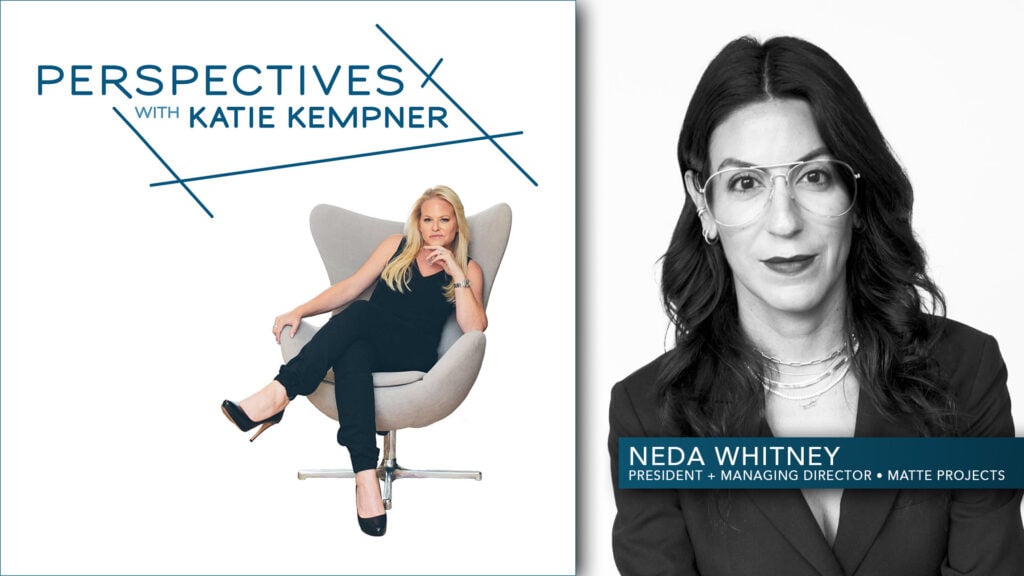
Neda Whitney, President and Managing Director, MATTE Projects
Join Katie Kempner as she sits down with Neda Whitney, President and Managing Director of MATTE Projects, for an inspiring conversation about forging your own path.