




Retailers Don’t Need More Traffic – They Need to Offer Consumers Relevant Experiences

By John Hughes, VP of Marketing, Wingify
Retailers have surely noticed that they are paying more to bring people to their websites these days, yet that traffic is converting at lower rates. Consumers are more cautious about what they buy, of course, given the economic conditions. But shopping behaviours are also changing, and meanwhile ecommerce teams are being asked to do more with shrinking budgets.
There is an obvious temptation to keep investing in acquisition via paid channels when conversion rates fall. But more visitors won’t necessarily solve the problem if retailers don’t understand what those visitors are doing once they arrive.
Another opportunity is to make more of the traffic they already have, by creating an experience that responds to the individual shopper rather than treating every visitor according to the same assumptions.
Consumers, not segments
For years, personalisation has largely been built around assumptions: women aged 25–30 like this; returning customers see that; shoppers who bought X are recommended Y.
That obviously has its place, but these approaches don’t necessarily tell a retailer what an individual shopper wants. They are, in effect, advanced guesswork. Several people can arrive on the same website with completely different levels of intent. One might be ready to pull the trigger on a jumper. Another could be researching and comparing the kind of jumper they want. A third might be idly browsing, with little purchase intent.
The difference between them isn’t necessarily visible in their demographic profile or purchase history, but their behaviour can provide clues. Scrolling behaviour, products viewed, search activity and the way someone navigates a site can help build a picture of what they are actually trying to do.
This changes the question retailers need to ask. Rather than asking who this customer is, they can start asking what this customer is trying to do right now. The technology now exists to interpret those signals and use them to adapt the shopping experience as the customer moves through it.
Relevant interventions
Think about a physical store. If someone picks up five items and takes them into the changing room, a shop assistant has a good indication that they’re showing purchase intent and can leave them to reach their own conclusions. Conversely, someone wandering around without picking anything up might need a different sales approach.
Technology now gives retailers the opportunity to do something similar online: to follow a consumer through their shopping journey, reading the signals they’re giving off and adapting the experience accordingly. Just like a good shop assistant, retailers can understand when to step in, what to recommend and, importantly, when to leave someone alone.
A high-intent shopper may not need a 10% discount waved under their nose when it just gets in the way of a purchase they were already going to make. We’ve all had the irritating experience of finding exactly what we’re looking for online, only to have a pop-up appear just as we’re about to buy, offering us something we didn’t ask for. Yet someone browsing without much intent might respond better to a recommendation, more information or an incentive to continue exploring.
The goal isn’t to interrupt more, but to understand the context well enough to make the intervention – or the decision not to intervene – more relevant to the consumer.
Traditional personalisation tends to think about relevance as something that can be established in advance: this customer belongs to this group, has done these things before and should therefore see this experience. Behavioural optimisation takes a different approach, using what the customer is doing now as another source of information.
The relevance loop
AI can help connect the different parts of this process. Behavioural signals provide an indication of what the shopper is doing; AI helps determine what response might make the experience more relevant; and experimentation establishes whether that response actually works.
Not every decision needs to be automated – and AI won’t always predict exactly what a consumer wants. But by helping retailers process more behavioural information, you also help them to make faster, more informed decisions about the experience they provide.
Connected optimisation
Historically, retailers have often had separate tools and platforms for analytics, experimentation, personalisation and optimisation. That can create a fragmented, protracted process where one system identifies a problem, another makes a change and another measures the result.
Connecting those stages means insight can flow more directly into action. Behavioural data can identify where customers are encountering friction, experiments can test potential solutions, and the results can feed back into the next decision. Instead of analytics, experimentation and personalisation operating as separate functions, they become parts of the same optimisation process.
The goal is continuous relevance
Retailers have no control over market conditions or trimmed budgets, but they can control how well they respond to the people already visiting their websites and stores. Creating a perfect experience for every customer may be an unrealistic ideal; far more achievable is to create an experience that responds to what people are doing, learns from it and improves over time.
The most valuable visitor, after all, could well be the one who’s already on your site. The challenge is learning what they’re looking for, responding in the moment, and using that learning to make the next experience more relevant.
About the Author
John Hughes, VP of Marketing at experience optimisation platform Wingify, explores how real-time behavioural insight can help retailers get more from the traffic they already have.
You May Also Like

Cutting Through The Noise of Fashion Week
Fashion Week is no longer what happens on the runway, brands inside and outside the agenda are finding ways to get involved.
More Than the Game: Building Brand Connections Across Sports Culture
On the panel presented by Paramount Advertising, Mary Kate Callen, SVP, Global Ad Marketing & Intelligence at Paramount Advertising, sits down with Neil Greskiewicz, VP, Sales, Paramount Advertising, Dayo Harewood, SVP, Creative, Brand Studio, Paramount Media Labs, and Amanda Evans, Head of Brand, Insights & Partnerships, Wayfair, to discuss Wayfair’s partnership with the NFL on CBS.
DOOH’s Next Frontier: Dynamic Negotiation and the Future of Premium Inventory
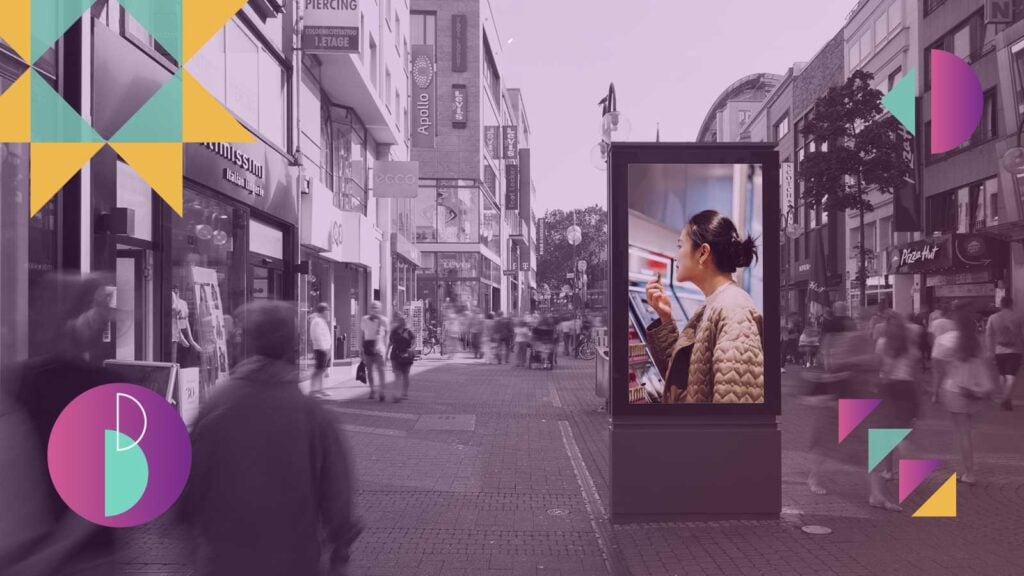
Digital Out-of-Home (DOOH) inventory has become increasingly sophisticated. Advertisers can now buy screens based on location, audience, time of day, context, share of voice, and rich data signals. Yet the mechanisms used to buy that inventory have remained comparatively rigid.