




Health and wellness is seeing a boom like we haven’t seen since the ’80s. Skincare routines have become daily wellness rituals, sleep is something we track and optimize, protein and nutrition have moved into the mainstream conversation, and wearable technology gives us more information about our bodies than ever before. We’re thinking more proactively about mobility, stress, recovery, gut health, and longevity. And now we’re starting to understand that dental health belongs in that same conversation, with growing research connecting oral health to cardiovascular and overall health. For brands and marketers, this broader definition of wellness is changing not only what consumers buy, but how they expect brands to talk to them about their health, their habits, and the products that become part of their everyday lives.
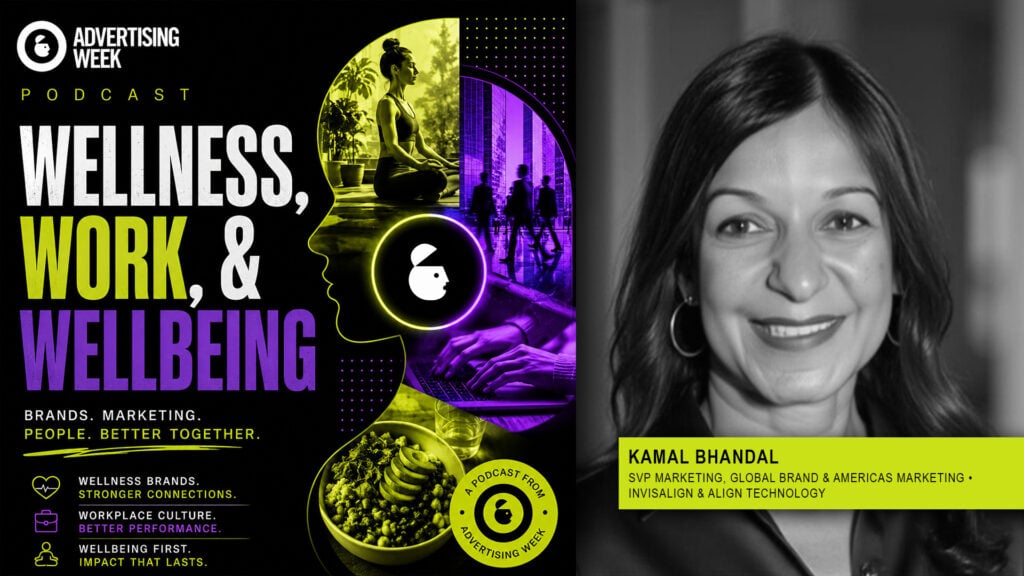
Welcome to the inaugural episode of Wellness, Work & Wellbeing. We are joined by Kamal Bhandal, SVP of Global Invisalign Brand, Consumer & Americas Marketing, to explore how the modern “Chief Household Officer” is reshaping healthcare marketing. We talk about earning trust instead of demanding attention, why education is becoming the foundation of great healthcare brands, and how the shift toward proactive wellness is changing the way people think about their own health. It’s a conversation about where healthcare, marketing, and wellbeing are headed next.
Five Key Takeaways
1. The “soccer mom” stereotype no longer reflects the modern household decision-maker.
Bhandal describes today’s “Chief Household Officer” as multidimensional: balancing career and household responsibilities while often making financial and healthcare decisions for the family. For brands, understanding her means moving beyond one-dimensional demographic profiles and recognizing the many roles she occupies at once.
2. Brands have to earn the right to be part of consumers’ lives.
The path to consideration is no longer linear. Decisions are shaped by friends, family, personal research, creators, communities, and a consumer’s own perceptions. Bhandal argues that brands can no longer simply talk at people; they need to participate in their lives, create conversations, and prove their relevance before they can expect trust.
3. Wellness is becoming more proactive, and education is central to that shift.
Consumers are increasingly looking to understand and take greater ownership of their health rather than waiting to react to a problem. Bhandal points to oral health as an example, where education about the connections between straight teeth, gum health, and overall health can help people make more informed decisions alongside their healthcare providers.
4. Relatability is replacing polish as a way to build trust.
Highly polished advertising can create distance when consumers increasingly want to see people and experiences that resemble their own lives. Bhandal says brands should focus less on perfection and more on relatability and human connection, particularly as marketing becomes increasingly digital and AI-driven.
5. The future of wellness may bring health and beauty much closer together.
Bhandal predicts an increasing convergence between health and beauty, describing a future in which “health becomes the new flex.” As consumers seek out the facts and science behind health claims, she expects proactive wellness, education, and real-world community to become increasingly important—and believes people will look to brands to help facilitate human connection both online and in person.
Listen & Subscribe