Retail Media Got Easier to Buy. But Harder to Run.

By Bess Devenow
Retail media has spent the past several years scaling at a pace few channels have ever matched, and global ad spend is now projected to surpass $200B by 2027. But the more interesting story isn’t the size of the number. It’s what’s happening underneath it: growth rates are cooling from 38.6% in 2021 to a forecasted 11.6% by 2027, and the channel is moving from rapid expansion into something that looks a lot more like maturity.
That shift matters, because it changes what separates the winners from everyone else.
For most enterprise brands, simply having access to retail media tools and signals is no longer the differentiator it once was. What matters now is whether you’re operationally equipped to act on them. And that’s where most organizations are starting to struggle.
Retail media generates an enormous amount of information—how consumers search, browse, convert, and respond, with a level of granularity traditional media rarely provides. In theory, that should mean faster optimization. In practice, most organizations are moving far more slowly than the channel itself.
The issue is rarely a lack of data. It’s the operational friction sitting between insight and execution.
Campaign changes still move through multiple approval layers. Media, analytics, ecommerce, and merchandising teams sit separately and operate on different timelines. Reporting may happen in real time, but decision-making rarely does. Even sophisticated retail media programs get slowed down by fragmented ownership and workflows built for a much slower era of marketing.
And that pace mismatch matters. Retail media sits right at the point of purchase, where consumer behavior can shift overnight—a promo cycle hits, demand swings, inventory tightens, a cultural moment lands. The longer it takes to respond, the less useful the signal becomes.
This is why the operational conversation is becoming so central to the future of the channel.
For years, the industry’s focus was on scale: more networks, more formats, more targeting, sharper measurement. Those things still matter. But as retail media matures, the bottleneck is less about capability and more about coordination.
The question isn’t whether you can activate campaigns across retail media environments. It’s whether you can coordinate planning, execution, optimization, and measurement across multiple teams and systems without slowing yourselves down in the process.
Many brands are now running programs across multiple retail media networks, which means navigating a different set of reporting structures, approval processes, measurement standards, and ad formats for each one. Without stronger internal alignment, scale itself becomes a source of inefficiency. Teams spend more time managing workflows than acting on insights.
Technology helps solve part of that, but operational clarity matters just as much. Better tools alone don’t create more agile organizations. A fragmented organization with sophisticated tech is still fragmented.
The companies adapting most effectively tend to treat retail media less as a standalone media channel and more as a cross-functional business capability. They’ve narrowed the distance between the teams responsible for commerce, media, analytics, and merchandising. They’ve aligned incentives around shared business outcomes instead of isolated channel metrics. And they’ve built workflows designed for faster decisions, not more layers of process on top of already fragmented systems.
The companies outperforming in retail media aren’t usually the ones with dramatically different tools. They’re the ones who’ve figured out how to reduce the friction between insight and action—treating the orchestration of teams, systems, and signals as its own discipline rather than something that happens by accident.
As retail media matures, operational speed stops being a nice-to-have and starts being the thing that separates winners from everyone else.
You May Also Like
Emma Witkowski, VP, Media Solutions at WildBrain
Why Gen Alpha deserves marketers’ attention now and why branded content can earn attention by becoming part of the entertainment families already love.
Live Nation Backs New Creator-Economy Company Creator Nation
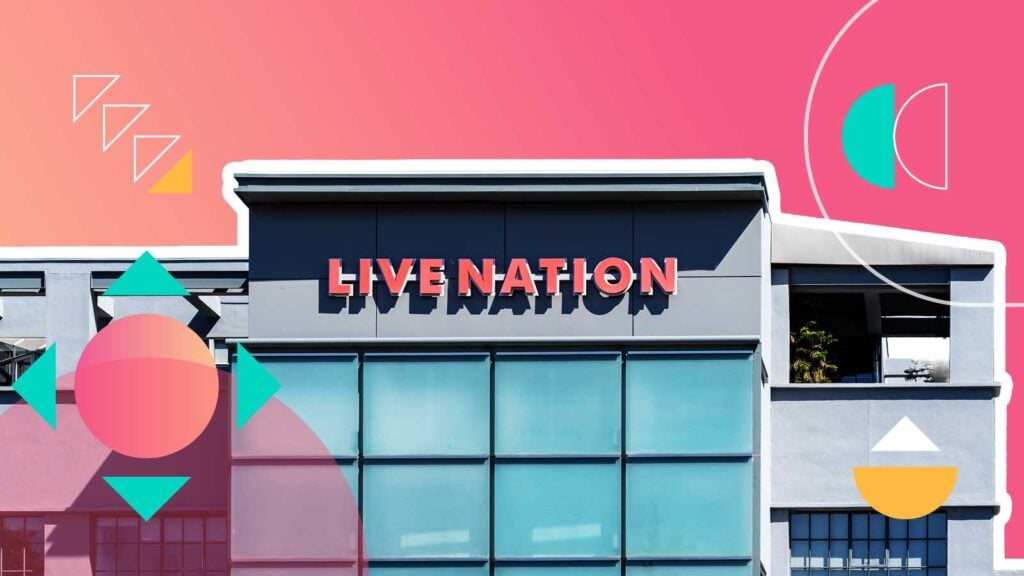
Live Nation is expanding its involvement in the creator economy, backing a new company designed to acquire, support and scale creator-management firms and adjacent businesses.

The Programmatic Stack Has Become Too Complex. AI Could Finally Simplify It
For three decades, digital advertising has added technology layers in the name of efficiency. The result is a programmatic ecosystem that can be remarkably sophisticated — and remarkably inefficient.