




AI Search Killed the Click. Intent Didn’t Die.

By Mallory Gray, Creative Director of Skydeo
The entire industry is panicking about the wrong thing.
Right now, every marketing team on LinkedIn is sprinting to get cited by ChatGPT. They’re rewriting their FAQs, stuffing schema markup into every page, and praying an answer engine quotes them. Meanwhile, the thing that actually mattered just died quietly in the background: the click. And with it went your cleanest read on AI search intent, the signal that told you what a real human actually wants in the moment they want it.
Here’s the uncomfortable part. The click wasn’t just traffic. It was the last reliable behavioral signal most marketers had. Now it’s gone, and almost nobody is talking about what replaces it.
The click was your intent signal. AI search just killed it.
Let’s start with the number that should be keeping you up at night.
Roughly 60% of Google searches now end without a click, about 64.82% in 2026, up from 50% in 2019. On mobile, where most of your audience actually lives, up to 77% of searches end without a click. And on Google’s experimental AI Mode? The zero-click rate hits 93%, with users never leaving the interface in three out of four sessions.
For a decade, the search funnel was the intent machine. Someone typed a query, clicked a result, landed on a page, and left a trail. That trail fed your retargeting pools, your lookalike models, your attribution dashboards. The query was the intent, and the click was the proof.
AI search collapsed that funnel into a single answer box. The user gets what they need and never moves. The query still happens (people aren’t asking fewer questions), but the behavioral exhaust you used to harvest is evaporating. AI search intent is still real. You just can’t see it through the click anymore.
That’s not a temporary blip. It’s structural.
Why GEO is the wrong obsession
So the industry’s answer is Generative Engine Optimization. Get your brand cited in the AI answer. Become the source the model trusts. Fair enough. Visibility matters, and citation in an AI answer carries real psychological weight with buyers.
But here’s where the consensus gets lazy.
GEO is a top-of-funnel awareness play wearing a performance-marketing costume. And the people selling it can’t even measure it. There’s a glaring gap in the 2026 data: roughly 54% of marketers plan to invest in GEO, but only 23% can actually measure it. Why? Because zero-click answers generate zero referral sessions. The most valuable AI influence, landing on a buyer’s shortlist, happens before any trackable touchpoint exists.
Read that again. The industry’s big strategic pivot is toward a channel it admits it can’t track.
Chasing citations doesn’t solve the intent problem. It papers over it. You can be the most-cited brand in your category and still have no idea which actual humans are in-market right now. Getting quoted by an answer engine tells you that your content is well-structured. It tells you nothing about the person reading the answer.
The real crisis isn’t visibility. It’s that AI search intent has gone dark, and most teams are optimizing for the symptom instead of the disease.
AI search intent doesn’t disappear, it just leaves the funnel
Here’s the reframe nobody’s giving you.
Intent didn’t die. People still want things. They still research cars, compare credit cards, rage-scroll for sneakers at midnight, and download apps the second a craving hits. The intent is as strong as it’s ever been. What changed is where it shows up.
When the click was king, intent expressed itself in the search funnel. Now that the funnel resolves before anyone moves, intent expresses itself somewhere the answer engine can’t intercept it: in what people actually do on their phones.
App opens. Repeat usage. Purchase behavior. The gaming app someone plays for three hours a night. The banking app they check every morning. The retail app sitting on the home screen. These are not guesses about intent. They’re intent itself: observed, deterministic, and completely untouched by the collapse of the click.
That’s the punchline of the zero-click era. The more search hides intent behind an answer box, the more valuable deterministic behavioral signals become. And the most honest behavioral signal in the world is what someone repeatedly chooses to do on the one device that never leaves their hand.
Deterministic mobile data: the signal that survives
Why does deterministic matter so much right now? Because a model is only as good as what you feed it. Search retargeting, intent scoring, and most lookalike audiences were quietly built on the clickstream, seeded from search trails and site visits that AI search is now erasing. When the seed data dries up, the model degrades. Garbage in, confident-looking garbage out.
Notice that the problem isn’t the modeling. It’s the input. Lookalike modeling isn’t dead. Done lazily, it’s just demographic guesswork dressed up in math. The version that survives is the one seeded on real behavior.
Deterministic mobile behavior never needed the click. It was already the truth underneath the click, the real AI search intent, observed directly instead of inferred from a query. So while everyone else watches their signal quality decay alongside zero-click rates, behavioral data just keeps working.
Picture it concretely. An auto brand used to find in-market shoppers by tracking who searched “best midsize SUV 2026” and clicked through to a review. In a zero-click world, that shopper gets the answer inside an AI summary and never clicks anything. The trail is gone. But the same person is still opening their auto-marketplace app twice a day, configuring trims, and checking loan calculators. That behavior never touched a search bar, never depended on a click, and it’s a far stronger purchase signal than any query ever was. Deterministic mobile data still sees the shopper the search funnel just lost.
And the economics back this up. The clicks that do survive in AI search convert dramatically better, with visitors from AI-driven results converting at notably higher rates than traditional organic. The market is concentrating into fewer, higher-intent moments. If you want to win those moments, you need to know who’s actually in-market before they ever touch a search bar.
That’s a behavioral question, not a citation question.
What smart marketers do tomorrow
Stop treating GEO as your intent strategy. It’s an awareness tactic. Keep doing it, but stop pretending it tells you who to target.
Then do the thing the panic is distracting you from: anchor your targeting to observed behavior instead of search-derived intent.
Build your audiences from what people actually do on mobile, things like app engagement, real purchase signals, and repeat behavior, then activate those segments across social, programmatic, and CTV. That’s the layer AI search can’t take from you, because it was never dependent on the click in the first place.
The marketers who win the zero-click era won’t be the ones with the best schema markup.
They’ll be the ones who realized AI search intent moved out of the search box and into the behavior, and who already had a deterministic read on it.
The click is gone. The intent isn’t. Go find it where it actually lives.
—
About Mallory Gray, Creative Director of Skydeo
Mallory Gray is the Creative Director of Skydeo, a high-performance audience targeting platform for advertisers and agencies serving auto, retail, tech, and mobile gaming industries.
You May Also Like
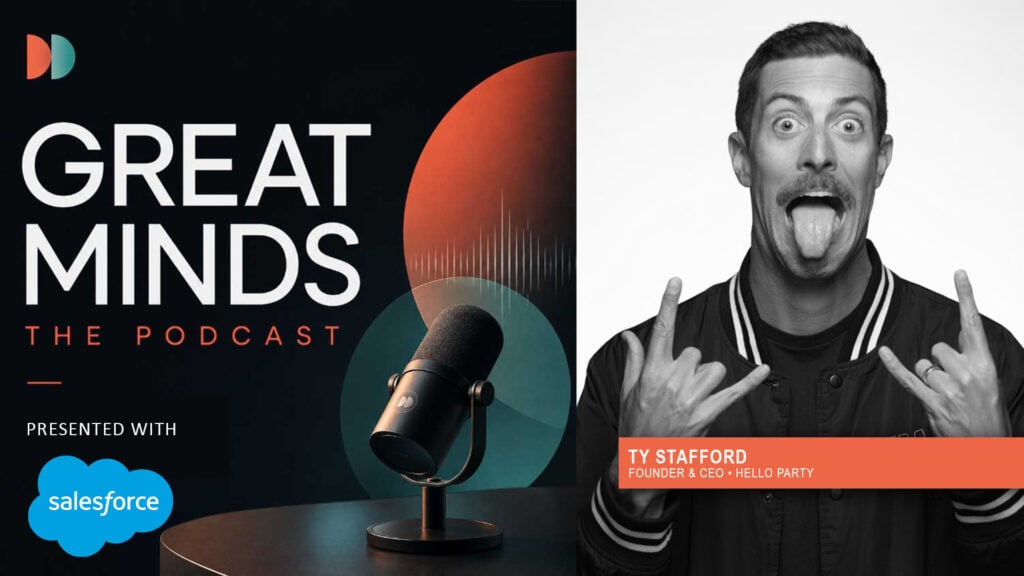
Would You Share It If You Didn’t Work Here? Featuring Ty Stafford of Hello Party
Joining us is Ty Stafford, Founder and CEO of Hello Party, whose experience spans making YouTube videos in his dorm room and working at Red Bull Media House.

From the Conference Floor to the Boardroom: How Kindle Scribe Is Changing the Way Executives Capture Ideas
At Advertising Week New York 2026, Amazon’s Kindle Scribe offers a glimpse into how business leaders are combining the familiarity of handwritten notes with the convenience of digital technology to make the most of an increasingly demanding professional world.
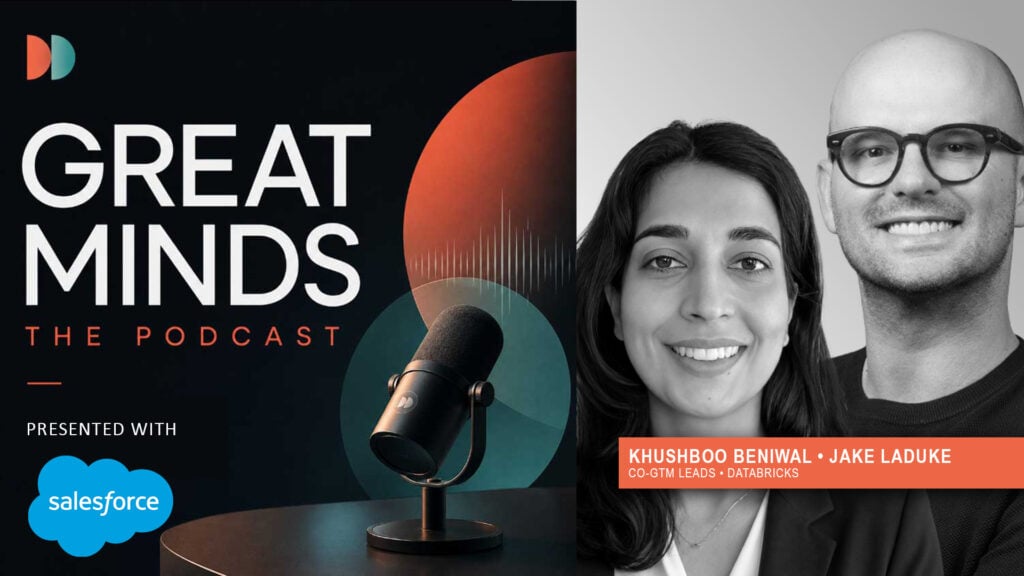
What Will the Next Advertising Dollar Deliver? Featuring Jake LeDuke and Khushboo Beniwal of Databricks
Joining us are Jake LeDuke and Khushboo Beniwal, Industry Go-to-Market Leaders for Media, Entertainment, and Advertising at Databricks.