




Amazon Gets The Whole Picture

By Andrew Sandoval, VP Biddable Media at Croud
When the Amazon juggernaut rolls into a sector, market dominance is assured – it’s a question of when not if. Its latest venture? The trusty television set. Earlier this month it was announced Amazon would be selling its own branded TVs, an inevitable extension of its Fire Stick products.
Beyond just making our homes even ‘smarter’, the Amazon TV presents an exciting proposition for the future of shoppable TV. Currently, only 36% of US shoppers are interested in shoppable ads on their TV. On the surface, therefore, it might seem that Amazon is entering quite a low-interest category, but with access to the biggest screen in the house and one of the oldest and still most compelling brand communications models, Amazon is in pole position to dominate this burgeoning category.
One of the current challenges for shoppable TV is friction, an obstacle Amazon has built its empire on eliminating from its other products and services. If a frictionless experience for consumers is what it takes for shoppable TV to succeed, then the opportunity is ripe for Amazon to exploit.
The key to this is ecosystems. It isn’t enough for Amazon just to pop up on another shoppable TV channel – like the Home Shopping Network, for example. Its strength is in its all-encompassing ecosystem and a branded TV channel is the final piece of the puzzle that will let Amazon create the ultimate shopper ecosystem.
Why is this important?
Imagine shoppable TV today. You’re sitting on the couch in front of the TV and an ad or infomercial comes up. There’s a number to call, a website to visit, or, for the really modern ones, a QR code to snap. Cue fumbling for your mobile, waiting for it to wake up and boom, the ad is gone.
Even if you do get to the number or the website, there’s time for second thoughts. Or at least time to compare – price, features, brand. You might have been interested in the product that was on the screen, but now there’s the whole worldwide web of choices at your fingertips. Did you really want the Beats buds or just a really slick pair of new headphones? The brand paid for the ad, but someone else got your order.
Amazon owns this ecosystem. If you’re watching its channel, you’re already logged in through your Prime and your bank and address details are stored. You’re using your Firestick or a compatible remote and when the ad comes up, it’s just one click of a button and you’re done. No hunting for the phone, no scrolling through menus. And even if the remote has gone down the back of the couch cushions, it’s the work of a few seconds to shout for Alexa to pick up the slack. No other player in this space, not Apple, not Google, not Samsung which leads the pack in connected TVs, has the connected ecosystem needed to deliver such a frictionless experience.
And now we’ve got the consumers on board, which brands will want to use this unique shoppable ecosystem?
Finally, it looks like it might be time for CPG to shine. Amazon already identified the direct-to-consumer friction points that CPG was trying to solve with its Dash buttons, but they never quite took off. Where to put them was one thing – do you really want to go hunting in the parlor when you remember you need diapers? But seeing an ad on TV and pressing a single button to stock up while you’re there? It’s a literal no-brainer. No thought required. No inconvenience is necessary.
This doesn’t mean that so-called big-ticket items are necessarily ruled out of the one-click shoppable TV experience. While the cohort that buys a Lexus on a whim might be a very small and unique one, the one that can click to schedule a test drive or request a brochure or call back is much larger.
Amazon is yet to confirm that branded TV is indeed where the juggernaut stops next but it looks highly likely, and we can already see its potential beyond. Through Prime Video and other streaming and studio investments, the synergies between product placement and shoppable entertainment are clear. The X-Ray function on Prime Video already shows the IMDb profile of actors in the current scene. Why not the clothes they’re wearing, the beer they’re drinking or the table they’re sitting at?
Commerce today is increasingly a world of Amazon’s imagining and shoppable TV looks set to have boundaries that only it can set.
You May Also Like

Why Static Audience Segments Break Down at Christmas
By James Sexton-Barrow, Head of Strategy and Planning at Mobsta Christmas remains one of the biggest moments in the retail calendar, but the way consumers shop for it is becoming […]
The Future of Advertising Belongs to Creative Systems, Not Creative Departments
Advertising has spent years borrowing the language of entertainment, but the more consequential change is happening behind the camera. Agencies are increasingly being asked to operate like studios, production companies are being invited into the creative process earlier, and creative leaders are finding that their jobs now extend far beyond deciding whether an idea is good enough to put in front of a client.
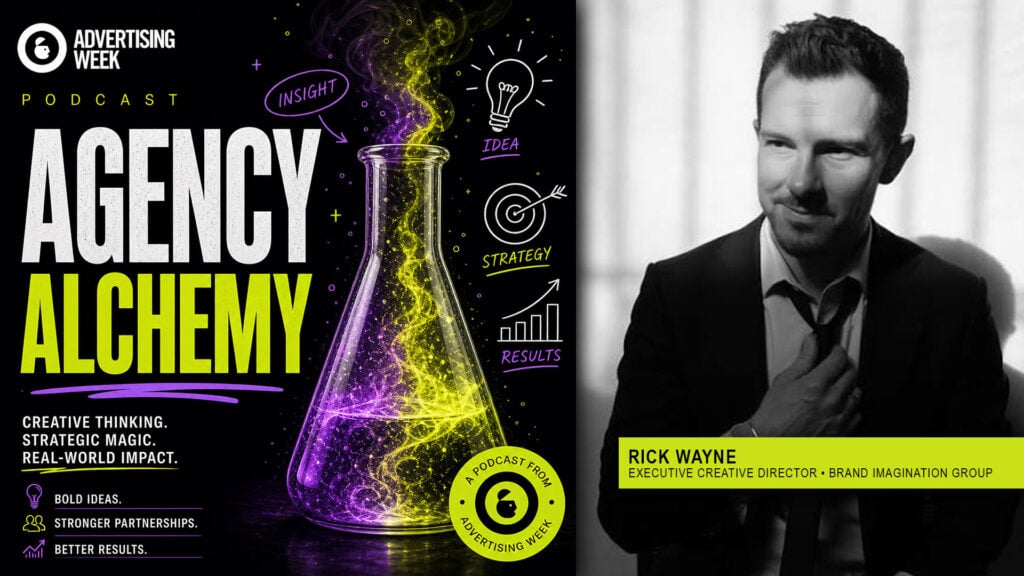
Building a Better Creative Engine, Featuring Rick Wayne of Brand Imagination Group
What happens when Hollywood filmmaking collides with the agency world? Rick Wayne, Executive Creative Director at Brand Imagination Group, joins Agency Alchemy to explore why the traditional agency model is struggling to keep pace with modern creativity and what might replace it.