




The Gold Dust of Brand Experience
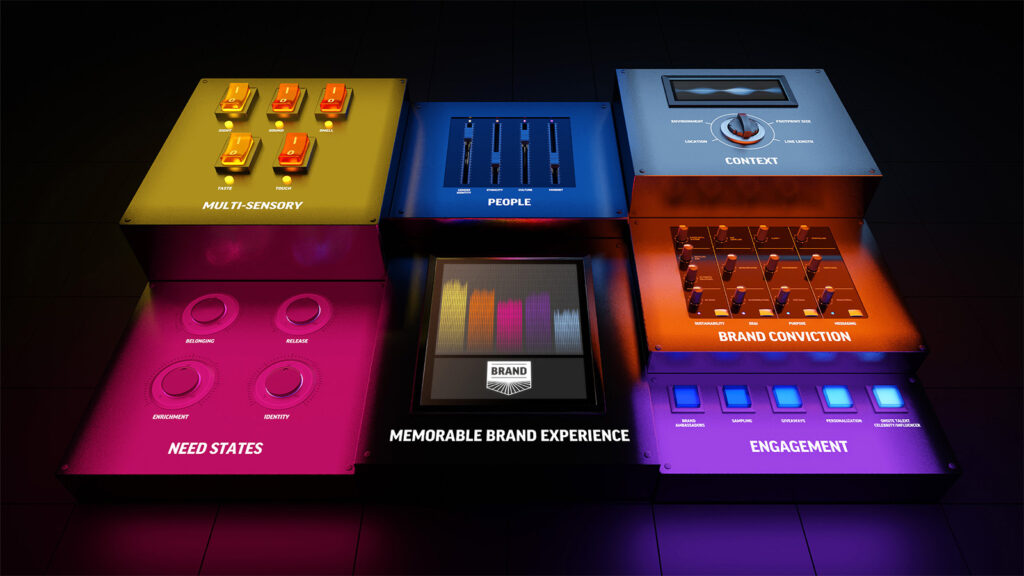
In the past year, we observed over 55 events in 41 states, where more than 450 brands delivered 550+ unique activations to a diverse group of fans, ethnicities, and cultural tastes. To determine the rankings of the 2022 GMR Brand Experience Index, we measured each activation in relation to a Three Factor Model. This is the same Three Factor Model we use to build our own brand activations, so we’re letting you in on the secret sauce.
- Sensory Immersion: the number and intensity of senses engaged within a brand experience. And to what extent they grab your attention. Examples include which senses and the centrality of the experience (i.e. was this the main attractor or simply one of many touchpoints).
- Level of Engagement: the volume of exchanges between a brand and the individual. This incorporates the number of touchpoints, the duration of each and the type of content aligned to that touchpoint. Examples include BA engagement, premium giveaways, access to talent/influencers.
- Relevance to Context: the degree to which the brand and its activation aligns with the event and delivers against the audience’s passions and interests. This accounts for the” fit” of the brand at the event, the activation components and audience expectations.
If we think of our memories as a string of lights, sensory immersion, intensity of engagement, and contextual relevance determine which bulbs burn brightest. At GMR, our experience design philosophy is guided by this “String of Lights Effect®.” But some memories burn brighter than others, so much so that when a person encounters a stimulus associated with the event it’s formed around, that event plays back in their mind. They’re literally transported back to that moment. These are called autobiographical memories, and we all have them. Want to learn more about the String of Lights Effect, check out our video.
Initial results have shown that when a person is fully engaged in a multi-sensory brand experience, they’re almost six times more likely to remember that brand when considering other options. The more robust the engagement and immersion levels, the more memorable the experience. However, if there’s little relevance to context and people are left confused, your brand may still be remembered, just not for the right reasons.
You May Also Like
Is the Open Web Dying? It’s Complicated.
Don’t treat agents as a threat to traffic, but as a new audience worth serving.

The Clean-Signal Advantage: How Predictive Marketers Beat AI-Driven Ad Fraud
Against the more than $750 billion spent on advertising last year, that share was roughly $165 billion that never reached a real customer.

Did Mr. Clean Have a Lesser-Known “Mean” Jingle?
By Heather Taylor Mr. Clean’s appearance has changed significantly over the years since his 1957 debut. He was initially drawn to look like a genie by the creatives at ad […]