Who Was the Coca-Cola Sprite Boy?
By Heather Taylor
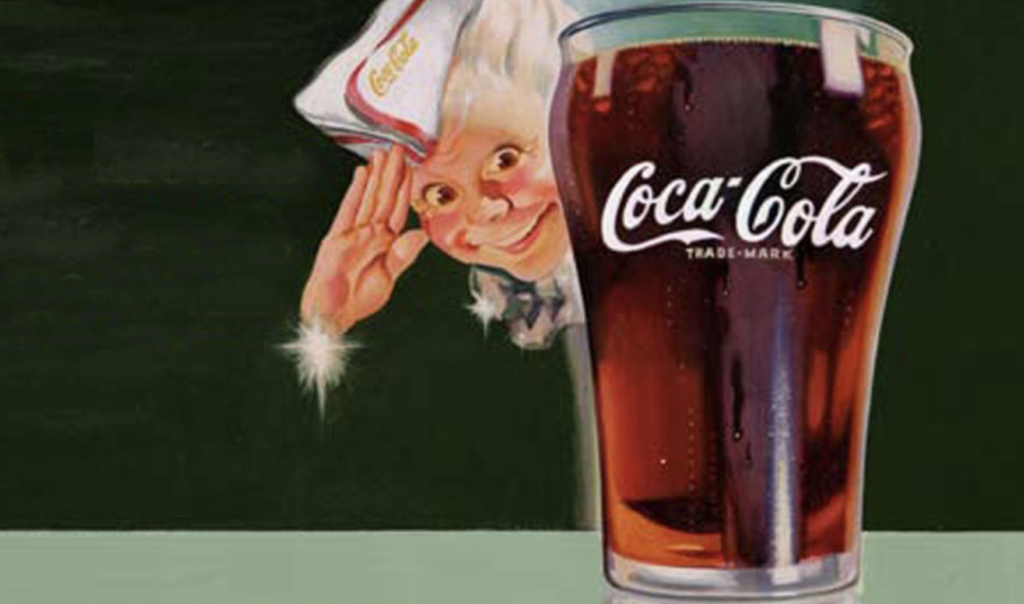
If you didn’t know any better, you might assume that Coca-Cola’s “Sprite Boy” was a brand mascot created for one of their most famous soft drinks, Sprite. However, in an M. Night Shyamalan-esque twist within the world of big brands, Sprite Boy had nothing to do with the lemon-lime soda. In fact, he made his debut in Coca-Cola advertisements nearly two decades before Sprite was introduced!
Archie Lee, an executive at D’Arcy Advertising Agency who worked on the Coca-Cola account in the 1940s, developed Sprite Boy while Haddon Sundblom, an illustrator now known for his iconic renderings of Coca-Cola’s Santa Claus, drew him. He made his introduction in Coca-Cola ads in 1942, sometimes appearing alongside Santa or on his own, but always on a mission to help consumers connect their nickname for the beverage brand, “Coke,” with the Coca-Cola brand name.
Sundblom’s Sprite Boy had a unique appearance. Synonyms for “sprite” include fairy and nymph, and Sprite Boy had plenty of elf-esque features. He was depicted as grinning, wearing two different hats, and only ever showing his head and hands. These hats alternated between a soda jerk’s cap and a hat designed to look like a bottle cap, created to represent both sides of the Coca-Cola business. Stars surrounded Sprite Boy, a nod to both his sparkling personality and the carbonated bubbles inside of Coke.
Despite his popularity with consumers, Sprite Boy was phased out of ads by 1958. Three short years later, the soda would be introduced to soft drink fans. While Sprite Boy may be gone, his legend still lives on in bottles, cans, and glasses of Coke everywhere. If you look hard enough at those bubbles, they might actually turn out to be stars!
You May Also Like
What the Dashboard Can’t Tell You About People Featuring Kerel Cooper of MarketCast
Joining us is Kerel Cooper, Chief Marketing Officer at MarketCast. Kerel shares why he believes marketers can learn from the strongest consumer brands and how human judgment should guide the use of AI in creative work.
Would You Share It If You Didn’t Work Here? Featuring Ty Stafford of Hello Party
Joining us is Ty Stafford, Founder and CEO of Hello Party, whose experience spans making YouTube videos in his dorm room and working at Red Bull Media House.

From the Conference Floor to the Boardroom: How Kindle Scribe Is Changing the Way Executives Capture Ideas
At Advertising Week New York 2026, Amazon’s Kindle Scribe offers a glimpse into how business leaders are combining the familiarity of handwritten notes with the convenience of digital technology to make the most of an increasingly demanding professional world.