




Ad Tech Can’t Seem to Shake Its One Key Problem: It’s All Hat, No Cattle

By Lance Wolder, Head of Strategy at PadSquad
Ad tech keeps reinventing itself, and marketers keep paying for it. From curation to attention measurement, we’ve watched trend after trend steal headlines and dominate conference stages, without meaningful accountability. Somewhere along the way, we stopped asking whether any of it solves a real problem, or if there’s even a problem that needs solving.
We celebrate new terms before we understand what they even do. One disappears, another rolls in, hardly different from the first, and we’re expected to pretend it all makes sense. This has led to a conflict of confidence, not a lack of it, but too much of the unsubstantiated kind.
As these new ideas keep rolling in, we’re presenting them as silver-bullet solutions, all while hoping no one asks the obvious question: does any of this actually work?
Too Busy Chasing Trends
Curation, identity resolution, connected commerce, contextual 2.0. If it sounds like it came from a VC pitch deck, it probably did.
We don’t grant ourselves enough time to validate the need and use of new tools and ideas. New solutions emerge in this industry, celebrated as cutting-edge innovations, but are rarely measured. In fact, their value is impossible to determine when we don’t know what we’re measuring. Although likely unintentional, when it happens repeatedly, it begins to feel like confusion is a recurring theme in the playbook.
There are certainly holes in the industry that need to be plugged, but it’s important that we take the time to test tools and ensure their effectiveness. Brands and agencies should be able to turn to us for measurable results, not squinting into the horizon as we blindly chase the newest trend.
The Next Big Thing Looks Like the Last Big Thing
Curation promised control. Attention promised quality. However, like many trends in ad tech, both were rushed to market, surrounded by hype and little clarity, and eventually wore out their shine. The only thing completely clear is that lots of marketers don’t know how to use them, to no fault of their own. Good ideas in theory aren’t, or can’t, always be carried out well.
They always say that you truly understand something when you’re able to teach it to someone else. But adtech is so dynamic that just when you think you might be onto something, the whole process is updated or uprooted, and you’re back to square one.
Even worse is when the industry collectively decides on a new name for a process, sending marketers into spirals of confusion when we all just need a working glossary.
What’s It All For?
Forget all the buzzwords, and go back to the basics. We need to ask ourselves the most important question: Is this helping brands reach real people in meaningful ways?
That should be the baseline, not a bonus. Anything added to the marketplace should be built to improve outcomes, not muddle impact.
Let’s focus on what matters: insights fueled by data, strategy that responds to human needs, creative that connects emotionally, and measurement that proves we are on the right path.
We don’t need more buzzwords. We need clarity and the accountability you’d expect of any good cowboy.
You May Also Like
The Entertainment Revolution: Why Brands Need to Think Beyond the Screen
As gaming, streaming and social media reshape how audiences experience entertainment, marketers face a fundamental challenge: Learning to participate in culture rather than simply advertise alongside it.

More Than the Game: Earning a Place in the Fan Conversation
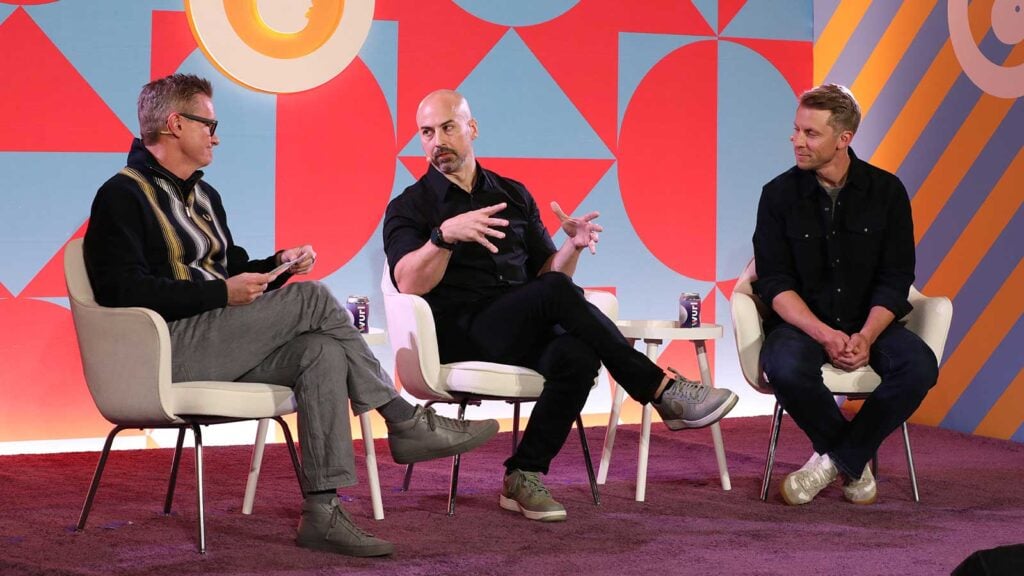
Ann Piper, Head of Sales for the Americas at Spotify, moderated the discussion with Angela Steele, Chief Client Officer, U.S. at WPP Media; Wes Harris, Director of Marketing for YouTube TV at Google; and Juliet Litman, Director of Talent and Operations at Spotify Podcast Studios.

Traditional Attribution and Promo Codes Share the Same Blind Spot
Traditional attribution and promo codes share the same blind spot.