Audience-First, Border-Free: pDOOH’s Next Chapter in the US

By Lindsay Shelton is Director, North America at VIOOH.
The programmatic digital out of home (pDOOH) market in the United States has moved past the adoption stage. According to VIOOH’s State of the Nation 2026 report, among recent US buyers, 34% of advertising campaigns included pDOOH in the last 18 months, and this is forecast to reach 52% over the next 18 months. Investment is expected to rise by an average of 49%, up sharply from 30% just two years ago. And, according to eMarketer, DOOH in the US will account for 45.2% of total OOH ad spending in 2028, up from 22.0% in 2016. This is undoubtedly a market entering its next phase of growth.
That growth needs supply to keep pace, and 2026 has seen significant progress on that front. Since January, we’ve welcomed a run of major US media owner partners onto the platform, that’s 22 media owners already live, with plenty more partner announcements due later this year. That means we now have coverage across premium inventory and powerful retail media owner partners, and in addition to media owner partnerships, we have autonomy across premium screens.
Unlike others in the market, we have partnered with media owners that best represent the US market and are able to deliver highly curated campaigns at scale. Individually, each partnership adds impressions, and collectively they’re solving the US market’s defining structural challenge: fragmentation.
With a multitude of media owners and supply pathways, achieving national scale has historically meant traders setting up and managing separate deals across numerous partners, creating workload and slowing activation. This is becoming a challenge of the past.
Reaching the right audience
Perhaps the clearest signal for optimism this year is what US marketers want to buy. Fifty-nine percent said they’d be likely to use a curated solution in the next 18 months to reach the right audience in the right environment, demonstrating a preference for buying pDOOH the way marketers already buy digital media.
That’s the thinking behind VIOOH Select, our curated marketplace, available in the US with dedicated Health & Fitness, Event-based, Political, Convention, Large Format and Retail packages. Rather than stitching together separate deals with each media owner, buyers can activate a single curated Deal ID, with the audience and environment defined upfront.
The right packaged inventory is specifically tailored by our in-house experts, delivering efficiency and simplicity at scale. It cuts down the paperwork and back-and-forth of separate campaign briefs, while still giving media buyers the brand safety and transparency of a private marketplace.
Interestingly, AI is no longer experimental for US media buyers, it’s embedded across the workflow. Almost half (47%) are already using it to generate creative and forecast audiences. Adoption runs deeper too, with 43% applying AI to measurement and attribution, intelligent inventory selection and dynamic budget allocation alike.
In-house we’ve been using an early iteration of VIOOH’s AI-powered ‘seller agent’, which delivers quicker brief responses and detail on why certain screens are selected. The platform can translate any ad campaign brief, DOOH or otherwise, into a comprehensive media plan. Whether it’s a digital out of home brief or brief that doesn’t include DOOH, it will create a map and explanation about why specific screens are the right fit.
That momentum is spilling into execution with 11% of US marketers already running dynamic creative optimization live in campaigns, against 7% globally – the clearest sign yet that AI-eased creative workflows are helping the US move faster from testing AI to trusting it.
Media planning across borders
What’s also striking is how many of the briefs behind that growth aren’t originating in the US. As our programmatic infrastructure matures, we’re increasingly planning and activating pDOOH across Designated Market Area (DMAs) within the US and across international borders in the same buy.
International advertisers are using our platform to activate US inventory without needing a local trading desk on the ground, while US brands are doing the same in reverse, regularly extending campaigns into the UK, France and Middle East among other markets. For agencies managing multi-market accounts, this borderless planning capability, with one platform and one set of standards, is becoming as important as scale itself.
From curiosity to pDOOH campaign
So, if you’re an advertiser looking to tap into the power of pDOOH, how do you get started? My five key actions for advertisers looking to get started with pDOOH in the US include:
1: Start with the brief, not the format. Bring your broader marketing brief, not a pre-packaged out-of-home ask, and let a specialist partner show you where and why pDOOH fits, rather than assuming you need to think in channel silos first.
2: Set your measurement framework upfront. Define how you want success measured in the brief itself. Programmatic moves too fast for attribution decisions to be bolted on after the campaign is live.
3: Choose a DSP-agnostic partner. Working with a partner that sits independently between you and the DSP means no competing fee structure, and no bias toward inventory that isn’t right for your audience.
4: Ask for the reasoning, not just the inventory list. An expert partner should be able to explain why specific screens were selected for your audience and objective, not just hand over access and leave you to figure it out.
5: Use major cultural moments as an on-ramp. Events like the World Cup and the upcoming Olympics are proving to be a low-risk way for advertisers new to the channel to test pDOOH at scale before committing to always-on activity.
Programmatic DOOH in the US is increasingly benchmarked against the same standards as search, social and display offering audience precision, measurement and speed. With 91% of US buyers already planning pDOOH as part of wider digital activity, and marketers telling us data integration and programmatic optimization are now their top investment priorities, the next chapter will be won on capability, not just access.
This is what a maturing market looks like: a supply side substantial enough that fragmentation is no longer a credible excuse to sit it out. A platform that lets media buyers plan across DMAs and international borders as a single campaign. And a curated, audience-first way to buy that finally matches how marketers already plan most of their media campaigns. Put those together with a 49% forecast increase in advertising investment, and the US pDOOH market isn’t just growing, it’s accelerating at pace.
About the Author
Lindsay Shelton is Director, North America at VIOOH. For more information visit: viooh.com
You May Also Like

The Localization Trap: Why Global Brands Fail When They Treat America as One Market
The bigger mistake is assuming that America is a single, culturally uniform market. It is not.
Please Stop Chasing Prompts, Featuring Dan Baptiste of Skyword
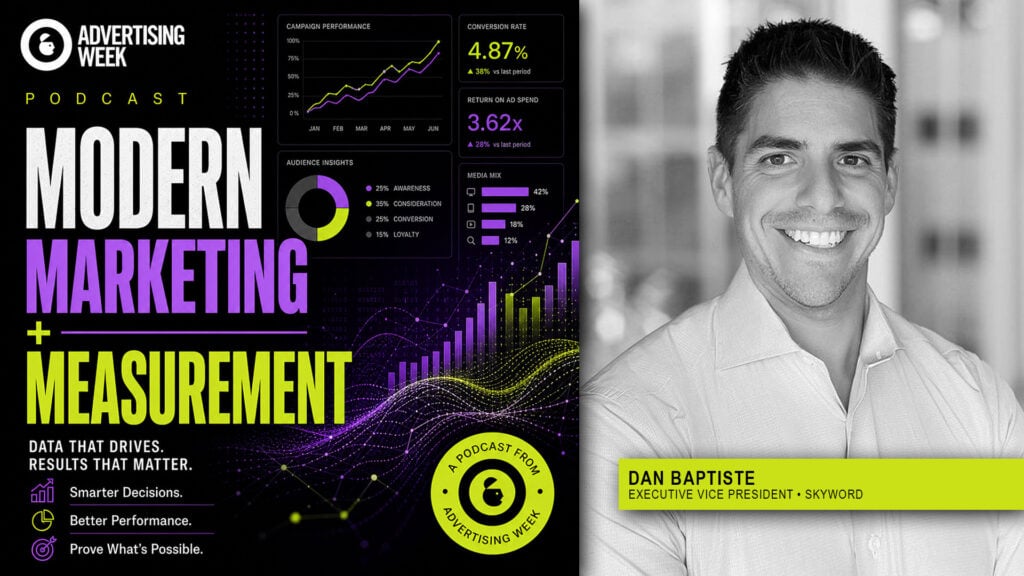
Dan Baptiste, Executive Vice President, Skyword, joins Modern Marketing and Measurement to discuss how brands can build authority through original expertise, a clear point of view, and teams that actually work together. Drawing on his experience helping companies tell their stories, Dan explains how a Vegas resort can accidentally become known for gambling instructions, why being cited is different from being recommended, and what marketing departments might learn from looking beyond their own org charts. He brings humor to a serious question: What does a brand contribute that customers cannot get everywhere else?

Your Marketing Looks Like Your Org Chart. Dan Baptiste Has Some Notes.
Choosing a position can make executives nervous. If a brand becomes more specific about what it believes and whom it serves, what happens to everyone else?