




Results, resilience, and the Route to Ready for 3 brands
By Bethany Poole Senior Director, Ads Marketing, Google
If we’ve learned anything from each pivot and zigzag over the past 18 months, it’s that things can — and do — change in an instant.
That’s why we at Google spend a lot of our time
thinking about readiness. It’s a simple idea that’s always been key to business success, and it’s never been more important for marketers.
Today, a successful brand is ready for volatile markets and disruptive shifts in consumer behavior, supply chains, and society at large. It’s also ready to deliver on the needs of every single customer, wherever they are, whether it’s for the first time or the 100th.
If we aren’t clear about what we mean by “digital transformation,” then it’s easy to imagine a long, complicated journey.
We’re in a new era, in which COVID-19 has accelerated digital consumption habits so much that analysts talk about seeing a decade’s worth of change happening in a few short months. Marketers must create messaging that’s agile and responsive enough to capture short-term opportunities, while also building long-term business resilience. But how?
The standard answer has been “digital transformation,” but, too often, the term is used as a buzzword. And if we aren’t clear about what we mean by “digital transformation,” then it’s easy to imagine a long, complicated journey.
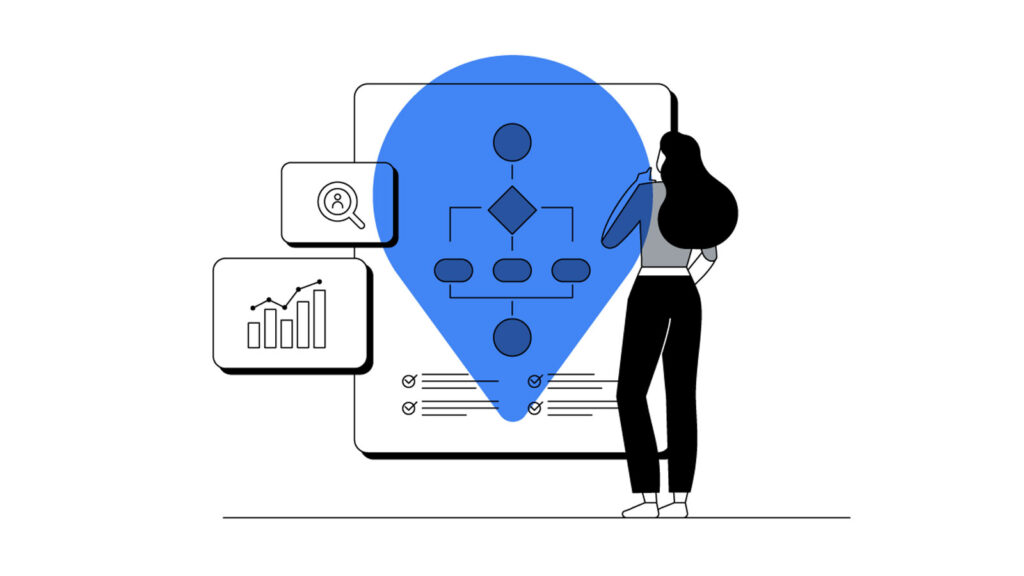
At Google, we don’t think transformation should be a grand project. It should be a self-guided, step-by-step journey, propelled by a flywheel like the one below. We call it the “
Route to Ready.”
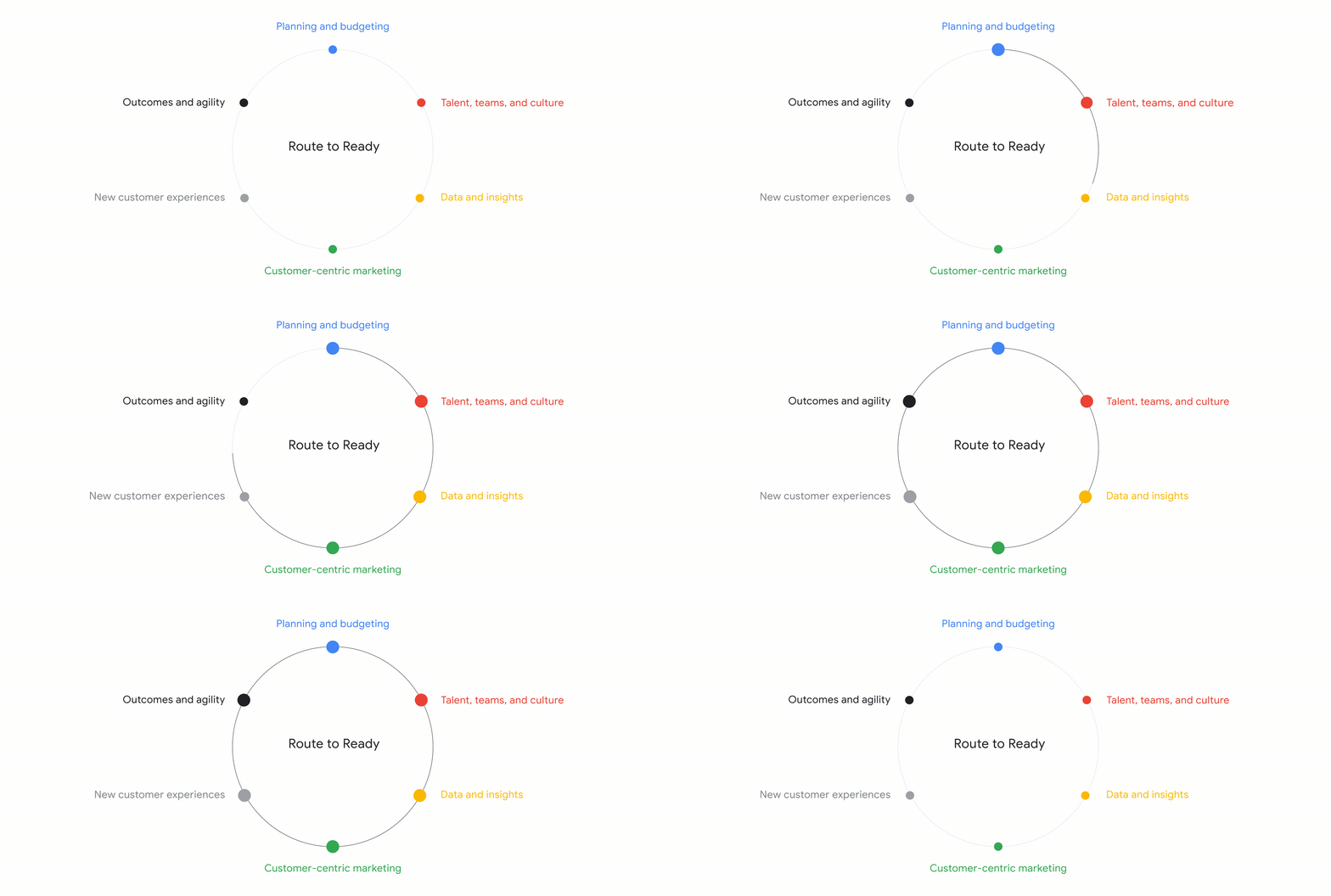
The journey will also depend on your company’s needs, which is why this approach lets you choose the entry point, based on what makes the most sense for your business.
To inspire and help you begin the Route to Ready, here are examples of how three successful brands got started on their own journeys.
Mondelēz International
For Mondelēz International — one of the world’s biggest snack food companies — the entry point was
customer-centricity.
Its Route to Ready began with a single insight: that meeting each consumer where they are means evolving from a mass-marketing strategy to one that delivers a more personalized, helpful set of experiences. This helped galvanize the entire company.
With customer-centricity as the guiding principle, teams from across Mondelēz International — from marketing and information business systems to finance and customer service — broke down their organizational silos to align on shared goals and adopt an agile approach to a companywide initiative called “Empathy at Scale.”
Deploying its digital strategy across multiple markets has helped Mondelēz International focus on building deeper, longer-lasting relationships with customers.“Don’t go far for hunger” campaign
the company launched in India for its Cadbury brand, which used automation to drive consideration among specific audiences. Optimized ad creative combined eight consumer passion points, like cricket or “Game of Thrones,” with six other contextual elements, including time, day of the week, and location. In all, the process generated 92,000 unique, personalized assets that drove a 50% increase in ad recall, and a click-through rate 2.6X higher than the CPG benchmark.
Deploying its digital strategy across multiple markets has helped Mondelēz International outpace the rest of its sector and deliver double-digit growth in ROI. It has also given the company a template for reorganizing its entire long-term business strategy to focus on building deeper, longer-lasting relationships with consumers.
Ford Motor Company
Well before the pandemic, automakers like
Ford Motor Companyfaced massive disruption from self-driving cars, electric vehicles, and shared mobility. But COVID-19 dealt the industry another blow, forcing dealerships to close their lots and
sell cars online, and causing supply chain shortages that slowed vehicle production. In 2020 alone, U.S. auto sales
sank by 15%.
While years of disruptions led Ford to begin its business transformation, those efforts took on new urgency under the leadership of CEO Jim Farley and global CMO Suzy Deering. Both executives believed that providing new, differentiated
customer experienceswould be a key to long-term resilience. Getting — and staying — ahead of auto consumers’ evolving needs required putting technology at the center of Ford’s business.
As Farley recently explained, “The biggest transformation for us is to a software services–dominated company and brand. We have to invest in electric architectures and build software know-how in the company. And we need to integrate that know-how in ways we’ve never had to before.”
Getting — and staying — ahead of auto consumers’ evolving needs required putting technology at the center of Ford’s business.
For now, Ford is leaning on this technology to aid in vehicle electrification and develop other digitally connected products. To facilitate this shift, it has tapped
strategic partners like Googleto integrate software into its vehicles. Beginning in 2023, for example, millions of Ford and Lincoln models will be powered by the Android operating system, with Google apps and services built in.
Crate and Barrel
The pandemic also accelerated the digital transformation underway at
Crate and Barrel. Its online sales have jumped more than 40% since the pandemic started, and online sales now comprise more than 65% of its overall business.
But the retailer’s Route to Ready hasn’t been about abandoning its physical stores for an exclusively digital storefront. It has focused instead on making shopping experiences more inventive and inspirational, both online and offline.
To enhance its customer experience across channels, Crate and Barrel knew it needed a better way to understand and measure the full customer journey, and to respond to those insights in near real time. So the company’s transformation journey has centered on building a more unified view of its customers, through a strategy that prioritizes organizational
agility and outcomes.
Crate and Barrel began by leaning into the power of cloud computing to gather diverse data from various touchpoints — like traffic information in-store, mobile shopping patterns, and other online purchasing behaviors. Then they created a
single data sourceto represent a holistic picture of the customer.
No matter where your business starts its Route to Ready, these actions — whether individual or collective — will pay immediate dividends.
To save time preparing data sources, the company relies heavily on Google Cloud’s
BigQuerydata warehousing and analysis tool, which allows it to draw on 10X more information sources compared to a few years ago. Data is then analyzed and transformed into actionable insights that can influence a customer’s next interaction and, in turn, drive revenue.
BigQuery’s machine-learning capabilities have also helped Crate and Barrel develop more models and recommendations at scale, without raising costs or overloading resources.
No matter where your business starts its Route to Ready, these actions — whether individual or collective — will pay immediate dividends. They’ll help you infuse agility into your plan and create marketing-driven growth for your company’s bottom line, all while future-proofing your business so you’re ready for whatever comes next.
This perspective originally appeared on Think With Google
You May Also Like
Design Is Britain’s Unsung Hero. It’s Time We Said So.
The UK design economy is worth £136.7bn and growing almost twice as fast as the wider economy. So why are we still so bad at recognising its value?

Count Me In – The Case for Total TV
We know that television still fills the room. Ask almost any advertiser and they will tell you the audience is larger than ever, gathered around bigger, brighter TVs.

Research Designed for the Decisions Advertisers Make
Advertisers have more choices than ever when deciding where to invest their media budgets.