





How Do You Measure Attention Out-of-Home?
By Shawn Spooner, Chief Technology Officer, Billups
In this modern attention economy, focused engagement is both coveted and finite. We turn to our phones during commercials and madly search for the faint “x” hidden in pop-up ads. You glance at a sign on the street on your way to grab coffee, but what did it say? Do you remember? Will it compel you to take action? Probably not, unless it stood out and earned the right to resonate with you.
Capturing and quantifying your target audience’s true “attention” in public spaces is a challenging imperative for brands looking for substantial ROI on their outdoor advertising.
Let’s take a look at the art and science of executing and measuring successful out-of-home (OOH) campaigns.
Why Attention Matters in OOH
Every advertiser wants their outdoor campaign to land with the right audience, but not all ads are created equally. There are a few essential factors to consider when pursuing this goal:
- Creativity: The ad must be innovative with eye-catching designs, colors, and formats that are more likely to grab attention.
- Relevance: Ads relevant to the audience in a specific location or context are more likely to be seen and remembered.
- Location: The placement of OOH ads in high-traffic areas or strategic locations in ideal moments or periods can significantly impact attention.
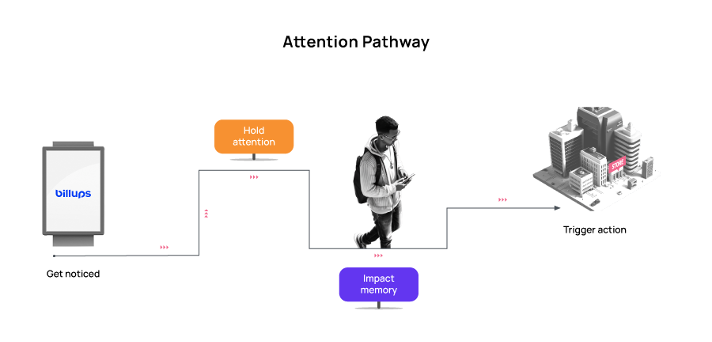
Brands that incorporate these elements in their execution are far more likely to produce campaigns that yield higher message retention, increase brand awareness, and make behavioral impacts—driving consumer actions like purchasing decisions.
This is especially important when considering the potential obstacles to successful OOH campaigns, such as context and physical location factors, competing visuals or distractions, and possible ad overexposure, which can lead to reduced attention.
Measuring Attention in OOH
Rapidly evolving technological advancements continue to facilitate improved measurement of an OOH target audience’s attention. Let’s explore some key examples:
Sensors and Cameras
How it Works: Physical sensors and cameras installed near outdoor advertisements can capture data on the number of passersby, their dwell time (time spent looking at the ad), and even demographic information.
Applications: This technology provides real-time data on audience behavior, allowing advertisers to assess the effectiveness of campaign placement.
Mobile and Beacon Technology
How it Works: Mobile devices with Bluetooth or beacon technology can interact with OOH units. Advertisers can track when users with enabled devices come in close proximity to the ad, accessing data on foot traffic and potential engagement.
Applications: This technology facilitates location-based targeting and engagement tracking, allowing advertisers to understand the impact of OOH campaigns on mobile users.
Computer Vision and Machine Learning
How it Works: Machine learning algorithms can process large datasets of images, identifying objects that people pay more attention to and discovering watcher’s patterns.
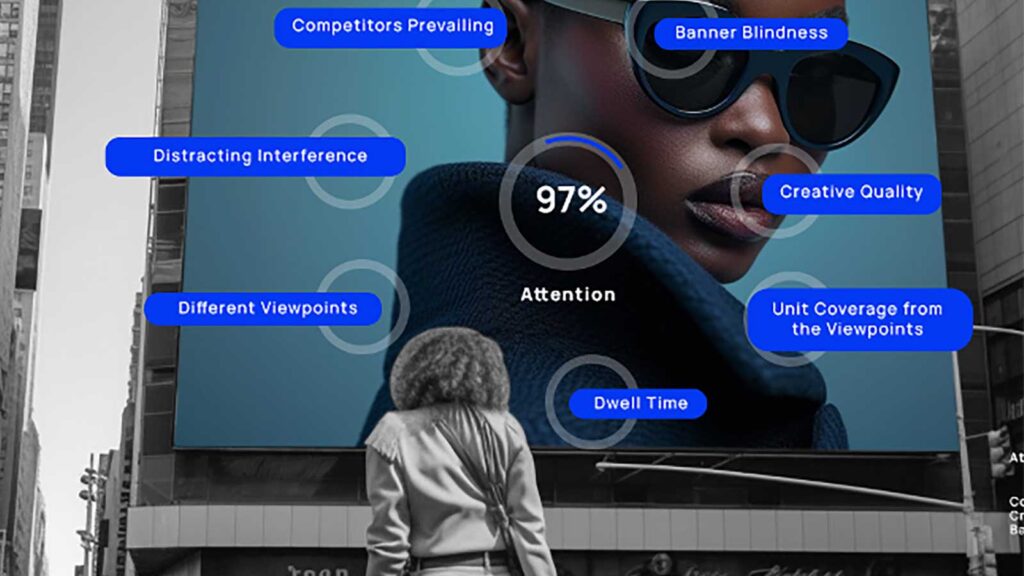
Applications: Image analysis can specifically show all available viewpoints for a unit, yielding a “heatmap” of attention distribution. This facilitates the calculation of the probability a unit will be seen and capture attention. Moreover, advertisers can use these details to optimize a consumer’s experience with their unit.

Attention Measurement in Action
In addition to determining a unit’s optimal placement, attention analysis technology can assess whether a brand’s OOH creative suits its campaign goals.
To illustrate this process, take a look at the following creative assets designed for a recent campaign (note: the brand name has been replaced with “Billups”):
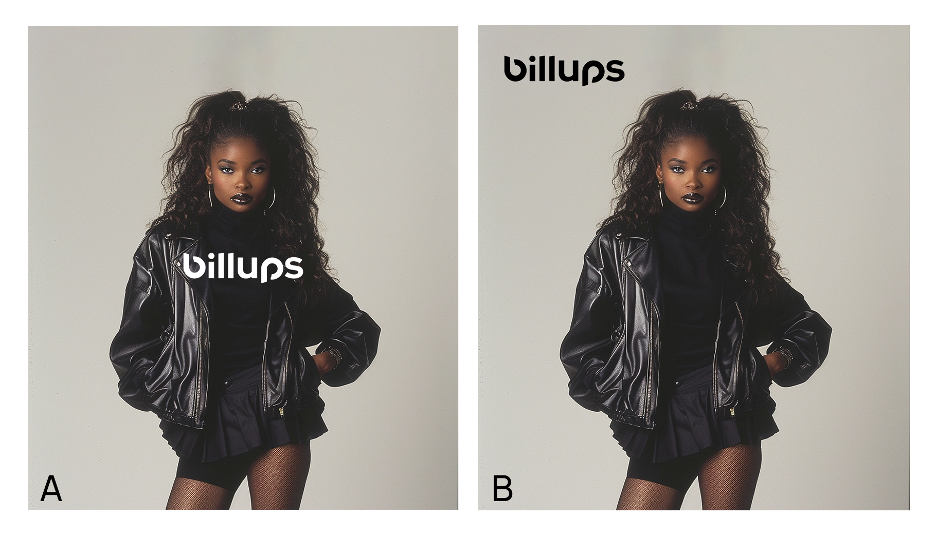
The goal of this campaign was to draw as much attention as possible to the brand. While each option has aesthetic merit, choosing between the two solely based on this distinction leaves too much to chance. To determine which option would best reach the target audience, we applied an algorithm to carefully examine each option’s attention distribution.
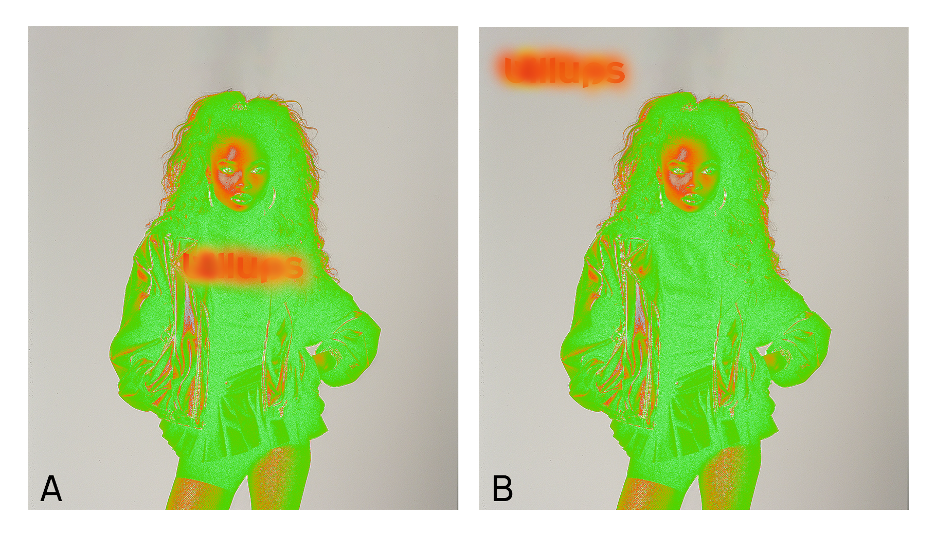
As this second set of images visually represents, the algorithm revealed that Creative B attracts more attention – represented by the deeper orange coloring – to the brand’s name, making it the optimal choice for the campaign.
In the world of outdoor advertising, where attention is the ultimate currency, the advancement of attention measurement is vital, turning conjecture into concrete data. Brands can now make informed decisions to drive the effectiveness and ROI of their outdoor advertising efforts. Determining the “how” and “why” behind successful outdoor advertising is no longer a guessing game.
You May Also Like

Predictions and Expectations for Advertising Week New York 2026
Ahead of AWNY 2026, we spoke to industry leaders about what they expect to dominate the conversation, how it would have shifted from last year, and what they will be watching closely throughout the week.

Mike Ellery, Chief Creative Officer, Sparks
As AI takes on a larger role across advertising, Mike Ellery, Chief Creative Officer at Sparks, believes it is making real human connection more valuable, not less.

For Advertising Week Executives, Preparation Starts With Setting Priorities
Three executives describe how they organize their thinking ahead of Advertising Week New York, with the Kindle Scribe serving as a tool for notes, planning and revisions.