





Advertising Without a Net: Why Experience Has Become Marketing’s Most Honest Channel

As consumers become harder to impress and AI makes content easier than ever to produce, experiential marketing has become one of the few disciplines where brands cannot fake relevance. Every interaction is tested in real time, forcing marketers to create experiences that genuinely earn attention instead of simply buying it.
By R. Larsson, Advertising Week
For years, experiential marketing occupied an awkward position within the agency ecosystem. The advertising campaign typically came first, media planning followed shortly afterwards, and the experiential team was often brought in to extend an idea that had already been decided. That model increasingly feels out of step with the way consumers actually engage with brands because people no longer separate advertising, commerce, entertainment and service into neat categories. They simply remember the moments that made them feel something, solved a problem or gave them a story worth sharing.
That shift has elevated experience from supporting act to strategic centerpiece. Rather than existing to reinforce a campaign, the experience increasingly becomes the campaign itself because it represents one of the few opportunities brands have to interact with consumers without the filters that exist across traditional media. When someone voluntarily walks into an activation, enters a branded gaming environment or participates in a live experience, there is no hiding behind click-through rates or inflated reach numbers. The interaction either creates value in that moment or it does not, making experiential perhaps the industry’s most honest form of marketing.
That honesty forces a different creative mindset because experiential work is judged by a harsher standard than many other marketing disciplines. Brands are no longer asking consumers to tolerate an interruption for thirty seconds before returning to what they actually wanted to watch. Instead, they are asking people to devote their time, attention and often their physical presence to something the brand has created. That exchange immediately changes the creative brief because the question is no longer whether the campaign will generate awareness, but whether the experience deserves to exist in the first place.
The answer rarely depends on scale, spectacle or technology alone. Instead, it depends on whether the brand understands the people it hopes to engage beyond the obvious characteristics of the environment. Too many activations mistake context for culture, assuming that showing up at a tennis tournament requires another tennis-themed installation or that sponsoring a music festival demands another Instagram backdrop. Those executions acknowledge where the audience happens to be without demonstrating any understanding of why those people are there or what genuinely matters to them. The strongest experiential work looks beneath the event itself to uncover the shared frustrations, rituals, behaviours and motivations that define the audience long before the brand arrives.
For more on this topic, check out this podcast episode:
That distinction becomes especially important as sponsorship spending continues to grow across sport, entertainment and culture. Visibility remains valuable, but visibility has also become increasingly commoditized because every sponsor can purchase signage, hospitality or logo placement. The brands that generate disproportionate value are the ones that use sponsorship to tell a story about themselves rather than simply borrowing attention from someone else’s audience. Creativity transforms sponsorship from passive exposure into active participation because it creates a reason for consumers to associate the brand with something meaningful instead of merely noticing that it was present.
The same principle applies as marketers experiment with virtual environments, gaming platforms and emerging technologies. A platform such as Fortnite does not simply provide another media channel where brands can recreate physical activations inside a digital world. Instead, it offers an opportunity to rethink what participation actually looks like because the environment itself can become part of the creative idea. During the pandemic, for example, virtual experiences succeeded not because they replicated live events perfectly, but because they recreated the emotional reasons people wanted to attend those events in the first place. Fans were searching for shared participation, community and interaction rather than simply another screen on which to watch content.
Artificial intelligence introduces another layer to that conversation because it promises unprecedented gains in speed, efficiency and personalization while simultaneously increasing the risk that creativity becomes formulaic. Across agencies, AI is already shortening concept development, accelerating presentations and helping teams evaluate production constraints, budgets and feasibility long before projects move into execution. Those efficiencies are valuable because experiential agencies often work against incredibly compressed timelines, needing to sell ideas quickly while reserving enough time to build them properly.
None of those efficiencies, however, reduce the importance of human judgment. If anything, they increase it because AI can make almost any idea appear visually compelling long before anyone determines whether it can actually be built. As the technology becomes more capable, agencies face a growing responsibility to distinguish between concepts that merely look impressive in a presentation and experiences that genuinely work in the real world. Trust is built not by producing increasingly polished renders, but by ensuring that what clients approve can ultimately be delivered exactly as promised.
That emphasis on reality reflects a broader truth emerging across the industry. As AI-generated content becomes more common, digital advertising grows more personalized and algorithms become more sophisticated at targeting individual consumers, authentic experiences become increasingly scarce. Scarcity creates value, which helps explain why brands continue investing heavily in moments that people can physically attend, participate in and remember. Experiences provide something algorithms cannot fully replicate because they create shared memories rather than isolated impressions, allowing brands to become part of conversations instead of merely appearing within feeds.
The challenge for marketers is that consumers apply much higher standards to those experiences than they do to traditional advertising. If a brand interrupts a social feed with a forgettable advertisement, the consequence is usually a quick scroll. If that same brand asks someone to stop at an activation, leave a concert, enter a branded installation or spend several minutes engaging with an experience, the expectation changes dramatically because consumers naturally expect that investment of time to produce something worthwhile. Creativity therefore becomes less about entertainment for its own sake and more about rewarding participation with genuine value.
That reality also challenges one of the industry’s most persistent assumptions, namely that increasingly sophisticated targeting will solve declining attention. Better targeting undoubtedly improves efficiency, but efficiency does not automatically produce effectiveness because people continue filtering out messages that resemble everything else competing for their attention. Human beings instinctively ignore familiar patterns, meaning brands ultimately succeed by creating work that disrupts expectations rather than simply reaching the correct audience. Creative differentiation therefore becomes more important as technology makes media buying increasingly accessible to everyone.
Perhaps the most valuable role agencies can play in that environment has little to do with production techniques or emerging technologies and everything to do with strategic honesty. Truly effective creativity often begins by confronting uncomfortable truths about brands, categories or consumer behaviour that clients may not initially want to hear. Safe ideas usually emerge from comfortable conversations, while transformative work typically begins when agencies challenge assumptions that have gone unquestioned for too long. As every agency gains access to similar AI tools, similar production capabilities and increasingly similar data, the willingness to deliver uncomfortable but necessary strategic advice may become one of the last meaningful competitive advantages creativity still possesses.
Experiential marketing illustrates that principle more clearly than perhaps any other discipline because it operates in an environment where consumers immediately decide whether a brand has earned their attention. There are no inflated metrics to disguise indifference, no media optimizations to rescue weak ideas and no opportunity to blame the algorithm when people simply walk past. In a marketplace increasingly filled with artificial content, synthetic imagery and automated communication, experiences remain one of the few places where brands must prove their value face to face, which may ultimately make them the most important marketing investment of all.
You May Also Like
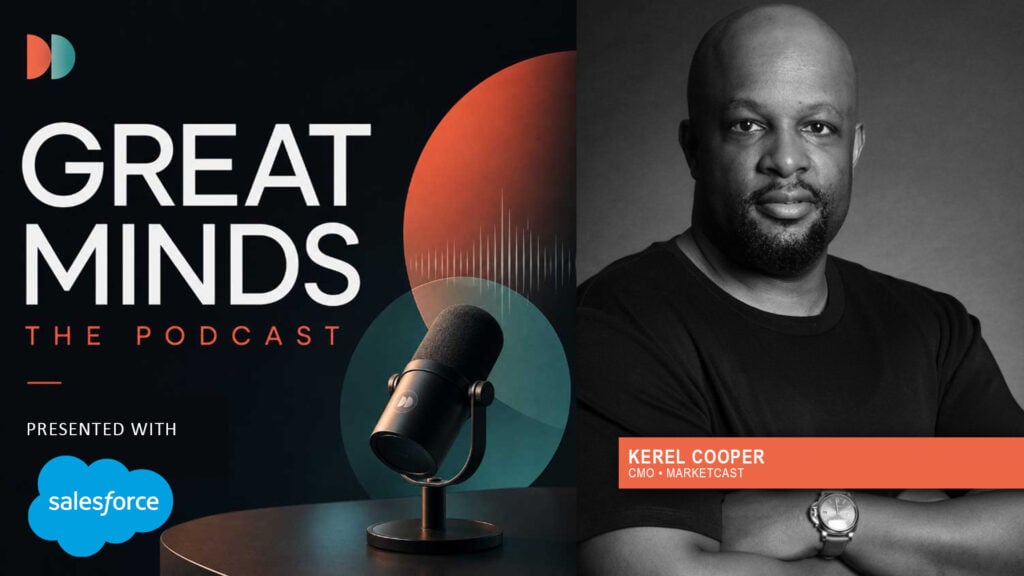
What the Dashboard Can’t Tell You About People Featuring Kerel Cooper of MarketCast
Joining us is Kerel Cooper, Chief Marketing Officer at MarketCast. Kerel shares why he believes marketers can learn from the strongest consumer brands and how human judgment should guide the use of AI in creative work.

Would You Share It If You Didn’t Work Here? Featuring Ty Stafford of Hello Party
Joining us is Ty Stafford, Founder and CEO of Hello Party, whose experience spans making YouTube videos in his dorm room and working at Red Bull Media House.

From the Conference Floor to the Boardroom: How Kindle Scribe Is Changing the Way Executives Capture Ideas
At Advertising Week New York 2026, Amazon’s Kindle Scribe offers a glimpse into how business leaders are combining the familiarity of handwritten notes with the convenience of digital technology to make the most of an increasingly demanding professional world.