How Has Your Data Strategy Changed With Agentic AI at Your Doorstep?

By Evgeny Popov, Global Head of Enterprise, Samba
Marketing data has never been more important, nor has it ever been this constrained. While marketers have learned to navigate restrictions and limitations, the next hurdle is different.
AI agents will increasingly sit between customer intelligence and marketing action. They will not simply analyze data or recommend what a marketer should do next. They will make decisions, execute workflows, measure results, and adjust execution. That makes the governance question decision rights and action rights, not data access.
We’re no longer in an era where humans are the primary users of marketing data, ending the catalog mindset that data strategies have been built around. The objective is not data availability, but the preparedness and accuracy of the data consumed by agents.
AI agents need strictly governed, decision-ready intelligence that they can safely understand, use, and act upon, with a clear view into the data’s meanings, usage permissions, and measurable outcomes. Accessible data tells an agent what exists. Decision-ready intelligence tells it what the data means, whether it may be used, what it can be used for, and what action the agent is permitted to take.
As brands have moved from DMP to CDP to clean room to warehouse-native, each shift moved control closer to the enterprise. Now, an agentic approach built on the data warehouse can begin to create decision and action control. Rather than simply think of agentic as a label, or checklist item, there are critical questions to ask. What decisions can an agent make? What actions can it execute? Where does a human intervene? And how are permissions and accountability enforced?
An agent might identify customers showing signs of churn, determine who qualifies for an approved campaign, select among approved channels, apply suppression rules, allocate spend within a defined budget, launch an activation, monitor outcomes, and adjust execution.
It should not be able to change those rules, access unauthorized data, exceed its budget, or redefine success without human approval. The enterprise therefore needs to govern not just data access, but decision rights and action rights.
Consider a lapsed-customer campaign. A marketer might manually build the audience, identify exclusions, choose channels, set the budget, launch the campaign, and review results weeks later.
An AI agent could manage that workflow end to end within defined controls. It could identify high-value customers at risk of churn, resolve them against trusted identity data, exclude recent purchasers, apply approved privacy and audience rules, select the best activation channel, and launch within an approved budget.
It could then monitor incremental outcomes. If one channel produces stronger incremental value, it could shift spend toward it within its authorized limits. If it reaches a decision outside its permissions, such as increasing the budget or changing audience criteria, it stops and routes the decision to a human. The agent executes, the human stays accountable, and the audit record is what makes the difference real rather than asserted
For brands, the goal is not to assemble the largest possible stack. It is to create an environment where the right intelligence reaches the right decision point, through the right workflow, with the right permissions, and produces a measurable business outcome.
Audience strategy, activation, measurement, identity, and outcome reporting need to operate as one governed system. The market is moving from fixed products to flexible architecture, from disconnected data pipes to governed intelligence, from manual activation to agent-assisted decisioning, and from campaign reporting to continuous proof.
The next generation of data strategy is not about giving machines more access to data. It is about giving them trusted intelligence, clearly defined authority, measurable objectives, and accountable boundaries.
You May Also Like
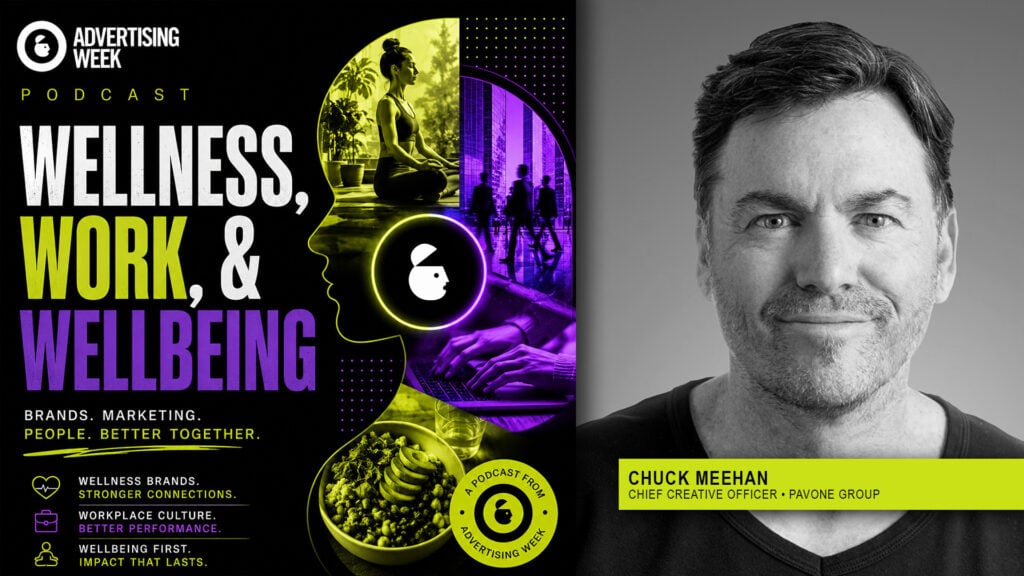
Healthcare Marketing That Tells a Better Story, Featuring Chuck Meehan of the Pavone Group
In this episode of Wellness, Work & Wellbeing, we’re joined by Chuck Meehan, Chief Creative Officer at Pavone Group, to discuss the storytelling behind Penn State Health’s Breakthrough Medicine Lives Here campaign.

Healthcare Marketing Has a Storytelling Problem
Healthcare advertising has a tendency to look the same. Doctors walking through hallways, impressive medical equipment, lists of specialties, and awards that are supposed to convince us we’re in good hands. None of those things are unimportant, but when every hospital leads with the same message, how is anyone supposed to tell the difference?

DOOH Is Growing, but Can It Prove Its Value to Advertisers?
In this AW360 Q&A, David Wellard, Managing Director UK at Zoom Media, explores why advertisers remain cautious, how first-party data and high-attention environments are changing the measurement conversation, and what the industry must do to make DOOH an indispensable part of the modern media mix.