





How Publishers Can Play a Bigger Role in the Nonprofit Economy

By Craig Heiting, Chief Revenue Officer, AdGood Foundation
Connected TV continues to expand at a remarkable pace, reshaping how publishers think about audience, inventory, and monetization all at once. That growth has been a clear win for reach and engagement, but it has also introduced a more complicated revenue environment. Inventory has increased faster than the most consistent sources of high-value demand, and publishers are now managing a wider range of yield outcomes within a single streaming ecosystem.
In response, most organizations have doubled down on programmatic optimization. The infrastructure has become more advanced, with improved forecasting, tighter floor management, and more sophisticated auction dynamics helping to stabilize performance across supply. These systems remain essential, particularly for scaling monetization efficiently. Still, they were largely designed around a relatively uniform view of inventory, where differences in impression quality are managed primarily through pricing rather than structural allocation.
What is becoming more apparent is that CTV inventory behaves less like a single pool and more like a spectrum. Audience composition, content adjacency, device type, and viewer intent all influence the commercial value of a given impression. As supply grows, those distinctions matter more. Publishers are increasingly working to reflect that reality by segmenting inventory in more intentional ways, ensuring that different types of demand are matched to the appropriate level of value.
Within that broader segmentation effort, there is growing attention on how to handle impressions that fall outside of premium or high-efficiency programmatic demand. These are not without value, but they often clear at lower rates or remain partially unfilled depending on market conditions. Rather than treating this as a purely inefficiency-driven problem, some publishers are beginning to explore whether alternative forms of demand can play a constructive role in absorbing that layer of supply.
Nonprofit advertising has started to emerge in that context as a meaningful, if still developing, component of the ecosystem. It has long existed within media, but typically in a fragmented way – activated through individual partnerships, seasonal campaigns, or CSR-driven initiatives. What is changing is less about intent and more about structure. As more standardized approaches to nonprofit activation take shape within CTV, publishers are gaining a clearer pathway for routing certain types of inventory toward mission-driven campaigns in a way that is operationally consistent with existing workflows.
For publishers, the appeal lies in flexibility. This category of demand can sit alongside traditional monetization strategies without requiring changes to how premium inventory is packaged or priced. It introduces an additional layer of utility for impressions that may otherwise be difficult to fully optimize through commercial channels alone. At the same time, it gives nonprofits access to streaming environments that have historically been out of reach, along with the measurement and reporting standards expected in digital advertising.
The broader shift underway is not about replacing existing demand sources, but about expanding how publishers think about allocation. As CTV matures, the most effective strategies are increasingly those that recognize inventory as differentiated rather than uniform, and that build systems capable of reflecting those differences in practice.
In that context, nonprofit demand represents one of several emerging approaches to making better use of the full supply curve. It is still evolving, and its role will likely vary across publishers, but it reflects a larger theme in the market: the move toward more layered, intentional monetization models that account for both commercial performance and broader ecosystem value.
You May Also Like
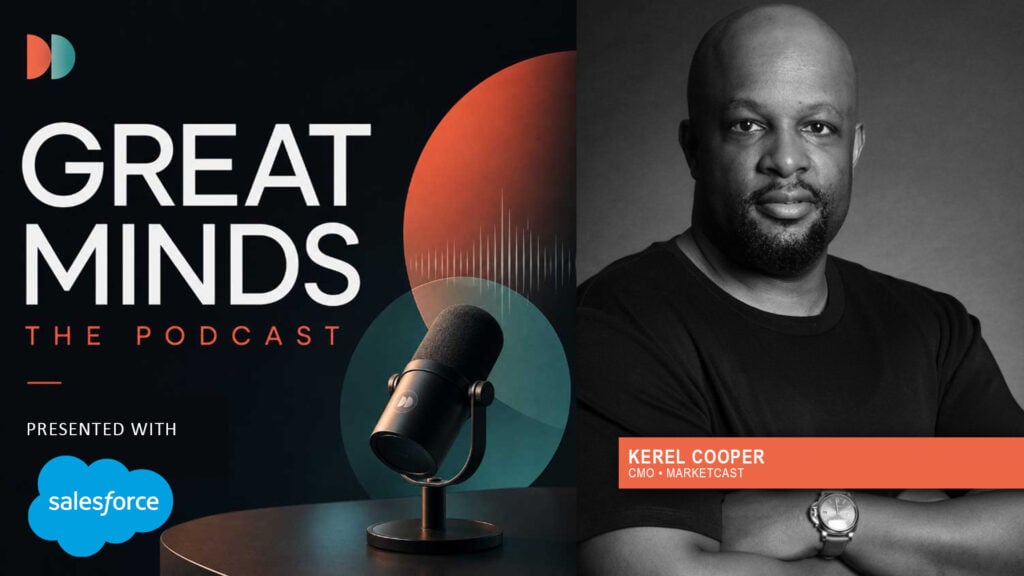
What the Dashboard Can’t Tell You About People Featuring Kerel Cooper of MarketCast
Joining us is Kerel Cooper, Chief Marketing Officer at MarketCast. Kerel shares why he believes marketers can learn from the strongest consumer brands and how human judgment should guide the use of AI in creative work.

Would You Share It If You Didn’t Work Here? Featuring Ty Stafford of Hello Party
Joining us is Ty Stafford, Founder and CEO of Hello Party, whose experience spans making YouTube videos in his dorm room and working at Red Bull Media House.

From the Conference Floor to the Boardroom: How Kindle Scribe Is Changing the Way Executives Capture Ideas
At Advertising Week New York 2026, Amazon’s Kindle Scribe offers a glimpse into how business leaders are combining the familiarity of handwritten notes with the convenience of digital technology to make the most of an increasingly demanding professional world.