




Outcomes Are Not a Buzzword. But We’re Treating Them Like One.

By Ryan Schaumburg, PadSquad
Every few years, advertising finds a new word to rally around. For a while, in the early days, it was reach. Then it was attention. Now it’s outcomes.
The focus on outcomes is a step in the right direction. Marketers should be asking harder questions about whether media investments are driving business impact. Measurement companies should help brands understand which consumer behaviors are changing. Media partners should be accountable for more than delivery.
The problem is that “outcomes” is becoming another vague industry term, stretched so broadly that it risks losing meaning.
Everyone wants better outcomes. That was true long before digital media became as measurable as it is today. But has the industry become disciplined enough to define what an outcome is? Do we really know how it ladders up to a business goal and which signals can be used to optimize while a campaign is live?
That last part matters. Too often, a campaign will end, a report will arrive, and a brand learns what worked when it is too late to do anything about it. Begging the question as to whether the report and its insights were even used on the next campaign. Even if the insights inform the next plan, it is not optimized to get the most out of each investment. If the industry is going to talk seriously about outcomes, it needs to move beyond post-campaign validation and toward real-time decisioning. That means leveraging real-time signals a partner can act on during the flight, such as creative fatigue, pacing adjustments, and audience delivery optimization, rather than waiting for a report that arrives after the budget is spent.
The starting point is simple, but often overlooked: brands need to own their outcomes.
That does not mean every brand needs perfect attribution. A media impression rarely connects cleanly to a purchase in a way that satisfies all stakeholders, systems, and privacy requirements. But brands can define the measurable behaviors that indicate progress toward a business goal.
Here’s an example: a retailer may want to sell more products; this is their business goal. But the measurable outcome may be getting more people into stores, because the brand knows its conversion rate once someone walks through the door. If the company understands what a store visit is worth, it can work backward and determine what it will pay to drive that visit.
This is a much different conversation than asking a partner to deliver an efficient click-through rate, low CPM, or high completion rate. Those may be useful digital KPIs in context, but they are not the outcome that will help a brand get closer to what it actually cares about.
To fix that, marketers need a clearer hierarchy. At the top are business goals such as selling more products, growing market share, increasing sign-ups, driving subscriptions, or shifting brand preference. Beneath that is the measurable outcome, including store visits, qualified leads, product page visits, sales lift, bookings, or another signal connected to the business goal. Beneath that are the digital KPIs used to manage performance.
Those layers should not be treated as interchangeable. When they are, “outcomes” becomes just another word for KPIs. There’s a place for each, but the opportunity is to align on what a media investment is intended to deliver.
Agencies have a major role to play. They should help brands understand which outcomes are measurable, which signals are meaningful, and which KPIs are merely directional or supplemental. That same shift needs to extend to media partners, brought into the conversation early instead of being handed a tactical brief after the strategy is set. Agencies and brands should be asking partners, “Here is the outcome we care about. How can you help us get there?” rather than briefing to a CPM or clicking a target and hoping the outcome follows. That question changes the relationship. It invites collaboration instead of compliance and allows partners to bring expertise around creative, format, audience behavior, and measurement.
Creative needs to be a big part of this conversation, too. If every platform, DSP, and SSP is now talking about outcomes, the differentiator cannot only be pipes, targeting, or reporting. Creative is what the consumer sees, notices, cares about, and acts on.
A decision that might feel like an insignificant adjustment, like enhancing a video ad by bringing a brand logo front and center, could actually be the determining factor between breaking through and keeping attention compared to a standard piece of visual creative.
Adding interactivity and shoppability to the fold is another surefire way to maintain that attention and drive real action directly from a high-impact video unit. But the decision-making to get there needs to ensure creative is getting just as much love as the other components that make up an ad.
The industry needs more discipline and a shared goal, not buzzwords. Outcomes can be meaningful, but only if advertisers clearly define them, agencies translate them accurately, and partners optimize toward them transparently.
You May Also Like
The Entertainment Revolution: Why Brands Need to Think Beyond the Screen
As gaming, streaming and social media reshape how audiences experience entertainment, marketers face a fundamental challenge: Learning to participate in culture rather than simply advertise alongside it.
More Than the Game: Earning a Place in the Fan Conversation
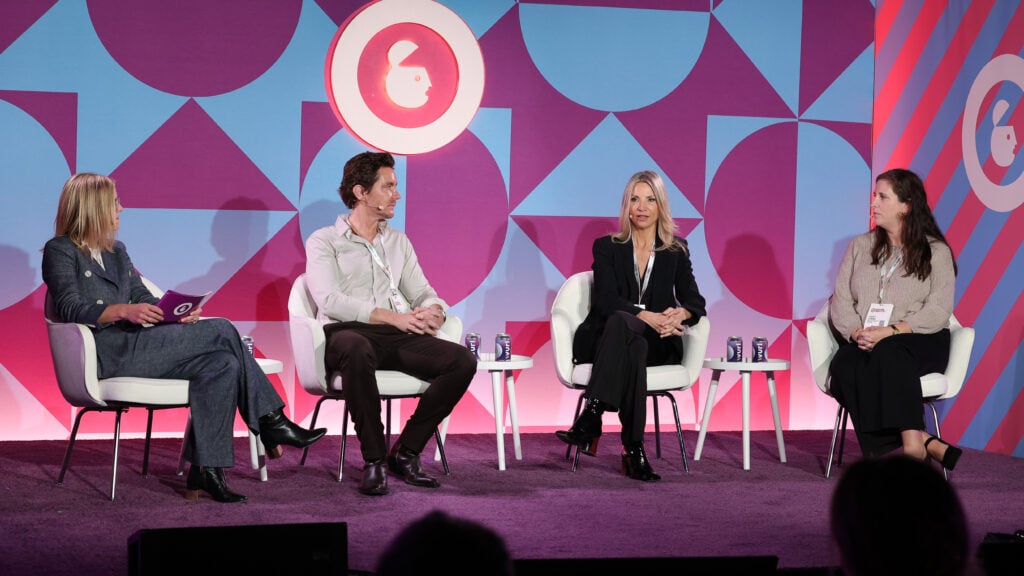
Ann Piper, Head of Sales for the Americas at Spotify, moderated the discussion with Angela Steele, Chief Client Officer, U.S. at WPP Media; Wes Harris, Director of Marketing for YouTube TV at Google; and Juliet Litman, Director of Talent and Operations at Spotify Podcast Studios.

Traditional Attribution and Promo Codes Share the Same Blind Spot
Traditional attribution and promo codes share the same blind spot.