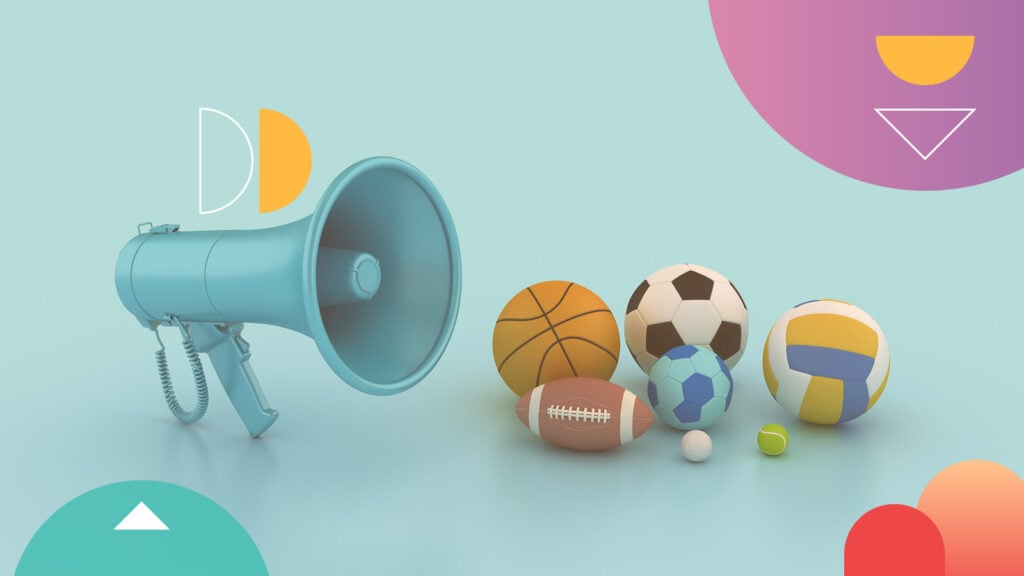
Sports Isn’t a Channel. It’s the Marketing System We’ve Been Trying to Build.
By Paul Woolmington, CEO & Steven Graciano, SVP-Sports Strategy, Canvas Worldwide
For years, marketers have been told to embrace omnichannel: connect the TV buy to social, bring experiential into the media plan, turn creators into commerce engines, make the physical and digital feel seamless.
And yet, one ecosystem has done all of this naturally for decades: sports.
That matters because sports may be the last true mass medium in a media environment that has otherwise fragmented into niches. More importantly, it has evolved beyond a media channel altogether — a living marketing ecosystem where mass reach, culture, physical experience, digital engagement and community converge in real time. Yet the industry still tends to buy it like it’s 1995: investment begins with a rights deal, sponsorship package or media schedule and ends with a logo, a few activations and an impressions report. Substantial exposure isn’t the same thing as impact.
Sports creates something increasingly scarce: shared attention. In a world where algorithms personalize virtually everything, live sports can still bring millions of people into the same cultural moment at once, transcending age, geography, income and even ideology. But the real value isn’t audience size — it’s what happens once that audience is emotionally invested.
Sports sits at the intersection of entertainment, music, fashion, gaming, technology and social identity. Athletes have become cultural creators; a tunnel walk can become a fashion story, a highlight a meme within seconds. That makes sports fundamentally different from conventional media inventory. A consumer might encounter a game through a broadcast, experience it in a stadium or bar, follow commentary on social, watch highlights on mobile, discuss it with friends and then meet the brand again through commerce. The journey isn’t a funnel — it’s a loop. That is omnichannel marketing in its most complete form: the stadium creates energy, the broadcast scales it, social redistributes it, creators reinterpret it, and brands participate across every layer. This powerful dynamic is what we all should strive for.
For marketers, this should change the planning question, from “How much sports can we afford?” to “What business problem can sports help us solve, and how do we leverage the ecosystem around it?”
Even brands that set out to build this broader system often fall short — and increasingly, they’re saying so themselves. At a 2024 panel, Verizon’s senior director of sports sponsorships described teams that refuse to share fan data competitively as “a backwards way of thinking” — a telling sign of how siloed the ecosystem remains even among those running it, per Marketing Brew. This year, Harvard Business Review reported that many brands still lean on outdated exposure metrics like logo visibility, missing the more durable value of authentic participation — a costly mismatch given the spend flowing into the 2026 World Cup and 2028 Olympics.
That requires breaking down the silos that have traditionally surrounded sports marketing. Sponsorship cannot live separately from media, media cannot operate independently of social, experiential cannot be an isolated event team, and creators, commerce, retail and CRM cannot arrive as afterthoughts. Each layer should reinforce the brand platform and amplify the same story, and measurement should connect it all back to business outcomes. Clients deserve a strategic partner who can connect those dots — a “data storyteller” with the analytical rigor to read the numbers and the craft to turn insight into narrative.
The emotional power of sports is not a substitute for accountability; if anything, its scale and cost make accountability more important. Marketers should demand the same rigor from sports investments that they demand elsewhere: defined objectives, meaningful KPIs, brand-lift measurement, attribution and evidence of business impact.
The irony is that sports may be one of the best environments for proving integrated marketing’s value, precisely because its ecosystem is so interconnected: awareness from the broadcast, engagement from social, participation from an activation, consideration from creators, conversion from commerce. None of those touchpoints exists in isolation — together, they tell the story of how culture becomes business.
This also changes what “authenticity” should mean. Consumers can tell when a brand is simply renting fandom for a weekend. The brands that win will contribute something meaningful to the culture around the sport — not just borrow its audience.
Sports presents marketers with a rare paradox: it is simultaneously the broadest reach environment and one of the most intimate, delivering millions of impressions while making an individual fan feel part of something personal. That is the real competitive advantage. As media keeps fragmenting, marketers will spend more trying to reconstruct the shared experiences sports already creates naturally — communities, second-screen experiences, creators, experiential platforms — all in pursuit of something sports delivers at its core: participation in culture.
The smartest move isn’t to treat sports as another channel to add to the plan. It is to recognize sports as the model for what the modern marketing ecosystem should become: mass without being generic, personal without being isolated, physical without being disconnected from digital.
Sports isn’t simply the last true mass medium. It may be the ultimate blueprint for integrated marketing.
You May Also Like

Research Designed for the Decisions Advertisers Make
Advertisers have more choices than ever when deciding where to invest their media budgets.
Microsoft Work Transformation Leader on Turning Uncertainty into Opportunity
Katy George, Corporate Vice President of AI & Work Transformation at Microsoft, joins the Edelman Trust Institute’s Drake Baer to discuss why successful transformation depends on more than technology.

The 90-Day Contract: What B2B Marketing Leaders and CEOs Owe Each Other
Something ominous is happening in marketing right now, and no, it’s not AI.