




Stop Building Ad Products Like It’s 2019

By Justin Silberman, VP of AI Product, Disco
Most of what’s being written about AI and advertising is coming from people who haven’t built anything with AI.
Watching AI from the outside produces market commentary. Building with it every day produces a completely different understanding of what’s actually changing.
My company has spent the last few months wiring agents into production systems across engineering, creative, bidding, and campaign operations. Here’s what we’ve learned.
The compression is real
Everyone says AI makes things faster.
The interesting part is what happens to your decision-making when the cost of building drops by 10x. A year-long roadmap done in a month. PMs shipping production code. Sales building internal tools. People who’ve never written a line of code start building things that work, because the distance between “someone should fix this” and actually fixing it collapsed.
That distance was always organizational, with layers of handoffs, specs, tickets, and status meetings that accumulated over decades. AI removes the organizational drag. What’s left is the actual work: systems-thinking, evaluation design, knowing which customer problems are worth solving.
For advertising, this changes everything about what you build and how you build it.
The old loop is dead
Old way: write a spec → hand it to engineering → wait six months → hope it works → discover it doesn’t → repeat.
That loop doesn’t survive contact with AI agents.
The new loop: build a working reference with agents → run evals against real data → prove the outcome → hand engineering something that already functions. The eval is the spec now. The prototype isn’t a Figma file. It’s running code with real outputs.
We do this across every product surface. Offer creative that used to require a creative team now gets generated and tested in real time. Campaign setup that was a multi-day back-and-forth compresses into a single workflow. Bidding optimization that needed a human adjusting knobs runs autonomously, across surfaces, without anyone touching a dial.
None of this is “AI-powered” in the slide-deck sense. It’s agentic in the operational sense. The machines do the execution. The humans decide what’s worth executing.
The model is not the advantage
The conversation about frontier model supremacy is a distraction. Everyone has the models now. The advantage is how you wire the agents together, how you design the evals, and how you build the guardrails that turn a one-off automation into something durable.
We’ve built a band of agents at our company. Each one runs against evals. Each one compresses something that used to take weeks into hours. The approach that lets a PM ship code is the same approach that lets us launch a new product as configuration instead of a six-month engineering project.
What breaks when you move at machine speed
There’s a consequence to all this compression that the advertising industry hasn’t fully absorbed.
When you can generate, test, and optimize ad experiences at machine speed, the old inventory stops making sense. A lot of digital advertising is filler. It’s there because there were gaps between intent and outcome, and advertising filled the gaps.
There’s a sorting coming. Companies that treat AI as a feature will fall behind. Companies that treat AI as an operating system for how they build will pull away.
Everyone has access to the same models. The advantage comes from knowing what to build, how to evaluate it, and how to compress the cycle from idea to outcome.
You May Also Like
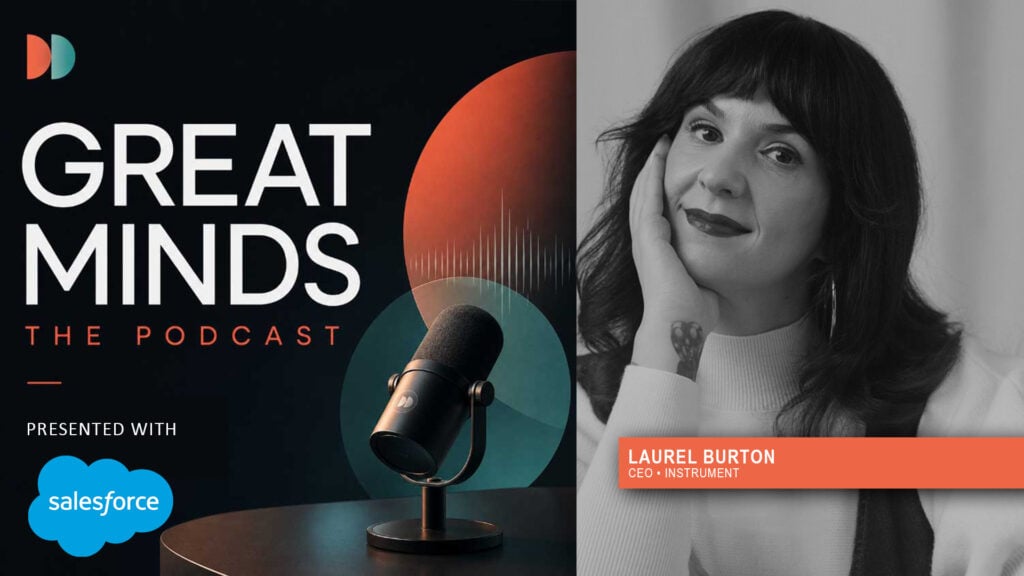
Stop Pitching and Start Building Featuring Laurel Burton of Instrument
Joining us is Laurel Burton, CEO of Instrument, a design and technology company whose work includes Nike, Oura, Google, and Nordstrom.
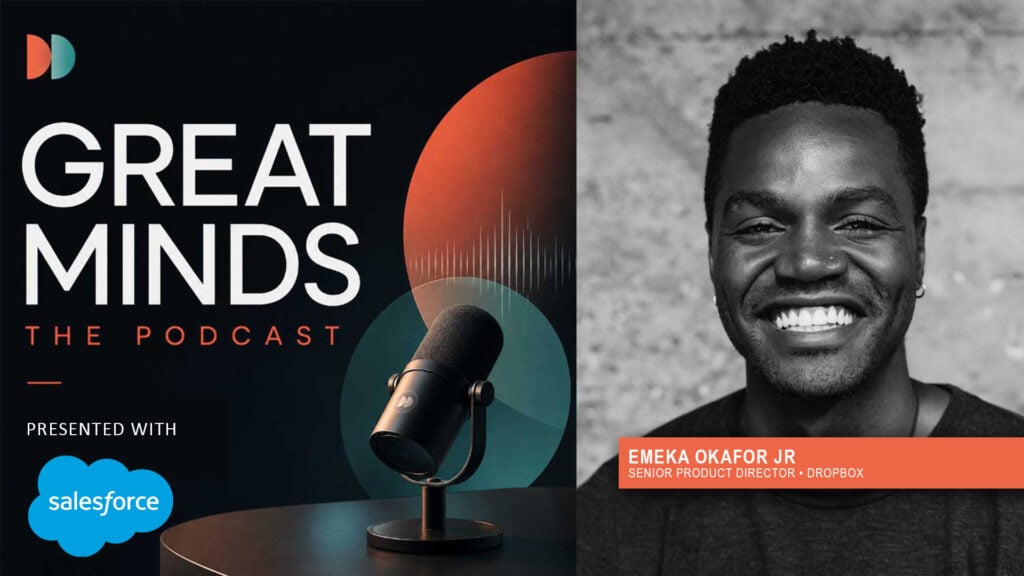
Customer-Led Products with Intentional Leadership Featuring Emeka Okafor Jr. of Dropbox
Joining us is Emeka Okafor Jr., Senior Product Director at Dropbox, who leads product for its applied AI division.

Podcaster Brinda Adhikari on Building Trust Through Curiosity, Not Correction
Brinda Adhikari, a journalist and the co-host of the podcast “Why Should I Trust You?,” joins host Drake Baer to discuss what it takes to build trust in science and public health across deep divides.