The B2B Marketing Formula Empowering Brands in 2026

By Mario Peshev, DevriX
For decades, the B2B marketing formula was relatively simple: generate leads, drive traffic, and convert sales. Website visitor volume was synonymous with growth, and growth was the engine of profitability.
In 2026, this formula is more complicated. The web is noisier and more commoditized, with an overwhelming flood of generic, increasingly AI-generated content.
Consider just the volume of new content created today:
- 95 million photos and videos will be posted on Instagram
- 7.5 million blog posts will be published online
- 376 billion emails are sent and received globally
In other words, as our online spaces become increasingly noisy and commoditized, simply generating traffic or optimizing for vanity metrics, like website traffic, social media views, or email open rates, is a failing strategy.
As a result, B2B marketers are shifting away from what they sell to who they are as a brand.
Escaping the Commodity Trap
It’s arguably never been more difficult for brands to differentiate themselves from the competition. Product quality is often on par, prices can be matched, and customer experiences are increasingly standardized.
In other words, many products and services have been commodified. Fewer distinct features differentiate one product or service from another.
Consider the newsletter funnel.
Marketers are automating newsletter funnels, but this often turns a powerful channel into a high-volume, low-value commodity. It’s difficult to gauge the real quality of these leads when a CEO signs up with an anonymous email, and the unpredictability of results makes it hard to compare against the predictable ROI of paid ads.
This creates a volume-to-value inversion where you get more leads, but they are worth less.
In one marketing survey, 58 percent of respondents said that generating high-quality leads is the hardest part, even when volume is up.
Brands need a better way.
Two Levers for Breakthrough Growth
To escape the commodity trap, B2B brands must pull two powerful levers: brand trust and proprietary data.
When customers can’t easily differentiate products or services on quality, price, or availability, they turn to brands they know and trust.
Of course, I’m not here to tell you that trust matters. You already know that.
You should understand why it matters and, even more importantly, how to achieve it.
According to Deloitte’s research, 88 percent of customers who trust a brand will buy from it again. Additionally, Deloitte found that “trusted companies outperform their peers by up to 400% in terms of market value.”
In a commodified economy, trust is king. It’s also easy to lose and hard to regain.
One Boston Consulting Group analysis revealed that just 2 percent of companies regained customer trust in the quarter after a trust breach. Many take years to recover consumer confidence and rebuild their reputation.
To establish and maintain trust, brands can:
- Deliver consistent, reliable quality
- Communicate with transparency
- Create frictionless experiences
- Personalize engagement
- Provide credible proof
These efforts are amplified when brands utilize their valuable data to craft marketing messaging that resonates with consumers and reinforces brand trust.
Simply put, when generative AI can create a competitive product or website in days, trusted brands will need to do more to connect with their customers.
The new competitive moat is proprietary data and brand.
Companies must go beyond standard CRM and analytics data to capture buyer intent and signal data, differentiating themselves from competitors stuck scraping publicly available information.
For instance, don’t just track that a prospect downloaded an ebook. Use your internal data to see that they also repeatedly visited your enterprise pricing page and used the ROI calculator. That is a proprietary buying signal that allows you to trigger a personalized follow-up from sales, turning rich data into actionable insight.
Why does this data matter? It’s the foundation of a brand that fosters trust and recognition, enabling it to connect with customers in new, personalized ways.
It also helps brands move from data-rich but insight-poor to a position where they are insight-rich and data-driven, able to assess the effectiveness of marketing and sales campaigns, identify gaps, and expose value-added KPIs that guide executive decisions and hiring strategy.
Breaking Through
Currently, and for the foreseeable future, B2B marketing volume is not a direct indicator of business success.
As a result, more tools, more content, or more automation don’t produce better outcomes.
Forward-thinking brands are focused on building a clear brand archetype that commands trust. They will also leverage their first-party data today to derive a distinct competitive advantage, unifying disjointed data streams and ensuring full compliance and accuracy.
In a world where every company can say the same thing, the ones that thrive will be those that build a reputation that’s impossible to copy.
The formula has changed but the lesson is clear: stop chasing algorithms and start building a foundation for sustainable, long-term growth.
About the Author:
Mario Peshev is the CEO of DevriX (https://devrix.com/), a RevOps consultancy engineering revenue growth by combining strategic advisory with data-driven execution and in-house delivery for mid-market leaders. His company has over 15 years of building revenue engines for Fortune 1000, global brands, banks, telecoms, automotive, and B2B SaaS. From revenue strategy to running code, he leads a team that transforms how $30M-$500M companies capture, predict, and scale revenue.
In addition to leading DevriX’s 35+ expert team providing executive-level insights through GTM enablement and powerful martech engines, he is also a veteran angel investor, a certified Business Coach with MindValley, and a multi-disciplined business owner with a wide scope of skills frequently featured on Entrepreneur, Forbes, Inc. Magazine. Peshev helps businesses scale operations, invest in digital transformation, execute successful post-merger integrations, and adapt to the everchanging digital landscape of the 21st century. His latest book, “MBA Disrupted”, is a 2x Amazon bestseller, and his frameworks are taught in over 30 universities in North America and Europe, serving as an executive guide to hundreds of VPs and C-level executives.
About the author:
Peshev empowers entrepreneurs with sage advice through the Growth Shuttle advisory and by supporting local and global aspiring technologists with scholarships, internships and educational opportunities. He is also an ambassador with SeedBlink and Flippa, bridging the gap between investments and acquisition deals. Follow him on Twitter @no_fear_inc and connect on LinkedIn. For more insights, you can also visit his personal site.
You May Also Like
The Entertainment Revolution: Why Brands Need to Think Beyond the Screen
As gaming, streaming and social media reshape how audiences experience entertainment, marketers face a fundamental challenge: Learning to participate in culture rather than simply advertise alongside it.
More Than the Game: Earning a Place in the Fan Conversation
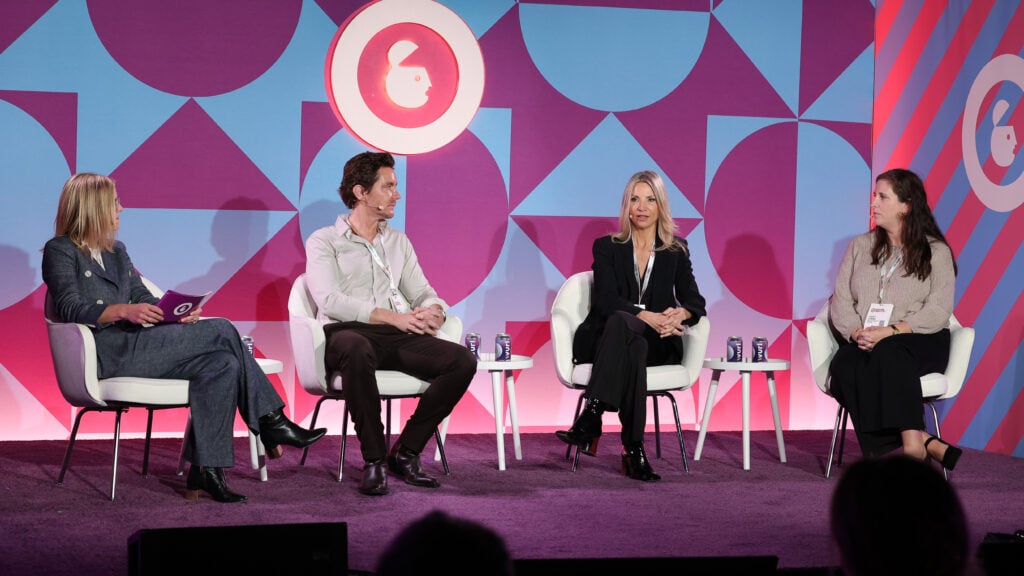
Ann Piper, Head of Sales for the Americas at Spotify, moderated the discussion with Angela Steele, Chief Client Officer, U.S. at WPP Media; Wes Harris, Director of Marketing for YouTube TV at Google; and Juliet Litman, Director of Talent and Operations at Spotify Podcast Studios.

Traditional Attribution and Promo Codes Share the Same Blind Spot
Traditional attribution and promo codes share the same blind spot.