When AI Writes, Who Owns the Thought?
By Isabelle Duarté, CMO at Soldo
There is something reassuring about the more open conversations we are beginning to have about the use of AI in content creation.
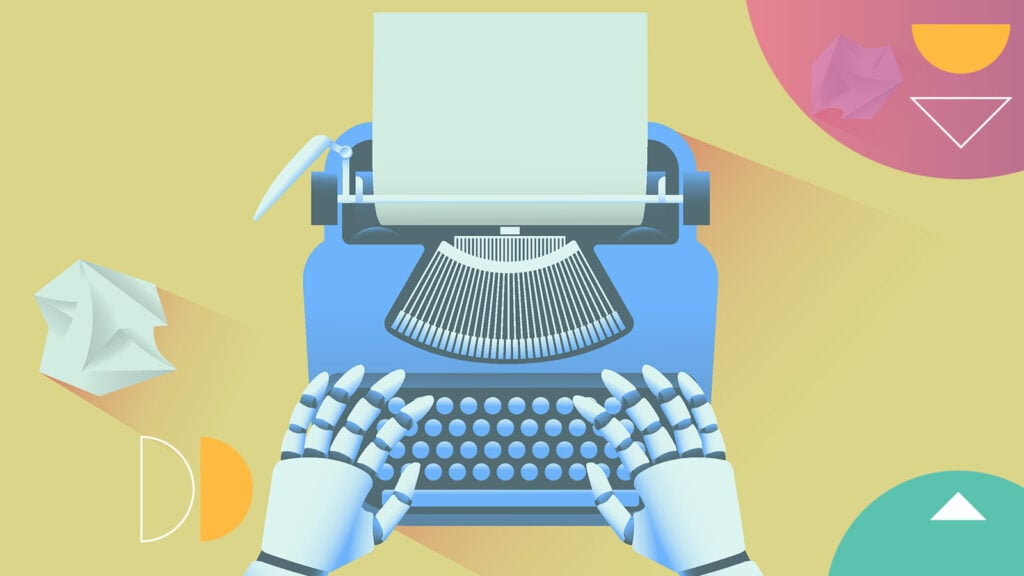
We’re all familiar with many of the so-called ‘AI tells’ we have come to recognise – and perhaps dislike – in a remarkably short space of time. But, as is the case with almost every AI use case, the technology is growing more sophisticated. AI-generated writing is becoming harder to distinguish from our own. In response, we’re already seeing platforms like Substack and Claude introduce new tools and processes designed to Identify content that has been heavily produced or curated by AI.
I welcome that transparency. But I also wonder whether it risks focusing our attention on the wrong question. Rather than asking whether something was written by a human or by AI, perhaps we should be asking something more fundamental: who did the thinking?
I’m not an AI cynic. Far from it. I use it almost every day to research unfamiliar subjects, gather different perspectives, test assumptions, organise ideas and challenge arguments that are still forming in my mind. Used well, it is an extraordinary companion, particularly for anyone whose profession revolves around ideas.
What concerns me is not what AI can write, or whether we use it to aid our writing, but what we might stop doing ourselves in the process.
Increasingly, the outsourcing risks going beyond simply assisting with writing. We are asking AI not only to help articulate opinion, but to form one for us.
Who owns the thought?
“Human-written” and “authentic” have long been almost synonymous. I’d argue that AI has changed that.
I don’t believe a piece of writing becomes inauthentic simply because AI has played a role in producing it. If I use AI to summarise research, challenge my reasoning, suggest a clearer structure or help me untangle an awkward sentence, the argument can still be entirely my own.
For me, authenticity has very little to do with who typed the words. It has everything to do with who owns the thought.
Did the writer weigh the evidence, decide what they believe and reach their own conclusion? Did they wrestle with competing arguments or change their mind along the way? Or did they ask AI to do that work for them?
An article can be written with the assistance of AI and contain a genuinely original, human argument. Equally, a person can type every word themselves and say very little that is truly their own.
Unfortunately, no watermark can yet determine that difference.
The temptation to avoid an opinion
You can already see people avoiding having an opinion online.
LinkedIn, for example, is full of commentary where each sentence, taken on its own, seems perfectly reasonable. The grammar is faultless and the vocabulary polished, yet by the end, you realised you have learned almost nothing at all.
There is no clear opinion, no argument and certainly no perspective that could only belong to a person. The words look meaningful but somehow manage to say very little. “Word salad” is the only description that feels appropriate.
I used to find this mildly irritating. Increasingly though, I wonder if it reflects something a little sadder: a growing lack of confidence in our own voices.
Social media can be an unforgiving place in which to think out loud. There was a time when it felt possible to explore an idea or hypothesis or even change your mind in public. Today, the cost of expressing an imperfectly formed thought can feel disproportionately high. A poorly chosen word or unfashionable opinion can attract criticism remarkably quickly.
In that environment, the apparent safety net that AI offers is understandably appealing.
AI is remarkably good at producing prose that is hard to object to. It smooths away the rough edges, tempers conviction, removes ambiguity and produces something polished and balanced.
But those rough edges are often where an individual voice emerges.
Authenticity has always required a degree of vulnerability. The moment we express a genuinely original thought, we expose ourselves to disagreement. That has always been the price of authorship. If AI allows us to avoid that discomfort entirely, we may also avoid the possibility of saying something memorable.
For marketers, I think there is an additional tension here. We have spent years talking about the importance of distinctive brand voices and creating work that people remember and feel something about. Yet AI makes it easier than ever to gravitate towards the same, frictionless middle ground.
Used thoughtfully, AI can help us express distinctive, human-led ideas more effectively. But if we outsource the judgement behind those ideas as well as their execution, we risk making our brands sound more alike when the goal has always been to stand out.
The connections that shape our thinking
Research and thinking have never been the same activity. One gathers information; the other turns information into judgement.
AI is enormously valuable for the former – certainly in my own experience. It can synthesise material, expose us to unfamiliar perspectives and help us challenge assumptions faster than we could alone.
But between information and judgement lies something wonderfully untidy: reflection, uncertainty, lived experience, changing your mind, abandoning one argument for another, and making connections between things that may, at first, seem entirely unrelated.
That process can be inefficient. That is precisely the point. It is where we learn and where an individual perspective begins to form. Often, those connections happen without us consciously looking for them.
Not long ago, my husband and I bought a Pierre de Ronsard rose for our garden. Before it had even found its place in the flowerbed, I found myself reciting the opening lines of Ronsard’s Ode à Cassandre: “Mignonne, allons voir si la rose…”
The association was entirely instinctive. The rose evoked the poem; the poem evoked memories stretching back many years. It was a connection formed through a lifetime of reading, writing and loving language.
Books, conversations, experiences, mistakes and memories all shape the way each of us interprets the world. That particular connection was mine because of the experiences behind it. Someone else looking at the same rose would bring an entirely different collection of associations.
That is where individual perspectives come from.
AI can give us more information to think with. The danger comes when we use it to remove the need to do the thinking ourselves.
Presence over perfection
None of this is an argument against using AI. On the contrary, I believe it is one of the most powerful intellectual tools available to us. It can broaden our knowledge, challenge our reasoning and help us articulate ideas more clearly – often at a speed that would once have seemed extraordinary.
Whether it helps us become better thinkers, however, depends entirely on how we choose to use it.
When I read something new, I find myself increasingly less interested in whether AI played a part in producing the prose than in whether I can sense another human mind behind it. Is there genuine curiosity at work? An original insight? A conclusion that has clearly been wrestled with rather than simply generated?
Because I don’t think readers are searching for perfection. They are searching for presence.
They don’t necessarily need proof that AI never touched the copy – and many don’t even expect this anymore. They need the unmistakable feeling that someone had something worth saying in the first place – and did the difficult work of deciding what they actually thought.
A watermark might tell us who wrote the sentence. It cannot tell us who owns the thought.
You May Also Like
Stop Pitching and Start Building Featuring Laurel Burton of Instrument
Joining us is Laurel Burton, CEO of Instrument, a design and technology company whose work includes Nike, Oura, Google, and Nordstrom.
Customer-Led Products with Intentional Leadership Featuring Emeka Okafor Jr. of Dropbox
Joining us is Emeka Okafor Jr., Senior Product Director at Dropbox, who leads product for its applied AI division.

Podcaster Brinda Adhikari on Building Trust Through Curiosity, Not Correction
Brinda Adhikari, a journalist and the co-host of the podcast “Why Should I Trust You?,” joins host Drake Baer to discuss what it takes to build trust in science and public health across deep divides.