




1 Simple Trick to Tell a Great Story in Advertising

Why Tell Stories in the First Place?
Since the dawn of time, humans have conveyed messages through storytelling. And this isn’t a fad on a 2016 trends list; it’s a timeless concept that will never lose its power to build recall with an audience.
I Can Write Pretty Well, But I’m Not the Third Duffer Brother!
Well, the good news is you don’t have to be, or an Amazon bestseller. You just need a good story and a simple trick.
Three-Act Structure
And here it is…the three-act structure. It’s no revolutionary concept, but it is key to telling a good story. It’s been used from Harry Potter to Stranger Things, to ads you may have watched this morning, and it’s simple to use.
It’s all about how to build a story.
All stories have a beginning, middle and end. The trick is to rethink these terms as setup, confrontation (sometimes conflict), resolution…and that’s pretty much it.
Let me illustrate using a holistic view of the plot to Breaking Bad:
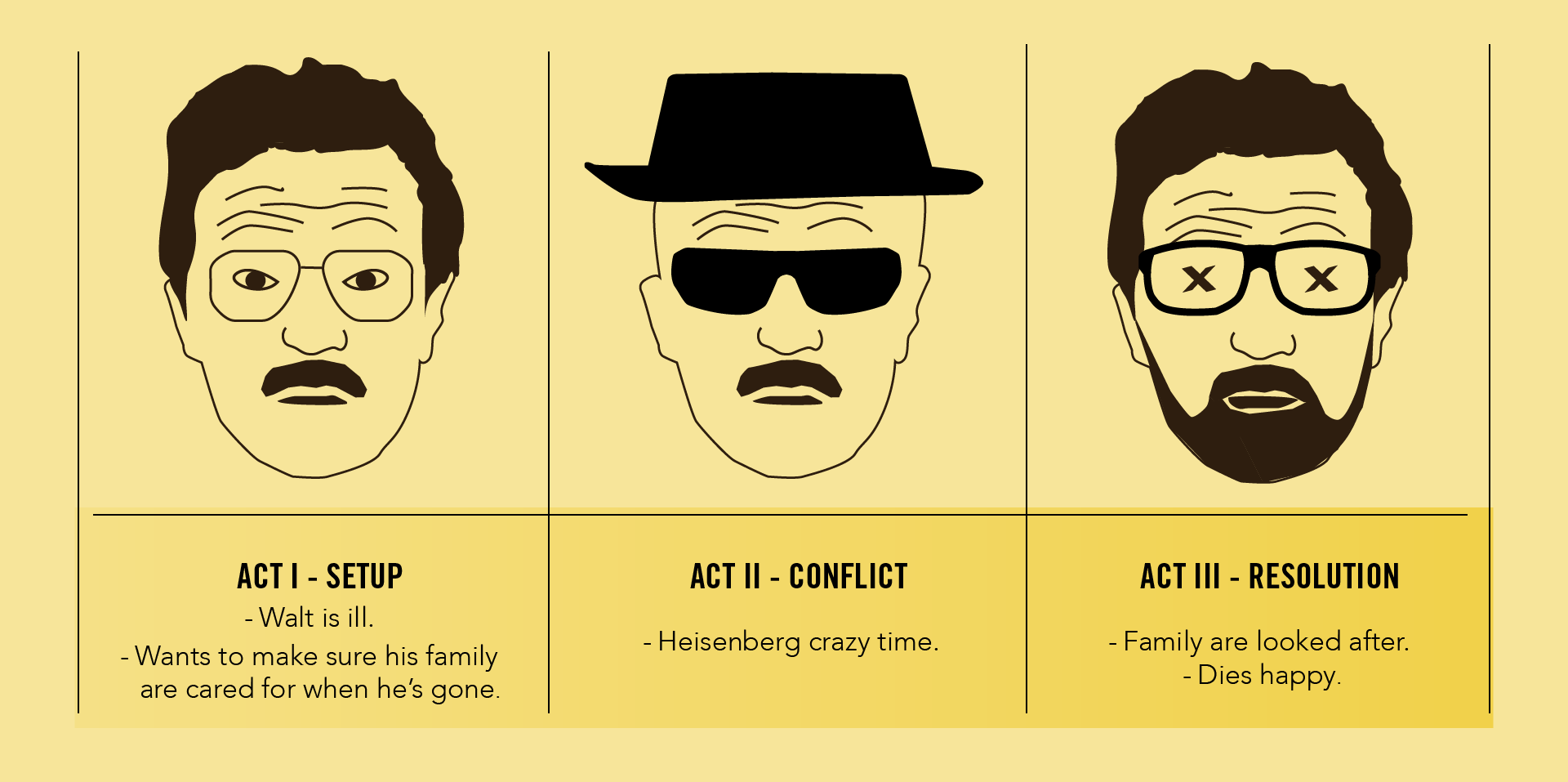
Now, film and ads work quite differently. Film and box sets are longer format, so you get to play with character development, sub plots and lots of fancy twist and turns. With ads you need to get in and out quickly. Let’s have a look at what that actually means in practice.
Build it and They Will Consume
Act I
So, always start your story with the setup, the problem that’s going to be solved in the end. Don’t spend too much time setting the scene here. Get in and out to the action.
Act II
This is the longest part of your story. How does the protagonist go about solving the problem in Act I? What confrontations or conflicts (internal or external) do they have to deal with?
Act III
The resolution. How did their actions solve the problem and what was the outcome?
Write, Then Distil
The hardest part of writing for advertising is getting in and out in of your story in the minutes — or even seconds — you have available. This bit can take some practice! As a rule of thumb, one minute of narrated content is between 100-150 words, so you can see how little you have to play with.
Setup a simple document with the headings; Act I, II, III, or problem, action, outcome, or setup, confrontation, resolution. Whichever descriptors work best for you.
Get all your ideas down under the relevant headers and then trim and distil and trim and distil until you have a succinct piece of writing that still retains the key information of the story. Basically, you want to start with a hi-res portrait photo and end up with a Picasso.
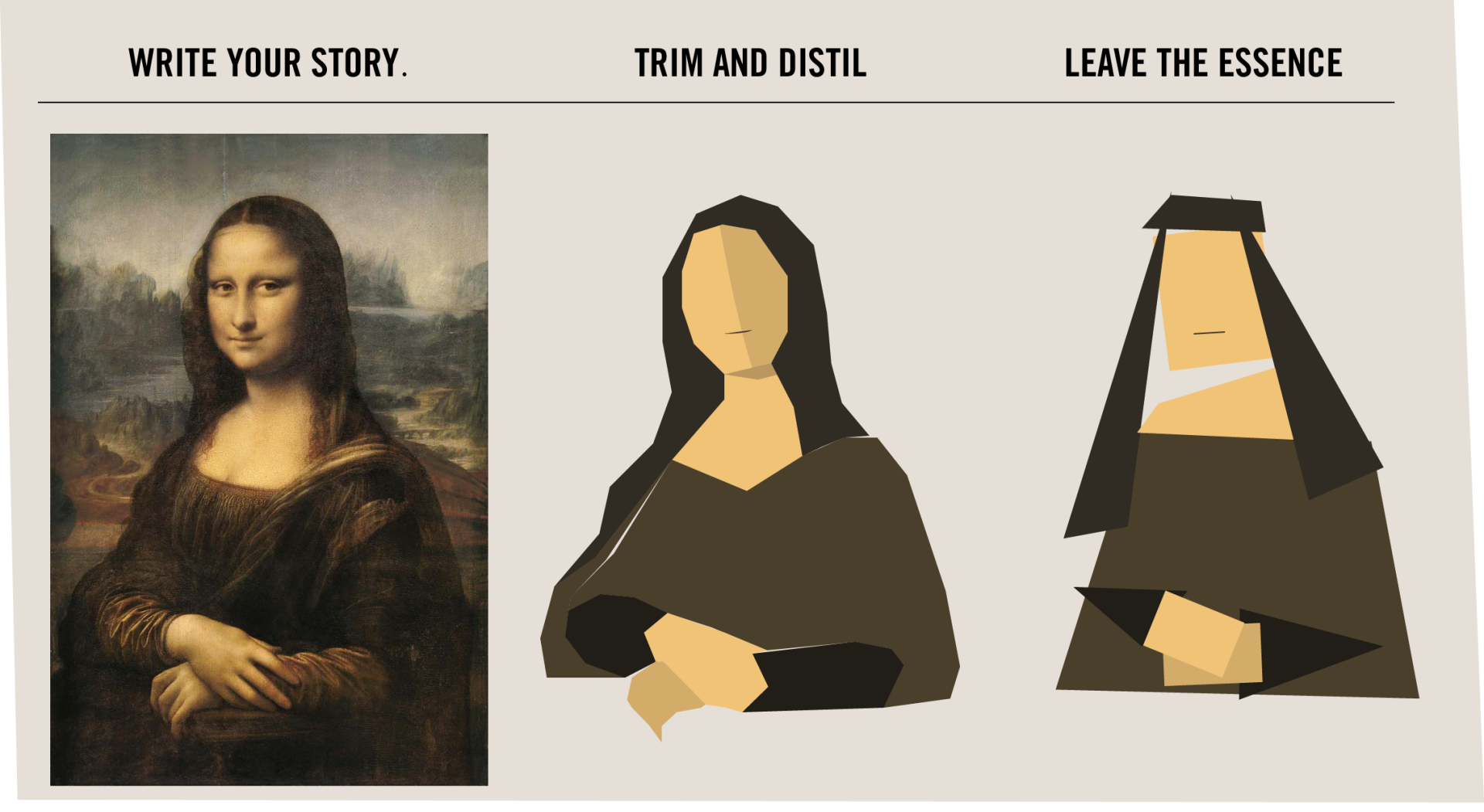
Don’t forget, your story can be told in visuals too, words aren’t always needed, but you still need to write the essence of the story to direct production through a storyboard.
Here’s a great example from UK-based retailer John Lewis, who worked with creative masters adam&eveDDB on this festive ad.
In terms of structure here, the setup is nailed in the first ten seconds when we see a middle-aged man trying to learn how to skate, but we’re not sure why. The conflict sees the man continually practicing — he really wants this — as he persists throughout his daily grind while the family prepare for Christmas. The resolution — we discover the family are adopting/fostering a young girl who skates, suddenly it becomes clear that the man’s desire to skate is really a desire to make their new family member feel welcomed.
Three-act structure, brilliant visuals, little dialogue, strong connection to brand values, utterly wholesome content — job done!
You May Also Like

The Best Agency-Client Relationships Are Built in the Trenches
When was the last time your in-house team handed you a Don Draper holy $#!* moment?

Evolving Commerce Media: How Offsite Unlocks the Full Funnel
Commerce media spent the last decade proving one thing exceptionally well: onsite ads drive immediate conversions. But treating commerce media purely as a bottom-funnel sales tool leaves most of the customer journey untouched.

The Entertainment Revolution: Why Brands Need to Think Beyond the Screen
As gaming, streaming and social media reshape how audiences experience entertainment, marketers face a fundamental challenge: Learning to participate in culture rather than simply advertise alongside it.