




From Berlin 1936 to 2036: Industry Leaders Reflect on 90 Years of Live Sports Broadcasting and What Lies Ahead
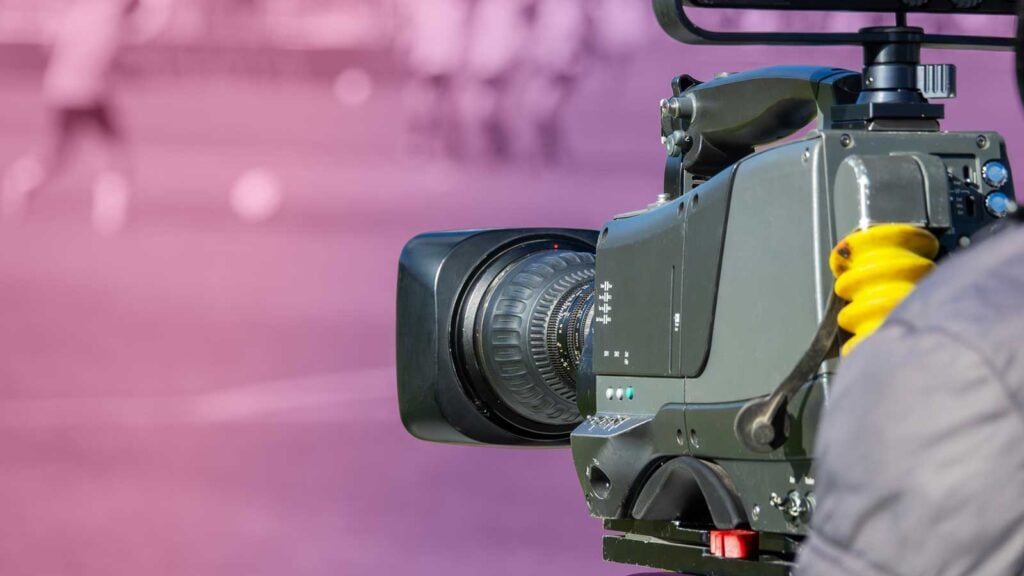
Ninety years ago, the 1936 Berlin Olympics marked the first sporting event ever broadcast live on screen. More than 150,000 viewers in Germany gathered around black-and-white television screens, unknowingly witnessing the birth of an industry that would go on to shape global culture.
Live sports broadcasting – and the advertising opportunities it provides – have constantly adapted since then, creating some of the most memorable and influential on-screen moments ever. Now, the sector is navigating yet another historic transition. As linear TV schedules give way to CTV, social media feeds, interactive apps, and creator-led ecosystems, the ways audiences experience sports events are being rewritten.
To mark this 90-year milestone, industry thought leaders across the US and UK reflect on how live sports broadcasting has transformed, and offer a glimpse into what to expect as we head toward the 100th anniversary in 2036.
The Scale and Emotional Resonance of Live Sports
Despite the well-documented fragmentation of the media landscape, live sports remains an unmatched environment for capturing broad, undivided consumer attention, where large audiences share the highs and lows of live competition.
Christopher Hogg, Chief Revenue Officer at Lotame, emphasizes that sports content continues to deliver rare scale alongside deep audience investment:
“This anniversary is a reminder of sport’s unmatched power to capture consumer attention. Today, live sport remains one of the single best content channels for advertisers seeking massive reach alongside exceptionally deep engagement.
“Audience intelligence from the Lotame Data Exchange (LDX) consistently shows that sports broadcasting brings together huge numbers and genuine passion. Across major UK consumer groups – from holiday shoppers to everyday decision-makers – live sport routinely connects brands with almost the entire demographic. Football, cricket, and rugby, along with major events like the Olympics, regularly reach 80% to 95% of target audiences, with fans showing up to 70% higher interest in brand messaging than the average consumer. At club level, the signal is even sharper: fans of the leading Premier League clubs are nearly 2.5 times more likely than average to actively engage with brand messaging during live coverage.
“Ninety years on from that first broadcast, live sport gives media planners a reliable, context-rich anchor to build meaningful brand connections with highly-engaged audiences.”
Emmanuel Josserand, Senior Director, Brand, Agency, and Industry Relations at Comcast Advertising, underscores that while delivery mechanisms have diversified, the human desire for shared live experiences remains constant:
“Over 150,000 people watched the first-ever live sport broadcast during the 1936 Berlin Olympics on television screens; today, live sport is a global phenomenon expanding far beyond traditional TV into streaming, social media and gaming. Technology innovation has broadened access to live sport and created a wider range of viewing experiences, helping it continue to attract large, emotionally connected audiences around the world.
“Advertising is playing a bigger role too, from creating memorable campaigns around events like the Super Bowl to helping make live sport available to audiences for free. The continued growth in premium video ad views around live sport reflects the scale and engagement of these audiences, while opening up more opportunities for brands to connect with fans in real time.
“While technology, platforms and audience expectations will continue to evolve, live sport will remain one of the most popular forms of programming because it uniquely taps into our desire for shared experiences and connection, stirring up emotions and bringing people together even 90 years later”
Beyond the 90-Minute Window: Fandom, Pre-Game Excitement, and Real Attention
While live coverage once began and ended with the stadium whistle, modern sports fandom operates on an always-on cycle. Highlights, creator analysis, and behind-the-scenes content can drive higher engagement than the live matches themselves, requiring advertisers to understand precisely where fan attention is to maximise the impact of their campaigns.
Hannah Blake, Managing Director of New Media at Mail Metro Media, points out that live rights are now just one component of a broader media ecosystem:
“Over the next decade, sports broadcasting will become less about a single live feed and more about an always-on world of content, driven by real fans and communities. Live rights will remain hugely valuable, but the match itself is only one part of how fandom plays out. Audiences are discovering and sharing sporting moments through social video, creator-led formats, analysis and behind-the-scenes storytelling.
“We saw this during the World Cup, when Daily Mail Sport generated more than one billion video views, including 625 million views of original video, despite holding no live broadcast rights. That came from understanding what fans wanted and creating content that felt native to the platforms they use every day. The future will really be about complementing the live action, tapping into cultural moments surrounding matches and giving fans more ways to experience and participate in the moments they care about, wherever and however they choose to do so.”
Ameer Jabak, Northern Europe Strategy Lead at Seedtag, notes that attention and anticipation often build days before the event takes place:
“Ninety years ago, live sports broadcasting was about bringing the event into the home. Today, audiences can follow a sporting event across a much wider range of content and conversations. A football match might still be watched live on television, while fans are also reading previews, checking team news, discussing the game on social media, managing their fantasy teams, or catching up on analysis afterwards.
“These moments change how advertisers should think about sports audiences. Our analysis of the 2026 World Cup found that attention often builds well before kick-off, with excitement accounting for 42% of the emotional context in the two to four days before a match. Utility content also generated particularly strong engagement, showing that fans are often highly attentive when they are actively preparing for an event.
“Looking towards the 100-year anniversary of live sports broadcasting, I think the next stage will be about continuing to understand these different moments of audience attention, and more precisely, the emotions they drive. The games remain central, but there are much larger conversations around them. For advertisers, understanding what fans are interested in at a particular moment can create more meaningful opportunities than treating everyone interested in a sport as the same audience.”
However, higher overall reach does not automatically translate to guaranteed attention. Sarah Tims, AVP Marketing at LoopMe, stresses that measurement must account for actual viewer behavior:
“After decades of live sports broadcasting, its value to advertisers is clear – bringing together huge, highly engaged audiences at the same moment. But are viewers always as engaged as brands think?
“Our 2026 World Cup research highlights that they might not be. Following anticipation around whether this year’s debut half-time show, the majority (89%) of UK adults said they had no interest in watching it, and 32% confirmed they typically switch off during football intervals. Simply creating more airtime does not create more attention.
“By the 100-year anniversary of live sports broadcasting, in particular as streaming and CTV allow improved measurement, the value of an advertising opportunity will be shaped by real-time audience signals, viewing behavior, and how attention differs across demographic groups. The opportunity isn’t to fit more advertising around live sport, but to understand where attention is strongest and use those insights to make every placement more valuable.”
Redefining ‘TV’: From Distribution Channels to Viewing Mindsets
As media environments become increasingly personalized, legacy buying approaches like broad national linear spots are giving way to strategies focused on contextual suitability, audience mindset, and interactive fan touchpoints.
Rob Blake, MD EMEA at Channel Factory, argues that not only must brands move beyond legacy broadcast strategies, these more traditional channels are evolving themselves:
“Linear broadcasting is also evolving as legacy publishers increasingly move into platforms like YouTube. It’s time to rethink what ‘TV’ actually means. The question has shifted from ‘Can we reach everyone?’ to ‘Are we reaching the right people, in the right environment?’ making suitability and context non-negotiable.
“Advertisers now need to decode the difference between interrupting and becoming part of the moment. In the next few years we’ll see a shift beyond reach, with AI helping brands understand where, when and how to show up in live sports, guided by human strategic oversight.”
Looking ahead toward 2036, Ian Maxwell, CEO at Converge, suggests that the industry will redefine TV around viewing mindsets rather than technical distribution formats:
“For most of TV’s history, we’ve defined the medium by how it is delivered – from broadcast schedules and channels to streaming platforms. By 2036, I think we’ll define TV by the type of experience it creates instead.
“While we would expect all TV to be IP-driven by then, fundamentally it will still be people sitting in front of screens, choosing what to watch and how they want to experience it. People aren’t choosing devices anymore; they’re choosing content. That’s why I think we’ll stop talking about linear versus streaming and start thinking about the different viewing mindsets TV creates.
“Live viewing and catch-up viewing aren’t just different ways of watching, they’re different audience behaviors that need different creative, measurement and planning approaches. The future of TV won’t be decided by where content is distributed. It’ll be shaped by which formats create collective attention in an increasingly personalised media landscape and by brands that plan for audience behavior rather than just distribution.”
This shift in viewing mindsets also changes how fans physically interact with live broadcasts. Rishan Weerakoon, Strategy Growth Director at Yodel Mobile, highlights the necessity of low-friction, interactive fan touchpoints:
“For today’s fans, the modern stadium experience now sits in the palm of their hands. That goes beyond access to high-definition streaming on a mobile device. The fan experience has evolved into a more interactive, personalised connection to the game, with supporters able to follow live sports through real-time data overlays, secondary content feeds, and tailored mobile updates.
“Consequently, sports rights holders and media brands face a steep retention challenge in a world where audiences expect more than ever, and loyalty hinges on seamless user experience. Capturing the next generation of sports fans requires providing low-friction platforms that prioritise intuitive navigation and immediate in-app engagement, turning passive viewers into active, long-term platform users.”
Securing the Digital Backbone: Identity, Privacy, and Trust
Underpinning all of these digital advancements is the critical requirement for secure, transparent data infrastructure as programmatic CTV continues to scale.
Vinod Kashyap, Chief Product Officer at Digital Envoy, notes that addressing identity and compliance is essential to safeguarding the channel’s long-term value:
“With the advent of CTV, live sports broadcasting has evolved from a broad, mass-reach medium into a data-driven, addressable, and increasingly personalised experience for every fan. But the next phase of evolution for this programming delivery depends on solving the key challenge of audience identity.
“As streaming continues to scale across CTV platforms, this new way of accessing live sport cannot come at the expense of trust and efficiency. Illegal streaming, CTV fraud, and waste of advertising spend are all increasingly prominent. Establishing the right audience data infrastructure that protects both viewer privacy and broadcast rights is essential to promoting the growth of both the channel and live sports programming, and seeing its value maintained for brands and broadcasters.”
Ninety years after a single black-and-white camera broadcast the 1936 Berlin Games to localized viewing rooms, live sports broadcasting has transformed into a multi-platform, multi-billion-dollar global ecosystem.
As the industry charts its course toward its 100th anniversary in 2036, the focus has clearly shifted from pure distribution to nuance, context, and user experience. Broadcasters and advertisers that succeed over the next decade will be those that look beyond the live 90-minute window, leveraging advanced real-time signals and privacy-first data infrastructure to meet modern audiences wherever, and however, they choose to tune in.
You May Also Like
What the Dashboard Can’t Tell You About People Featuring Kerel Cooper of MarketCast
Joining us is Kerel Cooper, Chief Marketing Officer at MarketCast. Kerel shares why he believes marketers can learn from the strongest consumer brands and how human judgment should guide the use of AI in creative work.
Would You Share It If You Didn’t Work Here? Featuring Ty Stafford of Hello Party
Joining us is Ty Stafford, Founder and CEO of Hello Party, whose experience spans making YouTube videos in his dorm room and working at Red Bull Media House.

From the Conference Floor to the Boardroom: How Kindle Scribe Is Changing the Way Executives Capture Ideas
At Advertising Week New York 2026, Amazon’s Kindle Scribe offers a glimpse into how business leaders are combining the familiarity of handwritten notes with the convenience of digital technology to make the most of an increasingly demanding professional world.