




From Adjacency to Outcomes: The New Era of Contextual

How rich video signals will drive the next era of outcome-driven advertising.
By Jay Wolff, CRO at KERV.ai
You don’t need to shout to get attention anymore.
For years, advertisers relied on volume, blasting mass messaging, prioritizing repetition over relevance, and interrupting whatever people were actually trying to watch. And for a while, it seemed to work.
But that model is breaking. Audiences are scattered across screens. Privacy regulations are tightening. And attention is harder than ever to earn.
That’s why we’ve entered the era of contextual 2.0.
This isn’t your basic keyword targeting from 2009. Today’s contextual is smarter, faster, and powered by real signals that are dynamic, real-time, and actionable. I’ve seen the shift up close, from my early days helping build ContextWeb’s first-gen targeting to my current role at KERV.ai, where we’re using AI to process video content at the scene level and place hyper-relevant in-stream ads in real time.
What was once a blunt tool is now a precision instrument.
While some still see contextual as a fallback in a post-cookie world, I see it as a full-funnel performance engine built on intelligence, not assumptions. With AI, we can analyze the tone of a moment, its emotional resonance, the pace, and the objects on screen to understand not just what someone is watching, but how they’re experiencing it. That shift unlocks a very different kind of value.
From Categories to Real Context
The old version of contextual was simple: place your ad next to a broad topic (sports, health, finance) and hope for a match. Keyword adjacency got you in the door, but it couldn’t tell you what was actually happening inside the content.
Now, we can.
Today’s contextual intelligence reads the full scene: the mood, the objects, the tone, even the narrative arc. It picks up the subtle stuff—whether the moment is tense or calming, emotional or energetic.
And when brands show up in moments like these—not just where the content is relevant, but when the moment is right—it changes how the message lands. It feels more like kismet than targeting.
Signals That Drive Performance
Let’s not dance around it; contextual is delivering real results.
When you know which scenes drive attention or recall, you can make smarter decisions on media, creative, and when to show up. The old model guessed at relevance. The new one proves it.
There are real-world examples that demonstrate this approach works across various verticals, including retail, entertainment, and ecommerce. And it’s especially effective in regulated industries like finance, pharma, or auto, where personalization isn’t an option but relevance still matters.
But here’s the key: contextual today is more than getting the right ad in the right place. It’s about connecting the moment to the metric. Brand lift. Time spent. Conversions. When you align signals with outcomes, you can earn attention
andBuilt for What Comes Next
Discovery looks different now. People find products through TikTok, YouTube how-tos, streaming content, and generative AI search results.
Prime time isn’t a time slot anymore. It’s any time someone decides to hit play.
Contextual thrives in this world. It doesn’t follow a user around, it follows the moment. That makes it one of the only tools built to scale across the full funnel:
- Top: Earn attention by showing up in the right moment
- Middle: Build engagement by matching the mood
- Bottom: Reinforce decisions at the exact time they’re made
In a fragmented, privacy-constrained media world, contextual is one of the most adaptable tools in the stack.
Contextual Is the New Currency
If you’re still treating contextual like a backup plan, it’s time to reassess. With the right AI, you can finally move from placement to precision. It’s privacy-proof, performance-ready, and platform-agnostic—a rare trifecta in today’s ad landscape.
Signals, not segments, will define how we buy media, optimize creative, and measure media going forward.
We no longer need to shout to earn attention.
We just need to listen to the signals that are already there.
You May Also Like

Stop Pitching and Start Building Featuring Laurel Burton of Instrument
Joining us is Laurel Burton, CEO of Instrument, a design and technology company whose work includes Nike, Oura, Google, and Nordstrom.
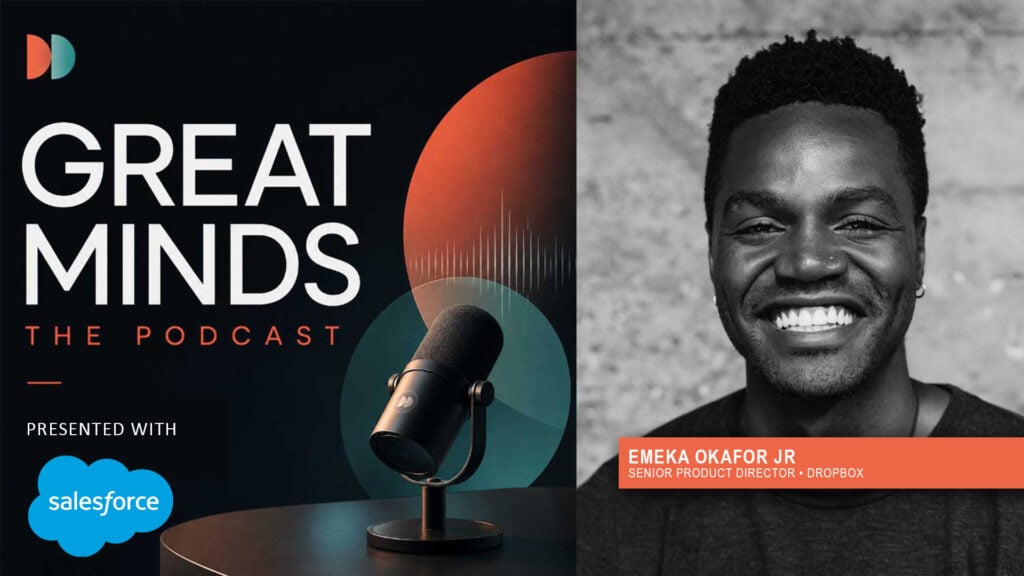
Customer-Led Products with Intentional Leadership Featuring Emeka Okafor Jr. of Dropbox
Joining us is Emeka Okafor Jr., Senior Product Director at Dropbox, who leads product for its applied AI division.

Podcaster Brinda Adhikari on Building Trust Through Curiosity, Not Correction
Brinda Adhikari, a journalist and the co-host of the podcast “Why Should I Trust You?,” joins host Drake Baer to discuss what it takes to build trust in science and public health across deep divides.