Is the Open Web Dying? It’s Complicated.

By Paul Harrison, Co-Founder, President, and CTO, Adgentek
The human-display model that financed the open web is weakening. But publishers, agencies, and adtech platforms still have an opportunity. They just have to stop treating agents as a threat and start building for them.
So, no, the open web is not dying. But the old bargain that supported it is under mounting pressure.
For decades, people visited publisher pages, publishers sold display impressions against that traffic, and a long chain of adtech intermediaries profited from the transaction. Now, people are increasingly getting answers, recommendations, and summaries without clicking through to the source page.
While that is bad news for the display model, it is not necessarily bad news for the open web.
AI systems still depend on the information, authority, context, and differentiated data that publishers create. At the same time, people still seek out trusted reporting, niche expertise, local information, and communities. But the interface between that content and its audience is changing. The pageview is no longer the only unit of value, and it may no longer be the default one.
Publishers now need to embrace the next commercial model before the old one collapses.
The open web is not dying, but display advertising to humans is
Advertisers need to go where people are. People remain on CTV and mobile, but they are also using chatbots and agents to aggregate information from traditional publisher sites. As that behavior grows, fewer human browser sessions mean fewer conventional impressions and less value for the supply chain built around them.
Display advertising was built for three things: a page, a person, and an impression. That model may remain useful in some contexts, but it is losing its status as the default way to monetize open-web content. Publishers cannot solve this simply by defending every pageview or adding more display units to a shrinking number of sessions.
They need to ask a different question: What are my information, authority, audience signals, and commercial context worth to an agent?
Publishers will need to serve agents, too
The publisher of the future has two audiences. One is human: readers who value a publication’s reporting, expertise, and experience. The other is machine: agents that need reliable information, product data, terms, offers, and context to help people make decisions.
That does not mean uploading promotional copy in a machine-readable format and hoping an LLM repeats it. The durable model will require better commercial interfaces, such as structured recommendations, attributable offers, contextual signals, transaction opportunities, and sponsored information that is clearly disclosed. Another model could allow commercial attribution already embedded in publisher content, such as an affiliate link, to survive when that content is crawled, aggregated, and presented by an agent. That creates policy and compliance requirements of its own, but language models can help manage those rules dynamically. At Adgentek, for example, we have built a system called Lawspeak to ingest applicable policies and evaluate commercial activity against them.
If an agent uses a publisher’s content or context to guide a commercial decision, there needs to be a transparent way for the publisher to participate in the resulting value.
The winners will be publishers with differentiated content and data that agents cannot easily replace or synthesize from a dozen interchangeable sources. Licensing alone is unlikely to capture the full value. Many large publisher groups have struck agreements allowing major LLM providers to crawl or use their content, but those agreements have limits. Attribution and licensing terms may not survive when other models are trained on top of larger models, and bilateral deals with the largest Western AI companies cannot cover the rapidly expanding universe of language models. Publishers therefore need a model with more upside than licensing alone. Advertising can provide it by creating an ongoing commercial opportunity whenever publisher information and context contribute to an agent-mediated decision.
The path forward is agentic
Publishers do not need to wait for the old display model to disappear before developing its replacement. They need to make their content, context, and commercial opportunities legible to the agents increasingly shaping how people discover and decide.
That does not mean turning every article into an ad or trying to manipulate AI answers. It means developing transparent, structured ways for an agent to understand what a publisher knows, what its audience values, and which relevant offers or transactions it can facilitate.
There does not need to be a single specification governing how that happens. I expect multiple approaches to coexist, including the IAB Tech Lab’s Agentic RTB Framework (AAMP), Google’s Publisher Direct, and the Ad Context Protocol (AdCP). Different specifications may serve different parts of the ecosystem, just as multiple protocols and transaction models coexist in programmatic advertising today. What matters is that they give publishers and agents interoperable ways to communicate commercial opportunities while preserving transparency and control.
The opportunity is to create a commercial layer around publisher content that works for agent-mediated experiences. A publisher’s product could be a recommendation, a contextually relevant offer, a sponsored answer with clear disclosure, a transaction opportunity, or a data signal that helps an agent make a better decision on a user’s behalf.
This is where agentic advertising becomes a publisher solution. Rather than treating agent traffic as lost human traffic, publishers can recognize it as a new audience and build a way to monetize its use of their information and context.
Don’t mourn the old web
The old display-web model is under pressure, but the open web does not need to disappear when the ad model breaks down. Its future depends on publishers building commercial models that allow agents to recognize and create value from their information, context, and authority.
Don’t treat agents as a threat to traffic, but as a new audience worth serving.
You May Also Like
More Than the Game: Earning a Place in the Fan Conversation
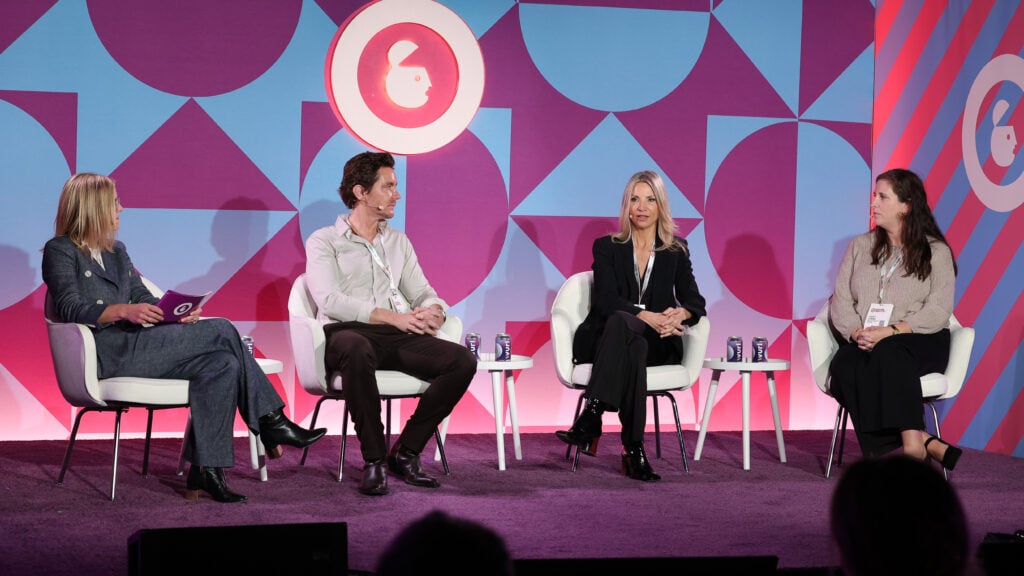
Ann Piper, Head of Sales for the Americas at Spotify, moderated the discussion with Angela Steele, Chief Client Officer, U.S. at WPP Media; Wes Harris, Director of Marketing for YouTube TV at Google; and Juliet Litman, Director of Talent and Operations at Spotify Podcast Studios.

Traditional Attribution and Promo Codes Share the Same Blind Spot
Traditional attribution and promo codes share the same blind spot.
The Next Era of Financial Media Networks
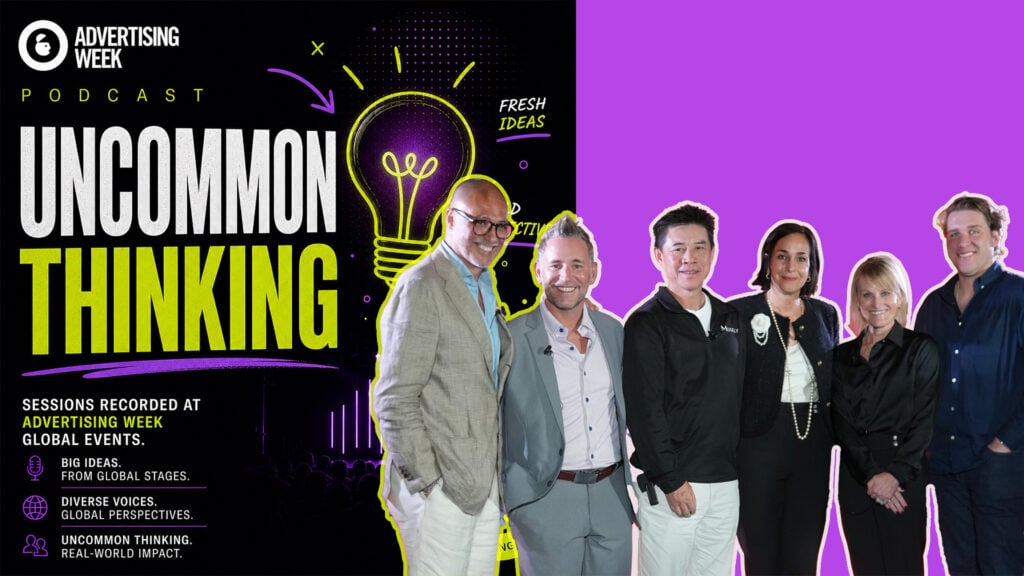
On this panel presented by Citi Commerce Media, Quentin George, Distinguished Partner at McKinsey & Company, joins Jeff Chwast, General Manager of Citi Commerce Media; Jack Jia, Founder and CEO of Musely; Maryam Paez, Head of Marketing & Loyalty at Paze; Jennifer Philo, Global Vice President, Digital Commerce and Partnerships at Blackhawk Network; and Joe Groter, Vice President of Commerce Partnerships at Publicis Media to discuss what financial media networks must deliver for advertisers. The conversation examines how transaction insights, relevant offers and payment capabilities can work together to serve customers.