





The AI Arms Race Isn’t About Innovation. It’s About Power
By Zuwei Li, Associate at Supergood
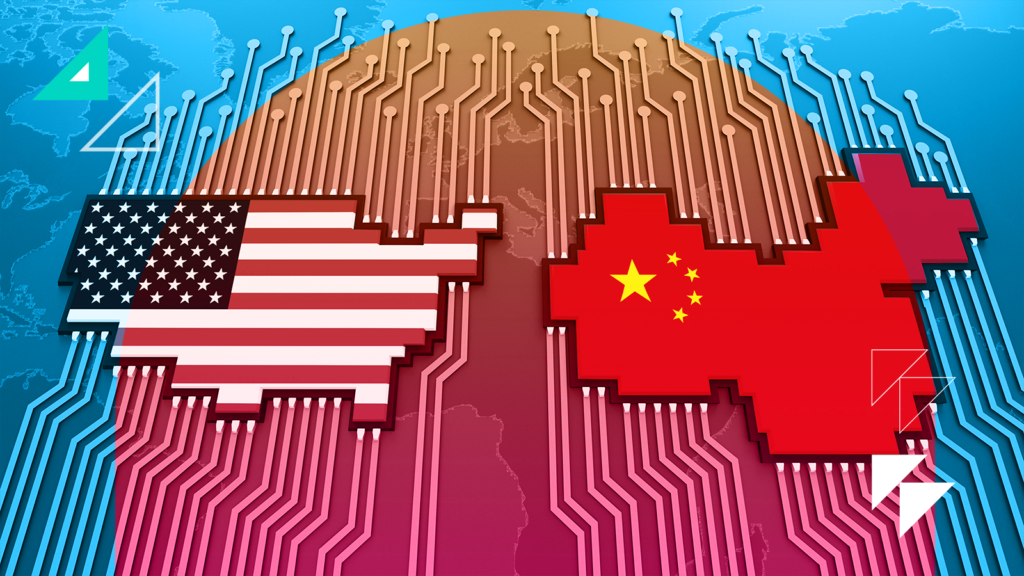
A few weeks ago, DeepSeek launched a model rivaling OpenAI’s ChatGPT and Meta’s Llama 3.1, surging to #1 on Apple’s App Store. Built using reduced-capability Nvidia chips—restricted from China by U.S. trade policy—its success highlights the escalating AI trade war between the two nations.
As a Chinese American who has lived in both countries, I see this for what it is: a struggle for power. AI, like social media before it, has become a geopolitical battleground. DeepSeek’s rise is a defining moment in the AI arms race, reminiscent of the 1957 Soviet satellite launch that ignited the Cold War space race. China is proving that trade restrictions won’t stall its technological ambitions. Despite U.S. barriers, it has produced a competitive model, raising questions about whether these policies truly protect American dominance.
This isn’t just about technology; it’s about ideology—capitalism versus communism, free enterprise versus centralized control. More than a race for innovation, it’s a battle to define AI’s future. OpenAI and DeepSeek reflect their respective political and economic systems. OpenAI, bound by Western regulations, adheres to privacy laws like GDPR and CCPA. DeepSeek, under China’s strict data policies, enforces state-mandated censorship and content labeling. The result? An AI ecosystem shaped as much by ideology as by technological capability.
But the real contest isn’t about who builds the most advanced AI—it’s about who makes AI a force for progress, enhancing everyday life and driving meaningful advancements that benefit humanity just like the technological breakthroughs that came before it.
Chinese companies have long replicated U.S. products at lower costs, and whether you call it reverse engineering or Copyright infringement, the result is the democratization of access to technology. OpenAI has played a similar hand in choosing to move fast, break things, and figure out how to repair the damage later. Once a nonprofit dedicated to AI for humanity, it has evolved into a profit-generating juggernaut focused on expansion. As AI companies scale, we must ask: Is this about technological progress or corporate dominance?
And perhaps rightfully so. This ideological divide is already reshaping global influence. Prioritizing dominance over cooperation has come at a clear cost. Meanwhile if DeepSeek enforces China’s state-controlled model that favors affordability over originality, AI will increasingly reflect national ideologies rather than technological progress.
When AI is dictated by politics and profit motives, does it remain a tool—or does it become a weapon? Already, it is fueling propaganda, censorship, and cyber warfare, deepening geopolitical fault lines. This battle isn’t just about trade or economies—it’s about who controls knowledge, narrative, and, ultimately, power itself.
The AI war isn’t about code—it’s about control. It’s about who dictates access to information, shapes knowledge, and defines the future of intelligence. DeepSeek’s rise proves this battle isn’t coming—it’s already here, rewriting the rules of global competition.
The race is clearly on, and like any war, we as bystanders stand to both benefit and lose. We win when progress allows us to do more with less; we lose when the outcomes are negotiated without our involvement. If nothing else, DeepSeek and OpenAI prove that as users, we still have power. The market has spoken—DeepSeek’s rise cost OpenAI billions in market share. The future of AI isn’t just in the hands of governments and corporations; it’s in the choices we make today. The products we use, support, and integrate into our lives will shape the AI landscape. Staying engaged, experimenting, and actively implementing AI isn’t just an opportunity—it’s the only way to ensure we’re not left behind.
You May Also Like
The Privacy Payoff: What 11,000 Consumers Want Marketers to Know
At Advertising Week New York 2026, Usercentrics’ Maureen Prado argued that clearer explanations and greater consumer control can help brands build the trust needed to sustain customer relationships.

The Best Agency-Client Relationships Are Built in the Trenches
When was the last time your in-house team handed you a Don Draper holy $#!* moment?

Evolving Commerce Media: How Offsite Unlocks the Full Funnel
Commerce media spent the last decade proving one thing exceptionally well: onsite ads drive immediate conversions. But treating commerce media purely as a bottom-funnel sales tool leaves most of the customer journey untouched.