




Why AI Needs a Branding Exercise

By Shannon Harris, ECD, Big Communications
Think of the early days of the Internet, filled with everything from chat rooms to MySpace to AIM Instant Messenger. Or Facebook at its inception, marked by FarmVille to poke wars. No one eagerly uploading an album of Photo Booth pictures in 2009 could have predicted the start of the Cambridge Analytica scandal just five years later. Meanwhile, according to Forbes, over 75% of consumers are concerned about misinformation from AI from the outset – and justifiably so. But while our industry – and society at large – debates the pros and cons of this new technology, ChatGPT drew in over 100 million monthly active users just two months into launch, according to Reuters.
AI, like social media before it and the internet before that, undoubtedly has its dark side. The difference? Those cons have become evident from the beginning rather than emerging five, even ten, years into use. So, should that awareness change our path, how we engage with it?
I would say yes. But, rather than preaching avoidance, I’m advocating for intentionality. If we leverage AI with a particular strategic focus, this tool has the potential to create more creative freedom instead of stripping away jobs, human relationships, and truth.
As of this year, Microsoft data reveals that the average worker spends nearly nine hours a week reading and writing emails, as reported by The Wall Street Journal. According to Forbes Advisor, the most common ways consumers use AI includes answering emails and texts from family and friends, answering financial questions, crafting emails in general, planning travel itineraries, preparing for job interviews, and writing social media posts, among other tasks.
In my own work, I’ve seen it drive efficiencies across everything from production to copywriting. When developing a campaign, instead of feeling limited by reference photography, art directors can use AI to add in key visuals, extend photos for wide formats like outdoor, and make room for typography. We’re able to storyboard without as many limitations, which helps us plan shoots with more precision, and gain creative opportunity beyond referencing only what already exists. I’ve also tapped ChatGPT as a sort of thesaurus, plugging in a phrase I’m overly reliant upon to yield more options that I can edit into a final piece of copy. Within that, it has the power to help copywriters and designers shorten and iterate headlines for tricky mediums like outdoor and digital, keeping pace with faster than ever client timelines. By cutting cost and time, AI has the power to reduce energy put toward less creative, more tedious work, freeing up more space for the inverse.
Brands will undoubtedly come to expect AI integration, whether formally or informally. In the late 2000s, social functioned as a bolt-on in client briefs, a nice-to-have rather than a must. But now, it has become as fundamental as broadcast or CTV. AI capabilities will undoubtedly emerge in this way too, meaning that agencies must find a way to engage ethically rather than dodge it altogether. We’ve already had clients come to us asking about what data we’ve gleaned from AI use. The key is for agencies to incorporate it into workflows in a way that supports workers and respects user privacy.
AI should function as a tool, not a replacement for individual thought, individual workers. Think of how the internet transformed the workplace, phasing out the inherent necessity for fax machines, printers, and more. By streamlining work processes, it transformed research from a days-long endeavor into an hours-long one. If we treat AI similarly – rebranding it as a new tool designed to help us, one that requires a bit of human touch to function effectively –, it has the potential to usher in a new creative frontier for our industry. But the ability for that to occur remains incumbent upon us as an industry, upon how we act going forward, whether we continue to tether AI to dystopian notions that have become attached to it.
You May Also Like
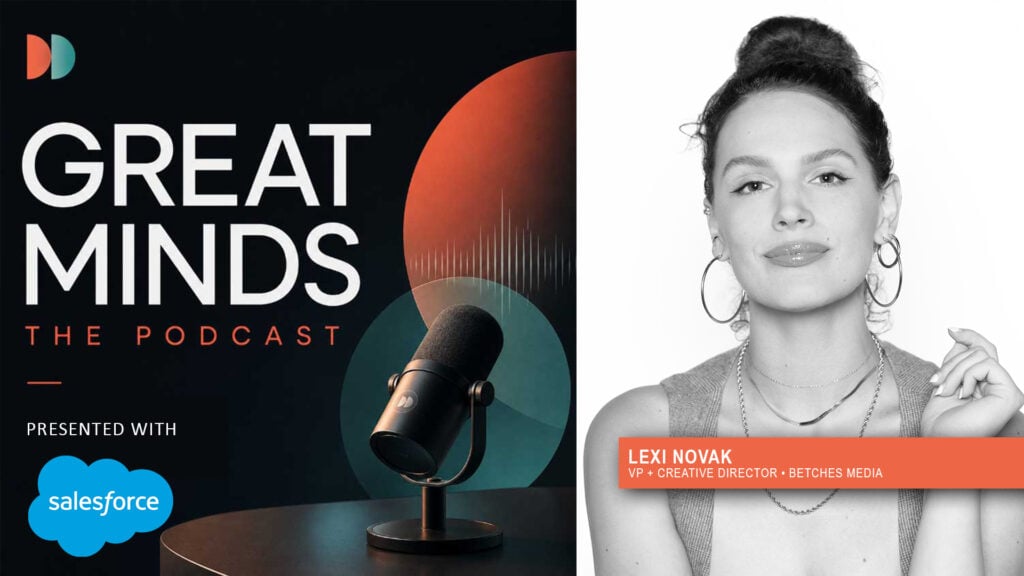
Lexi Novak of Betches Media on Why Audience Connection Beats Content Creation
What does it take to build a media brand that audiences genuinely connect with, and what can marketers learn from a company that has made humor, honesty, and cultural relevance its calling cards?
The Privacy Payoff: What 11,000 Consumers Want Marketers to Know
At Advertising Week New York 2026, Usercentrics’ Maureen Prado argued that clearer explanations and greater consumer control can help brands build the trust needed to sustain customer relationships.

The Best Agency-Client Relationships Are Built in the Trenches
When was the last time your in-house team handed you a Don Draper holy $#!* moment?